Rain Returns to Jeju During Tangerine Harvest Season... Snow Possible in Higher Elevations of Hallasan on the 24th
- Input
- 2026-11-22 07:52:39
- Updated
- 2026-11-22 07:52:39
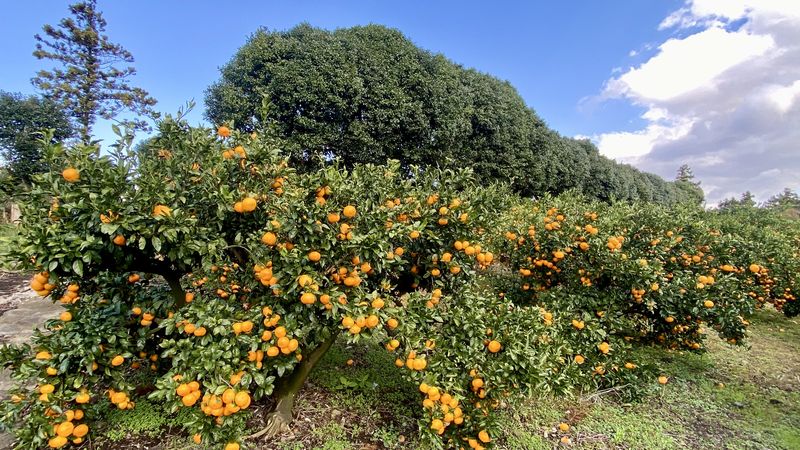
【Financial News, Jeju = Jeong Yong-bok】 Rain will begin falling in Jeju late in the afternoon on the 23rd, and snow is possible in the higher elevations of Hallasan on the 24th. With the field-grown tangerine harvest in full swing, care is needed in managing fruit after the rain and guarding against icy conditions on mountain roads.
The Jeju Provincial Meteorological Administration said on the 22nd that 5–20 mm of rain is expected in parts of Jeju from late afternoon on the 23rd through the morning of the 24th. From late in the predawn hours on the 24th, rain or snow is expected in high mountain areas above 1,000 meters above sea level. Snowfall is expected to be less than 1 cm.
Jeju will be mostly cloudy on the 22nd before gradually clearing from midday. The daytime high is expected to be 12–13°C, below the average of 15.0–16.9°C. The previous day, highs in Jeju stayed between 11.0°C and 13.7°C.
Temperatures will rise temporarily on the 23rd. The morning low is forecast at 6–9°C and the daytime high at 18–19°C. Temperatures, which were below average over the weekend, will recover, making it relatively mild during the day, but rain is expected to begin late in the afternoon.
Temperatures will fall again on the 24th as cold air moves in. The morning low is expected to be 9–11°C and the daytime high 11–13°C. Daytime temperatures will drop sharply in a single day, and strong winds could make it feel even colder.
The rain forecast could also affect farms during the field-grown tangerine harvest season. Field-grown tangerines are harvested in Jeju in November and December. This is a time to select fully ripe fruit for picking and take care to manage moisture and damage so the fruit does not rot during storage and distribution.
The Jeju Special Self-Governing Province Agricultural Research and Extension Services advises growers to let tangerines dry thoroughly before harvesting them if moisture remains on the peel right after rain or from morning dew. This is because the peel can be easily damaged if it absorbs moisture, increasing the risk of rot during storage and distribution.
The Agricultural Research and Extension Services recommends adjusting harvesting work after rain and lightly drying picked tangerines in a well-ventilated place as part of a pre-drying process. This process reduces moisture on the fruit’s surface and peel, helping improve its storability.
Jeju’s tangerine farmers also struggled with harvesting and distribution because of frequent rain last October. According to the Seogwipo Agricultural Technology Center, rain fell for nine consecutive days in the Seogwipo area from October 18 to 26, delaying the harvest of ultra-early-ripening field-grown tangerines. In some orchards, fruit rotted while still on the trees, a condition known as water-soaking, and damage from rot was also confirmed during distribution.
Water-soaking is a condition in which moisture remains on the surface of tangerines for a long time, causing decay, including softening of the fruit. At the time, the Agricultural Research and Extension Services urged growers to step up management, including controlling storage diseases, drying fruit after harvest and sorting out rotting fruit.
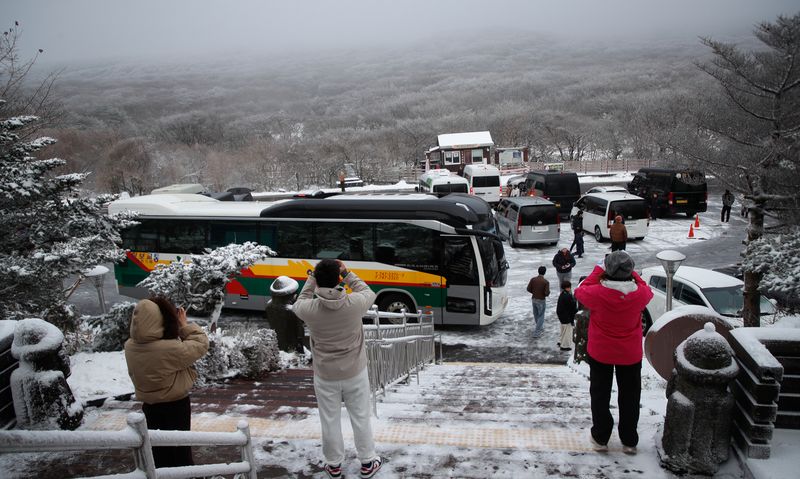
Road safety also requires attention in mountainous areas. Snow fell around Hallasan on the 20th and 21st, disrupting traffic on mountain roads, including a temporary full closure of Route 1100.
The weather agency forecast that rain or snow that fell in mountainous and some mid-mountain areas could freeze and create black ice on roads through the morning of the 22nd. With rain or snow also expected in higher elevations on the 24th, people using mountain roads should check the latest weather information and whether roads are closed.
Waves at sea are expected to rise again from the 24th. A northwesterly wind of 8–15 m/s is forecast over waters off Jeju, with waves reaching up to 3.5 meters. Fishing vessels and people using marine transport should take care.
[email protected] Jeong Yong-bok Reporter