Conflicting Stock Market Outlooks...Fear or Rebound at a Crossroads
- Input
- 2026-11-22 07:02:58
- Updated
- 2026-11-22 07:02:58
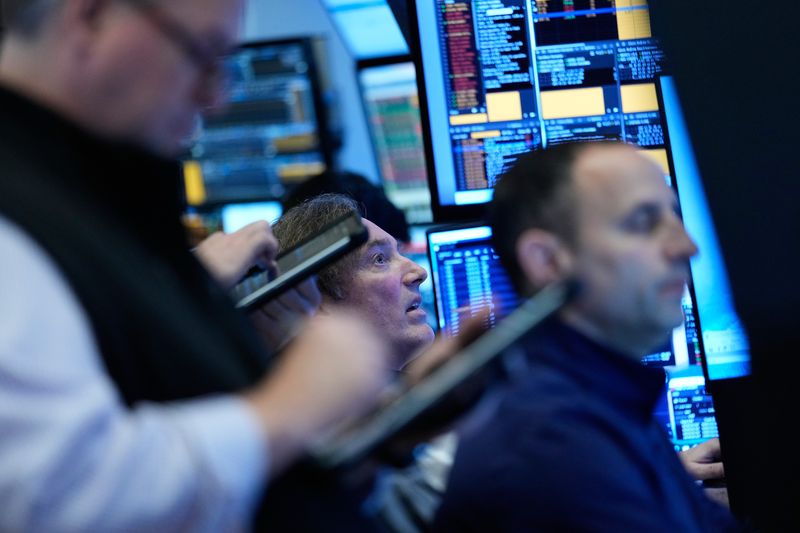
New York stocks saw their worst sell-off since the COVID-19 pandemic began last week, and views on the market outlook are sharply divided.
Goldman Sachs' trading desk was bearish, saying further declines were inevitable as some trend-following institutional investors began selling mechanically in response to a sharp rise in the fear index.
However, the financial and investment news outlet 24/7 Wall Street offered an optimistic outlook based on CNN's Fear & Greed Index, saying that everyone who wanted to sell had already sold and that the only way left was up.
Further declines...a domino effect is inevitable
According to Bloomberg on the 21st (local time), Goldman's trading desk forecast that institutional selling would intensify, saying its Panic Index had risen to 9 out of 10.
The Goldman Panic Index measures market stress and systemic selling pressure. It is calculated using factors such as the Chicago Board Options Exchange (CBOE) Volatility Index (VIX), known as the “Wall Street fear gauge,” market liquidity, put options, and sell signals from systematic funds.
The index rises when market volatility increases and institutions turn risk-averse, draining liquidity; when put options betting on stock-price declines surge; or when systematic funds begin selling. A rise to 9 out of 10 signals that institutional investors managing vast sums have flipped the “sell switch.”
Trend-following funds such as commodity trading advisers (CTAs), cited by Goldman, operate based on algorithms. They are designed to reduce positions when price trend lines break or volatility expands.
The 200-day moving average, a long-term trend line for the Standard & Poor's (S&P) 500 Index, was breached last week. Algorithms are now more likely to issue stock sell orders, having concluded that the uptrend has ended.
Most systematic funds in particular have internal rules requiring them to “keep portfolio risk at or below a certain level,” so when the panic index surges as it has now, they must mechanically sell their holdings to increase their cash allocation.
Artificial intelligence (AI), a driver of the stock market's rally, was shaken by the NVIDIA Corporation turmoil, and Anthropic's initial public offering (IPO) also ultimately failed to attract strong interest, heightening selling pressure in the market. Some observers say the risk of intensified institutional selling has therefore increased.
Goldman estimated that, based on its model, additional selling worth $65.8 billion could hit the market even if stocks remain flat, rising to as much as $80.6 billion if the downturn continues.
Historic bottom signal...rebound within three weeks
By contrast, 24/7 Wall Street said on the 21st that, judging from past experience, stocks were likely to rebound.
The basis for that view is CNN's Fear & Greed Index. In the wake of last week's stock market plunge, it registered 9.7, falling below 10 for the first time since last March. The closer it is to zero, the more extreme the fear it reflects.
However, historical data show that when the index fell below 10, the market was at a bottom.
Since 2021, after the Fear & Greed Index fell below 10, the S&P 500 has rebounded by an average of 9% over the following three weeks. Looking at only the three most recent instances, the gain was even higher, at 10.5%.
Analysts attribute this to the fact that, with everyone who wanted to sell having already done so, even a small amount of buying can quickly send stock prices soaring.
Analysts say it is also possible that, even if the market continues to decline next week amid selling by some institutions, it could return to an uptrend within three weeks once the panic subsides.
[email protected] Song Kyung-jae Reporter