Police to Incorporate Public Input Into Relationship-Based Crime Response... Introduce First Policy Deliberation Process
- Input
- 2026-11-22 09:00:00
- Updated
- 2026-11-22 09:00:03
[Financial News] For the first time, police will introduce a public deliberation process into the formulation of policies for responding to relationship-based crimes. The plan is for members of the public to discuss directly how far police can intervene when protective measures are needed against a victim’s wishes, and for the results to inform future policy.
The Korean National Police Agency said on the 22nd that it will hold a “Police Policy Public Participation Group” at the Vabien II Training Center in Seoul for two days, from the 23rd to the 24th, with 30 members of the public, four outside experts and six frontline police officers, among others, taking part.
The group’s discussions will focus on respecting the wishes of victims of relationship-based crimes and ensuring their safety, as well as the criteria and scope for police intervention. Key topics include whether police can take measures a victim does not want and how to safeguard both the victim’s safety and right to self-determination after police intervention.
Participants were selected from 378 applicants recruited through social media using random stratified sampling that took gender and age groups into account. The group comprises 15 men and 15 women. By age, there are eight participants each in their 20s and 30s, and seven each in their 40s and 50 or older.
To ensure the discussions are well-informed, Han Min-kyung, a professor at the Graduate School of Public Safety at the Korean National Police University (KNPU), will moderate. Speakers will include Seung Jae-hyun, a senior research fellow at the Korean Institute of Criminology and Justice (KICJ); Choi Sun-hye, secretary general of Korea Women's Hot-Line; Kim Gwang-hyeon, a legislative researcher at the National Assembly Research Service (NARS); and Shin Min Young, an attorney at Hoam Law Firm. Six frontline officers working in the field of women and youth will also attend and answer participants’ questions based on their practical work experience.
On the first day, the 23rd, the Korean National Police Agency’s Women’s Safety Planning Division will explain current procedures and practices for responding to relationship-based crimes. Participants will then identify specific issues for in-depth discussion through expert presentations, small-group discussions and a question-and-answer session.
On the second day, participants will continue debating the issues selected by each group. Based on the discussions, they plan to set out their positions on each issue and prepare and present policy recommendations. The Korean National Police Agency intends to incorporate the recommendations developed by the group into future policies for responding to relationship-based crimes.
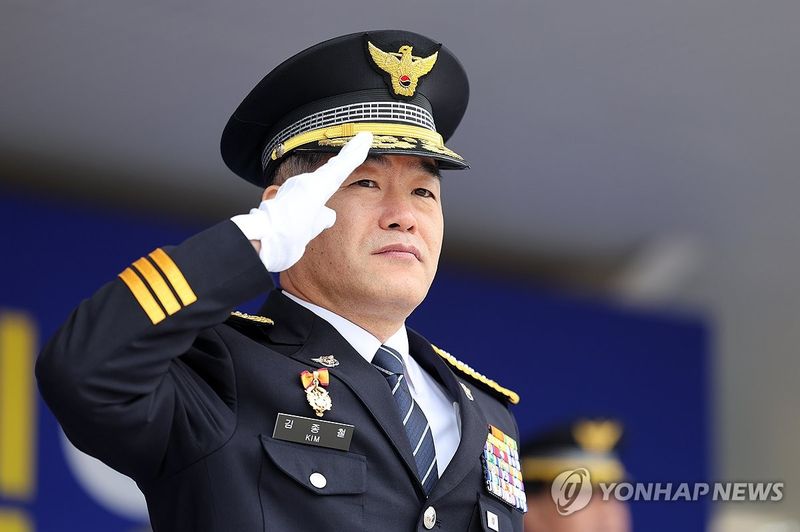
Korean National Police Agency Commissioner General Kim Jong-cheol said, “Relationship-based crime is the most difficult area in which to balance victims’ safety and their right to self-determination. We will take seriously the recommendations developed through public deliberation and faithfully incorporate them into relevant policies going forward.”
[email protected] Kim Ye-ji Reporter