New York Stock Selloff: Five Key Factors... Jeremy Siegel: 'An Adjustment to Expectations Is Inevitable'
- Input
- 2026-11-22 03:12:05
- Updated
- 2026-11-22 03:12:05
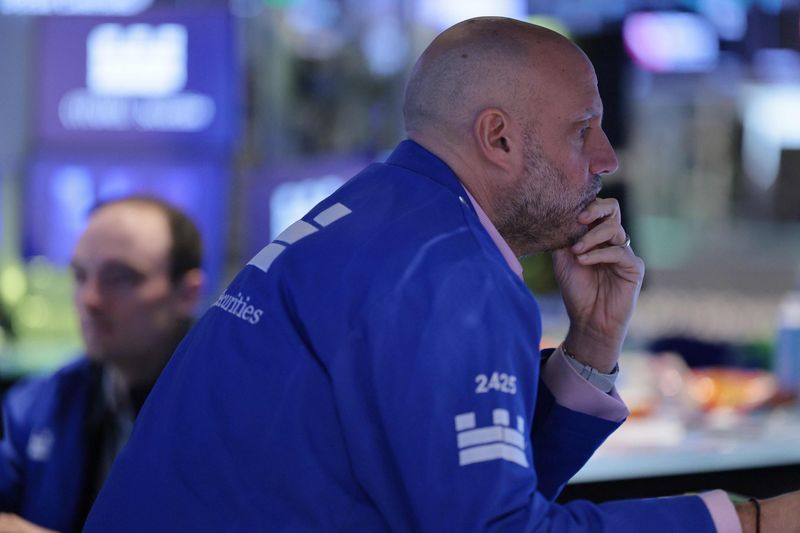
New York tech stocks recorded their worst weekly selloff in six years last week. NVIDIA Corporation plunged 23%, its biggest drop in 18 years, while the Nasdaq index fell more than 10%, marking its steepest decline in six years since the COVID-19 pandemic selloff in 2020.
In an analysis article on the 21st (local time), CNBC identified five broad factors behind the selloff, including the NVIDIA turmoil and Anthropic's IPO.
Jeremy Siegel, an influential professor at the Wharton School of the University of Pennsylvania, noted that the New York stock market, which had posted double-digit annual gains over the past three years, had finally buckled under the last straw added to its camel's back, making an adjustment to bullish expectations inevitable.
Anthropic IPO: a 'sell the news' moment
Anthropic, the company behind the AI model Claude, had drawn excitement as what was expected to be the biggest IPO in history. It attracted strong demand on its first day of trading, but plunged the next day, weighing on the stock market.
Fears of large-scale stock cash-outs by insiders, which had also been a concern with SpaceX's offering last June, spread and dragged down AI-themed stocks across the board.
Retail investors who had learned a lesson from SpaceX decided it was time to apply the stock market adage 'sell the news' to Anthropic's IPO.
Anthropic began trading on the 19th at an IPO price of $83 and soared as high as $115.10, but then gave back much of its gains, triggering a selloff in AI-related stocks. The selling intensified on the 20th, and after falling as low as the IPO price during the session, the stock closed at $88.91.
NVIDIA
NVIDIA, the leading AI stock, was hammered, casting a cloud over the AI theme. Investors dumped shares after Reuters reported that the U.S. Securities and Exchange Commission (SEC) was conducting a focused investigation into NVIDIA's accounting practices.
NVIDIA, whose CEO Jensen Huang stepped down amid an affair scandal involving a person suspected of being a Chinese spy, has plunged nearly 40% so far this month.
Investors also shrugged off NVIDIA's solid quarterly results and rosy outlook, released after the market closed on the 17th. The company plunged 23% in a week.
Long-term trendline breakdown
Technically, the market is also signaling further declines as support levels give way.
The S&P 500 had already fallen below its long-term trendline, the 200-day moving average, on the 17th, and ultimately broke below it on the 19th.
Some institutional investors use algorithms that automatically trigger selling if the 200-day moving average breaks down.
Professor Siegel noted that many investors have their own trendlines and follow them: they climb aboard when the market rises, fueling the rally, but once it turns downward, they become a factor that intensifies selling.
Inflation
Inflation is also bad news for the stock market.
At the Federal Reserve System (Fed), persistent inflation that has been slow to ease has even prompted talk of a so-called 'big step'—raising the benchmark interest rate by 0.5 percentage point in December, twice the usual amount.
Fed Governor Christopher J. Waller, one of the central bank's leading doves, stressed the need for a big step twice in the past week.
Concerns that inflation could be further fueled are mounting, particularly after the Financial Times (FT) reported on the 20th that President Donald Trump was considering resuming airstrikes on Iran, raising fears that oil prices—which have recently been falling—could climb again.
Slowing earnings growth
Concerns that growth led by AI companies is slowing are also making investors uneasy.
Anthropic had a strong debut, but its third-quarter results released early this month underscored that these concerns were not unfounded. Revenue growth last quarter slowed sharply to 47% year over year, about one-third of the 144% recorded in the second quarter.
Adding to the concerns, Democrats took control of Congress and key governorships in the midterm elections on the 3rd, raising fears that regulations on AI data center construction could become stricter.
Beyond AI-themed stocks such as CoreWeave, old-economy industrial stocks such as Caterpillar—which had turned into AI beneficiaries thanks to data center construction and demand for generators—are also struggling.
Neo-cloud provider CoreWeave has plunged 71% from its peak, while heavy equipment maker Caterpillar has fallen at least 50%.
'New Normal' midsummer dream
Many experts, including Professor Siegel, expect this selloff to change market expectations overall. However, they believe that with economic fundamentals still sound, the correction will amount to little more than a return to the more ordinary levels of investor expectations that prevailed before the initial steep rally drove them higher.
The S&P 500 rose more than 20% in both 2023 and 2024, and gained 16% last year.
Siegel said, "The stock market's long-term average annual return is around 8% to 9%," adding, "Investors who began to think that, thanks to AI, 15% to 20% would become the new normal now need to bring those expectations down to realistic levels."
He also described the selloff as "the result of the last straw being added, as if to break the camel's back." He said that, just as a series of negative events (the straws) eventually broke the camel's back, investors who had ignored these headwinds ultimately panicked all at once.
[email protected] Song Kyung-jae Reporter