Six in 10 Japanese Feel an Affinity for South Korea ... Highest Since 2020
- Input
- 2026-11-21 16:18:53
- Updated
- 2026-11-21 16:18:53
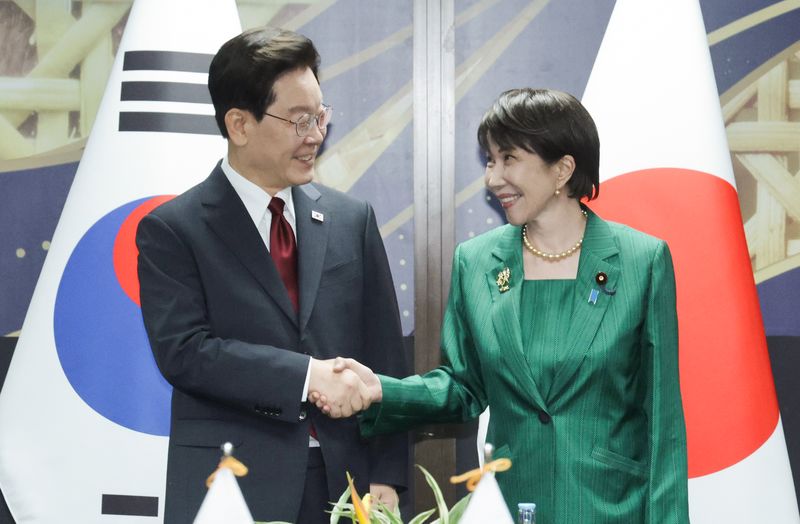
In the ‘Public Opinion Survey on Diplomatic Relations’ released by Japan’s Cabinet Office on the 21st, 61.8% of respondents said they ‘feel an affinity for South Korea,’ up 7.1% from last year’s survey. Another 37.4% said they ‘do not feel an affinity,’ while 0.8% gave no answer.
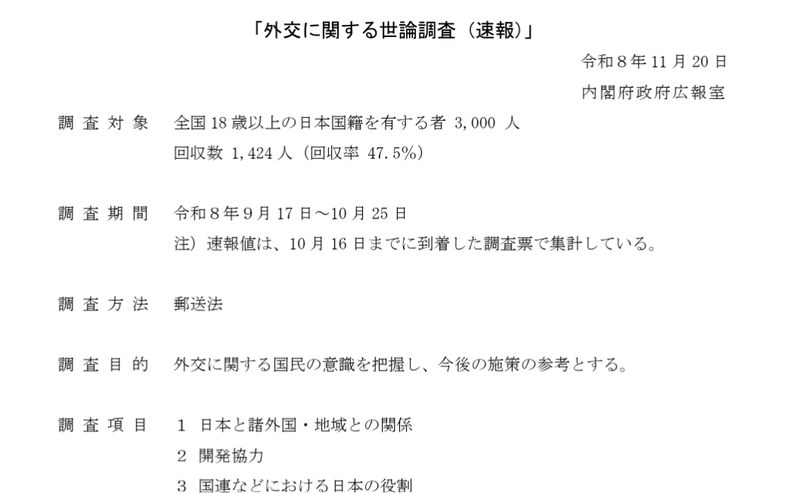
The survey was conducted among 3,000 Japanese nationals aged 18 or older from September 17 to October 25. Of them, 1,424 (47.5%) responded. The Japanese government seeks to understand the public’s views on diplomacy and use them as a reference when formulating policy by
conducting surveys of attitudes toward neighboring countries.
The share of respondents who said they ‘feel an affinity’ was just 34.9% in October 2020 and 37.0% in the September 2021 survey, during the administrations of Moon Jae-in in South Korea and Shinzō Abe and Yoshihide Suga in Japan. The figure topped 50% starting with the September 2023 survey and surpassed 60% this year. It is the highest since the current survey method was introduced in 2020.
The share who said South Korea-Japan relations were ‘good’ was 58.9%, up 9.7 percentage points from the previous year. Another 40.7% said they ‘did not think relations were good,’ while 0.4% gave no answer. In 2020, when tensions between the two countries over historical issues peaked, 16.6% said relations were ‘good’ and 82.4% said they were ‘not good.’ The results briefly shifted in the October 2024 survey (51.2% and 45.8%), and this survey confirmed that positive views had spread. Improved relations between the two countries’ leaders, the spread of Korean culture and increased people-to-people exchanges through travel, as well as worsening relations between Japan and China, are thought to have played a part.
By contrast, 86.4% of respondents said they ‘do not feel an affinity’ for China, the second-highest figure since 2020. The share who said they ‘do not think relations between Japan and China are good’ rose 6.6 percentage points from the previous year to 93.0%, a record high. However, 70.4% of Japanese respondents said developing Japan-China relations in the future was important. Since Japanese Prime Minister Sanae Takaichi made remarks in a parliamentary answer last year suggesting ‘intervention in the event of a Taiwan contingency,’ there has been no sign of an easing in tensions between Japan and China.
The share of Japanese respondents who said they ‘feel an affinity’ for the U.S. was 75.6%, down 1.3 percentage points from the previous year and the lowest figure since 2020.
[email protected] Jo Eun-hyo Reporter