Chey Tae-won Proposes Tying Internships to Hiring: 'Korean and Japanese Companies and Universities Should Develop AI Talent Together'
- Input
- 2026-11-21 15:46:59
- Updated
- 2026-11-21 16:04:47
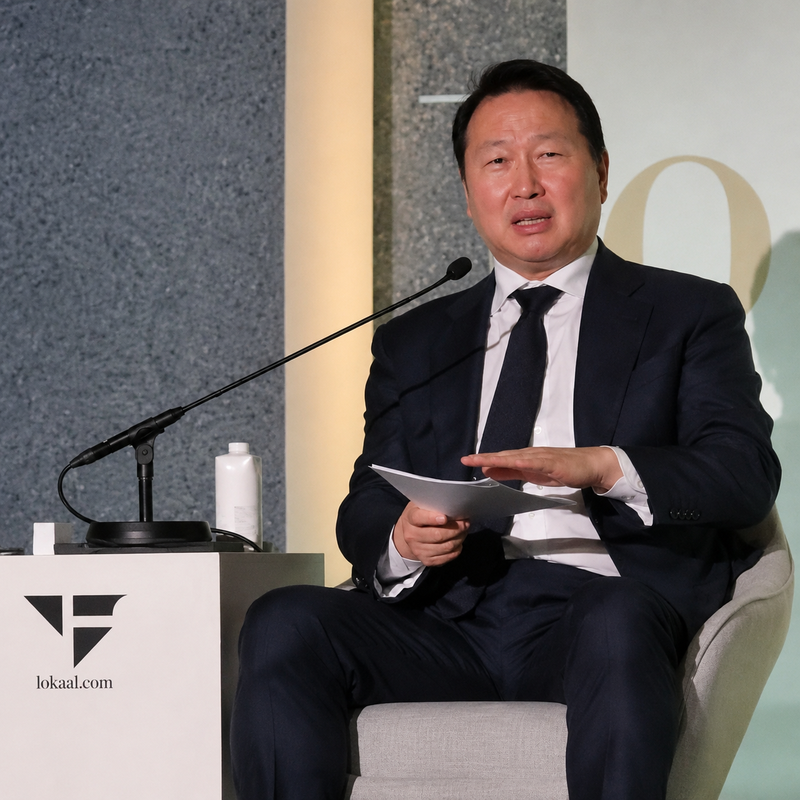
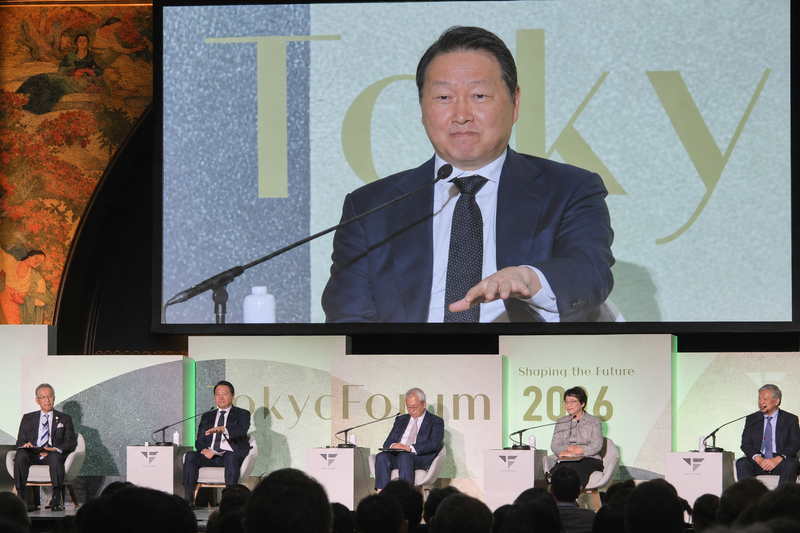
【Financial News, Tokyo—Correspondent Hyejin Seo】SK Group Chairman Chey Tae-won proposed on the 21st creating a platform for companies and universities in South Korea and Japan to jointly develop artificial intelligence (AI) talent. The idea is for companies to participate in university curricula, work on projects with students, and provide opportunities for internships and full-time employment. He urged universities to go beyond introducing AI into classes and redesign exams, degrees, and their operational frameworks from the ground up.
Companies to join university education; internships and hiring to be linked
Chey responded this way to a question from University of Tokyo President Teruo Fujii about ways for companies and universities in South Korea and Japan to cooperate during the Business Leaders Session at Tokyo Forum 2026, held at the University of Tokyo that day.
He cited the five-year integrated bachelor's and master's program, the College of Design, which the University of Tokyo will launch next September. The program combines knowledge from multiple disciplines with design methods to build the capacity to solve social problems. All courses are taught in English, and students complete about six months of internships in their fourth year at companies in Japan and abroad, international organizations, and other institutions, followed by team and individual projects.
Chey proposed that companies join the program for its final two years or so and work on new projects with students. The aim is for students to apply what they have learned to real-world challenges and design solutions and systems themselves. He explained that creating and operating new systems requires not only knowledge but also experience.
He said he would like to bring talent who have completed such a program into SK, adding that NTT would likely have the same need. He went on to say that a platform involving companies and universities from both countries could offer internship opportunities and connect participants with full-time jobs.
He said that working with people from other countries can be difficult because of differences in culture, institutions, and language, but that younger generations who use AI may be better able to navigate these barriers. He also mentioned social innovators and startup founders as groups to develop jointly. Since solving social problems is costly in both countries, he said, talent is needed to find new solutions.
Chey said that an MBA program in social enterprise, launched about a decade ago with a university in South Korea, had trained hundreds of business leaders, and that expanding this kind of education could bring greater benefits to both countries.
“Exams and degrees should also be reviewed”: learning by tackling companies’ tough problems
Chey stressed that the framework for university education must also change to meet the needs of the AI era. In an “AI-native society,” where people take AI for granted, what is taught and how students are assessed must change as well, he argued.
Referring to exams and degrees, educational content, and how AI is used, he said, “We should not think on the assumption that the current university system will remain unchanged.” He explained that universities need to go beyond adding AI as a tool to existing education and rethink their decision-making structures, operating rules, and required resources.
He said separate education is also needed for young people today, including university students. Unlike generations who will grow up using AI naturally from childhood, young people today need education to adapt to the AI era and learn how to use it, he said.
As an educational task for companies, he cited training staff to operate AI data centers. Chey said he is pursuing the construction of AI data centers with a capacity of about 5 gigawatts (GW) in South Korea and is also advancing a training program to develop specialists who can operate the facilities.
He also shared employment results from a separate AI services training program. Chey said that about 80% of the first cohort of around 300 graduates from the approximately five-month course, which teaches participants to apply AI technology to real services, had found jobs.
As an example of problem-solving-focused education, he introduced SK AIGEN. The program provides participants with financial support and offers two years of full-time training. Participants form teams and tackle difficult problems that SK actually faces, among other challenges. As they work to solve them, they learn the knowledge they need and design solutions themselves.
Chey explained that after completing the program, participants can take jobs at SK or other companies or try starting their own businesses. He also stressed the importance of clarifying who they are and what they want to do in the future while they are in the program. “I believe these unconventional approaches allow people to think much more freely,” he said, underscoring the need for education that encourages people to think for themselves about how to use AI and solve problems.
[email protected] Hyejin Seo Reporter