“Wear an Apron and Keep Your Ears Visible” ... AI Cheating Reshapes University Essay Exam Rooms
- Input
- 2026-11-21 14:46:05
- Updated
- 2026-11-21 14:46:05
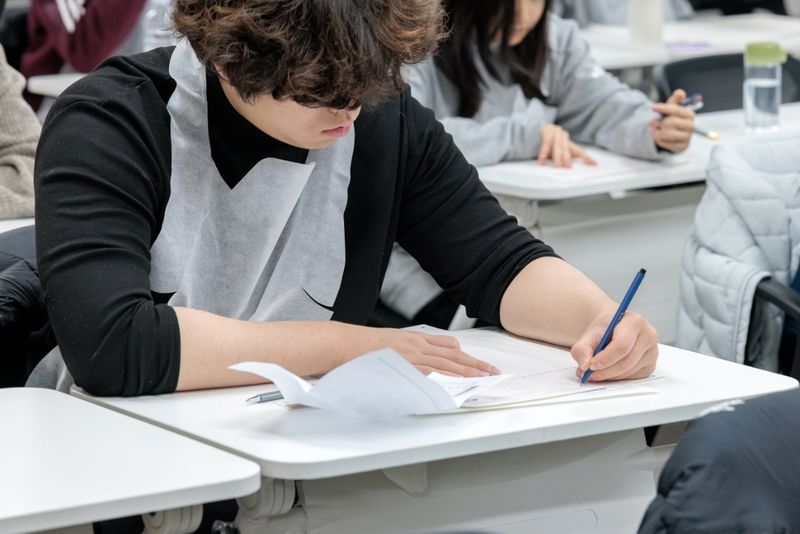
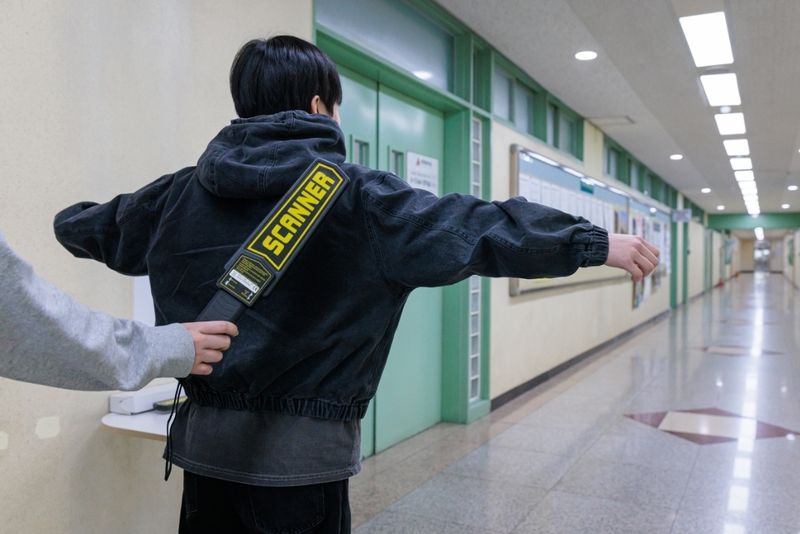
With university-specific essay and oral exams starting on the 21st, the first weekend after the College Scholastic Ability Test (CSAT), aprons even appeared in exam rooms.
To prevent cheating using electronic devices such as smart glasses, some universities have begun requiring test-takers to wear aprons or putting stickers on their clothing buttons. Universities are tightening exam supervision, even restricting clothes with buttons and the wearing of earplugs.
According to universities on the 21st, Kyung Hee University required all test-takers to wear disposable aprons for its 2027 early-admission essay exam, which is being held through the 22nd. The measure was introduced for the first time this year, and those who refuse to wear an apron may be removed from the exam room.
Smart glasses are also being checked. Proctors inspect test-takers' glasses before the exam begins, and if they suspect a test-taker is wearing smart glasses during the exam, the glasses are to be checked only after the exam ends. Proctors simply observe during the exam and conduct the check after collecting the answer sheets. If a test-taker refuses an inspection, the proctors report it to the emergency response team for cheating.
A proctor accompanies any test-taker who uses the restroom during the exam. A metal detector placed outside the restroom is used to check before and after restroom use whether test-takers are carrying electronic devices such as mobile phones and wireless earbuds. Test-takers must turn off their mobile phones and put them in their bags immediately after entering the exam room. Carrying a communications device that has not been turned off, or using one during the exam, is treated as cheating.
Sogang University banned bringing devices capable of taking pictures or recording into exam rooms—including AI smart glasses, button cameras, camera pens, and modified correction tape or writing instruments—in its “Notice on Preventing Cheating with AI and Electronic Devices in University-Specific Exams.” It also asked test-takers not to wear clothes with buttons on the upper body or sleeves. The university plans to conduct rounds of inspections in some exam rooms using equipment designed to detect recording devices.
Dongguk University required test-takers to put stickers on the buttons of their clothes, as it did for the CSAT. Sookmyung Women's University banned earplugs and required test-takers to tie their hair back so their ears would be visible.
The Ministry of Education has also established an emergency response team to address cheating in university-specific exams.
On the 20th, the Ministry of Education said it would form an “Emergency Response Team for Cheating in University-Specific Exams” together with the Korean Council for University Education (KCUE) and universities administering such exams. The team will operate until the 2027 university-specific exams have concluded, sharing measures to prevent cheating and cases in which cheating was detected.
The Ministry of Education also reviewed measures to address cheating with smart devices at 46 universities that administer university-specific exams, together with the KCUE. It shared response measures used in the CSAT and cases of cheating detected there, and had universities share measures of their own. It asked universities to respond firmly and strengthen sanctions if cheating using smart devices is detected in university-specific exams.
[email protected] Lee Bomi Reporter