“Is Something Strange About This Painting?”... Indie Games’ Imagination Shone [G-STAR 2026]
- Input
- 2026-11-21 14:29:23
- Updated
- 2026-11-21 14:30:39
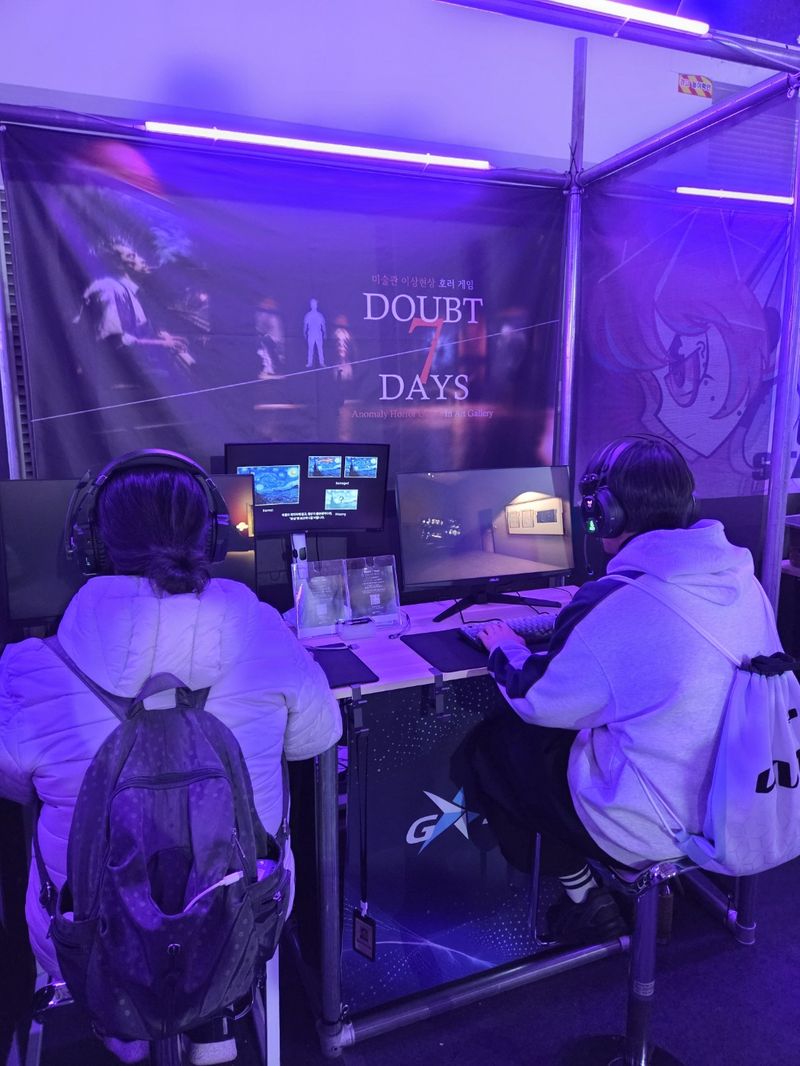
I looked closely at Van Gogh’s masterpiece, “The Starry Night.” It was a familiar painting, but something seemed different. The reporter’s assignment was to find anomalies appearing in the works on display. I checked for anything unusual in the paintings and for any parts that had been damaged or had gone missing, then wrote a report. Worried I might miss even the smallest change, I found it hard to take my eyes off the painting.
“Doubt Seven Days,” which I tried out on the 21st at the G-STAR Indie Showcase 2.0: Galaxy, an indie game exhibition space in the second exhibition hall of BEXCO in Busan, is an anomaly horror game set in an art museum. The protagonist, a museum guard, must find subtle changes appearing in the artworks on display over the course of a week, from Monday to Sunday. By putting well-known artworks front and center, the game sets itself apart from typical hidden-object games. The vaguely eerie atmosphere of the closed museum and the rule that a mistaken judgment sends players back to the beginning added tension even to the short playtime.
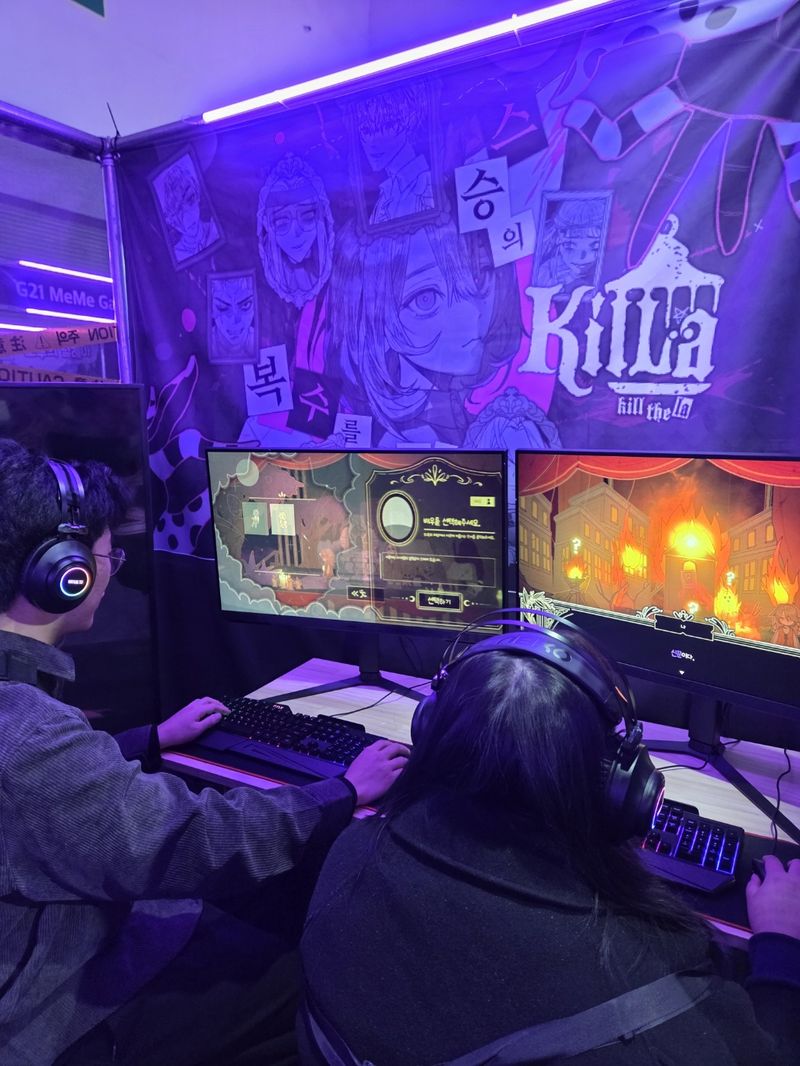
“KILLA,” a detective adventure game developed by Geomgyuldan, has players track down a culprit by following the mentor’s last words. The protagonist, “Valhalla,” investigates suspects whose names contain “ra” in order to find the person who killed the mentor. Players must enter suspects’ memories, gather clues, infer the causes and consequences of the case, and complete a puppet show. Unlike a visual novel that simply has players read dialogue, it also incorporates elements that let them explore the map and solve puzzles. A Geomgyuldan representative said, “It is a visual novel, but it has many elements that let players explore the map themselves or solve puzzles,” adding, “We currently expect at least 14 endings.” An estimated first playthrough takes 10–15 hours, and the game also offers multiple playthroughs.
Hypercent’s “Backroom Cleaners” turns familiar horror-game conventions on their head. It is set in the internet urban legend The Backrooms, known for its endless corridors and bizarre spaces. While players in earlier Backrooms games had to flee from monsters, here they seek them out and hunt them instead. The monsters, once objects of fear, become targets for the player to attack. Combining third-person shooter (TPS) gameplay with roguelike elements, the game lets players fight as one of four characters, each with unique abilities. It also introduces an “augmentation” system that grants new abilities during play. Up to four players can team up, but the game can also be played solo. A Hypercent representative said, “Unlike other Backrooms games, which have a lot of elements involving running away or feeling afraid, we instead emphasized the satisfaction of taking down enemies.”
The sound of tapping on a keyboard has also become a game concept. “Keycap Keycap!” is an ASMR game that uses keyboard typing sounds. Pressing a keycap produces a different sound depending on its material, and players can use the rewards they earn to collect new keycaps or upgrade their abilities.
While major game companies at this year’s G-STAR put forward dazzling graphics and expansive worlds, indie developers competed with distinctive gameplay and original stories. A total of 106 development companies from around the world took part in this year’s G-STAR Indie Showcase.
[email protected] Jang Min-kwon Reporter