“Father, I Can't Back Down This Time” Chung Mong-koo Defies Chung Ju-yung... That Night, Hyundai Motor Company's Fate Was Turned Upside Down [Businessman X-File]
- Input
- 2026-11-23 05:00:00
- Updated
- 2026-11-23 05:00:05
[Businessman X-File]It is a dopamine-fueled business true-story series that strips away stiff success myths and vividly uncovers, like a movie, the frenzied gambits and hidden stories behind business titans. Through astonishing decisions and raw scenes of confrontation, it explores the real “decisive moments” that built today’s giant corporations.
Dates of events:September 1991: Galloper unveiled; 1998: Kia Corporation acquired; 2003: Opirus quality inspection; January 2010: first blast furnace at the Dangjin steel plant ignitedLocation: Hyundai Precision’s Ulsan plant, Hyundai Motor Company’s Ulsan plant, Kia Corporation production plants, Namyang Research Institute, Hyundai Steel Dangjin steel plantStakes:Acquisition of Kia Corporation and its business turnaround; 5.84 trillion won investment in the construction of an integrated steelworks in DangjinKey terms:Chung Mong-koo, Chung Ju-yung, Hyundai Galloper, acquisition of Kia Corporation, quality management, hands-on management
Scene 1. “Your Uncle Already Has a Car Company—Why Make Cars Too?” The Son Who Persuaded Chung Ju-yungIn 1970, Chung Mong-koo worked as a parts section manager at Hyundai Motor Company’s Seoul office, gaining hands-on experience. He drove trucks loaded with parts around the country with employees and heard customers’ complaints firsthand. Wearing a navy jacket and combat boots, he roamed the factories and sometimes grilled pork belly with employees over a metal drum. One anecdote has it that after working late, he would spend the night at a colleague’s home.In the late 1980s, Chung Mong-koo proposed a new business idea to his father, Hyundai Group founder Chung Ju-yung: making cars directly at Hyundai Precision. The group already had Hyundai Motor Company, led by his uncle Chung Se-yung.
Chung Ju-yung is said to have asked why they wanted to produce cars separately when Hyundai Motor Company already existed. Chung Mong-koo argued that since Hyundai Motor Company focused on passenger cars, Hyundai Precision (now Hyundai Mobis) could broaden its business by making four-wheel-drive vehicles. Chung Ju-yung reportedly accepted his son’s proposal.
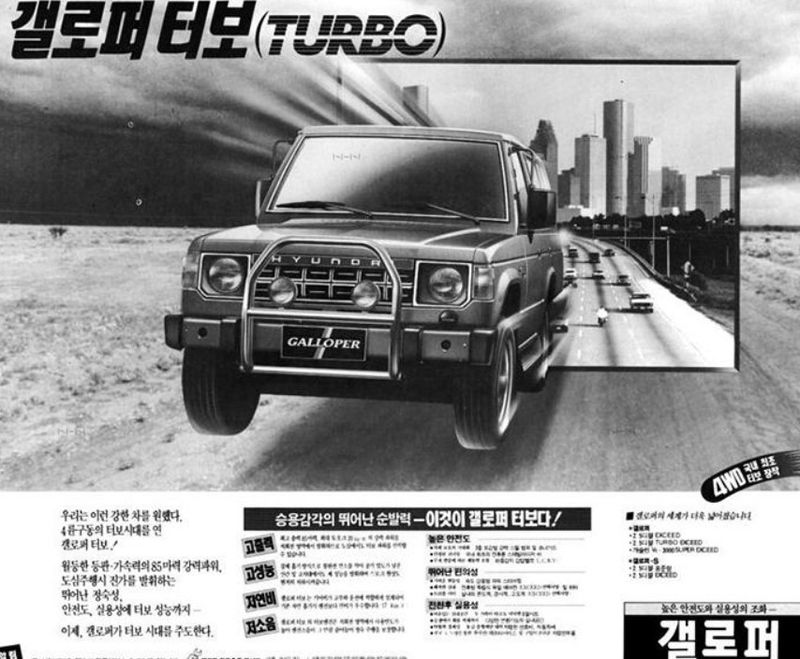
Hyundai Precision unveiled the Galloper in September 1991, based on Mitsubishi’s Pajero. About five months after its launch, in February 1992, the Galloper became Korea’s top-selling jeep-style passenger vehicle, and in 1997 its cumulative production surpassed 200,000 units.
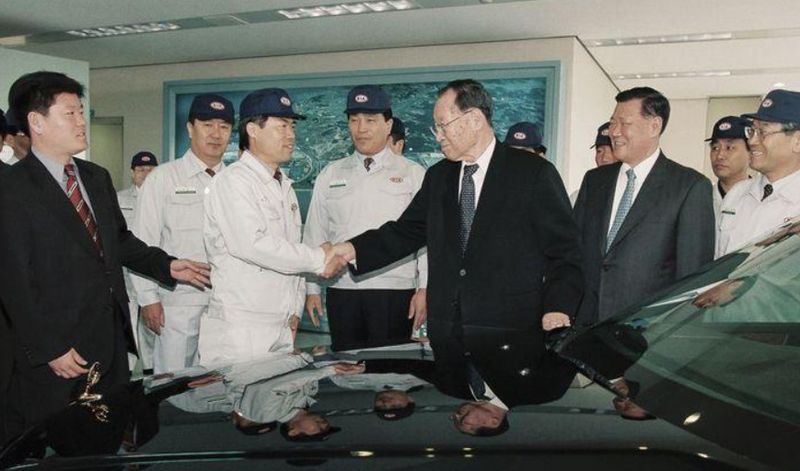
For the first three months after the acquisition, Chung Mong-koo visited Kia Corporation’s factories two or three times a week. He toured the Sohari, Hwaseong and Gwangju plants, inspecting production lines and checking everything from engine and foundry plants to boiler piping facilities. At quality-control meetings, he reportedly had problematic parts brought in and pressed for the cause to be identified.
He expanded the sharing of parts between Hyundai Motor Company and Kia Corporation and reorganized production facilities. In December 1998, he said he would make Kia Corporation profitable by 2001.
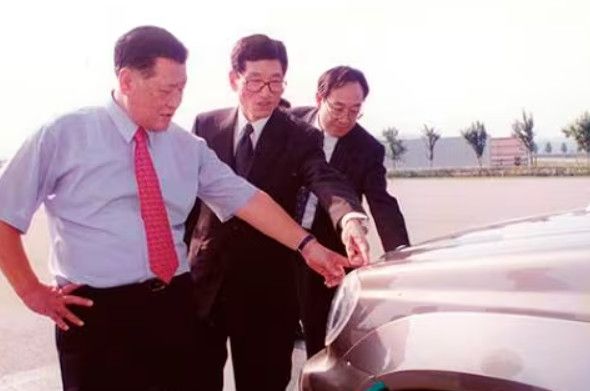
The results came faster than expected. Kia Corporation returned to profitability in 1999, posting net income of 135.7 billion won; the following year, net income rose to 330.7 billion won. Debt restructuring and a market recovery also played a role, but the acquisition of Kia Corporation laid the groundwork for Hyundai Motor Group to expand its production capacity.Scene 3. “Why Is the Door Coming Off?” What Happened After He Opened It 20 TimesAt Hyundai Motor Company’s Ulsan plant in 1999, Chung Mong-koo personally inspected the sliding door of a completed Grace van. According to an anecdote, after he forcefully opened and closed the door around 20 times, it came off its rail. Chung Mong-koo reportedly instructed staff on site to improve quality.
At the time, Hyundai Motor Company had to overcome distrust of its quality in the U.S. It entered the U.S. market in 1986 with the Excel and gained popularity, but consumer confidence fell because of durability problems. U.S. sales had dropped to around 90,000 vehicles by 1998.
After becoming chairman of Hyundai Motor Company in 1999, Chung Mong-koo made quality improvement a key management goal. In 2001, he established a quality monitoring center at the company’s headquarters in Yangjae-dong, Seoul, to focus on managing customer complaints and vehicle defects at home and abroad. His insistence on personally checking even minor quality issues led to an incident that changed an export schedule.
Chung Mong-koo ordered the engineers to fix it. Applying a quieter engine would take about 40 days, which meant the export schedule would also have to be delayed. But he put quality improvement first, and the Opirus’s U.S. export schedule was ultimately postponed.
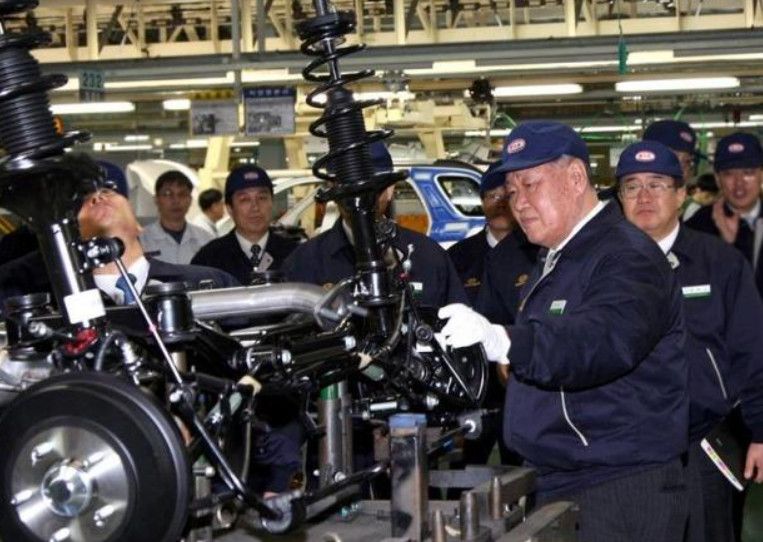
This quality-focused management continued in the years that followed. On March 18, 2008, he visited Kia Corporation’s Gwangju plant and personally inspected the equipment on the production line for the new “AM” (Kia Soul) and the quality of pilot-production vehicles.
During a visit to the Alabama plant in August 2010, the plant manager was unable to properly open the hood of the new Hyundai Sonata. The manager was replaced that September.
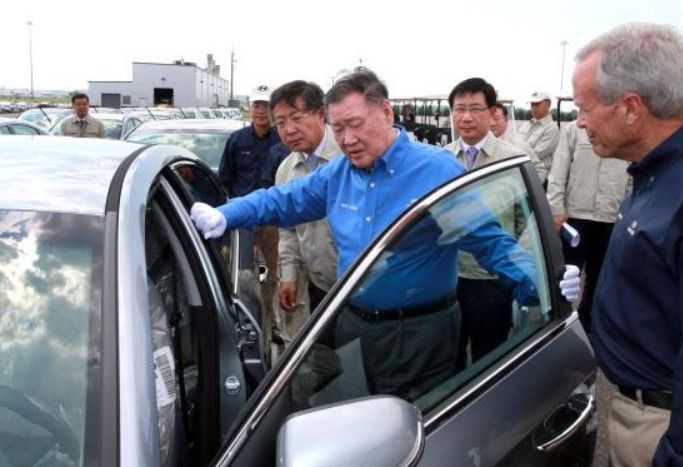
[X-File: Results]After entering the automotive business with the launch of the Galloper in 1991, Chung Mong-koo acquired the troubled Kia Corporation in 1998 and succeeded in turning it profitable the following year. Quality improvements also yielded results. In 2004, Hyundai Motor Company ranked fourth among non-luxury brands in J.D. Power’s U.S. Initial Quality Study, and in 2010 Hyundai Motor Group ranked fifth in global vehicle sales. But it was not all success. His hard-line management style—delaying exports over minor defects and abruptly replacing plant managers—put considerable pressure on the organization. Even so, Chung Mong-koo pushed ahead with construction of the integrated steelworks in Dangjin, investing 5.84 trillion won, and personally lit the first blast furnace in January 2010. It was the moment his father Chung Ju-yung’s long-held wish became reality.
If Chung Mong-koo had focused solely on increasing production while tolerating defects, the path by which Hyundai Motor Company—once dismissed in the U.S. as a “cheap car”—grew into a global automotive group might have been different. [email protected] Han Seung-gon Reporter