‘Jeju Visa-Free Entry Abolition’ Goes to National Assembly... Jeju Province and Tourism Industry Lobby Lawmakers Across Party Lines
- Input
- 2026-11-21 08:25:52
- Updated
- 2026-11-21 08:25:52
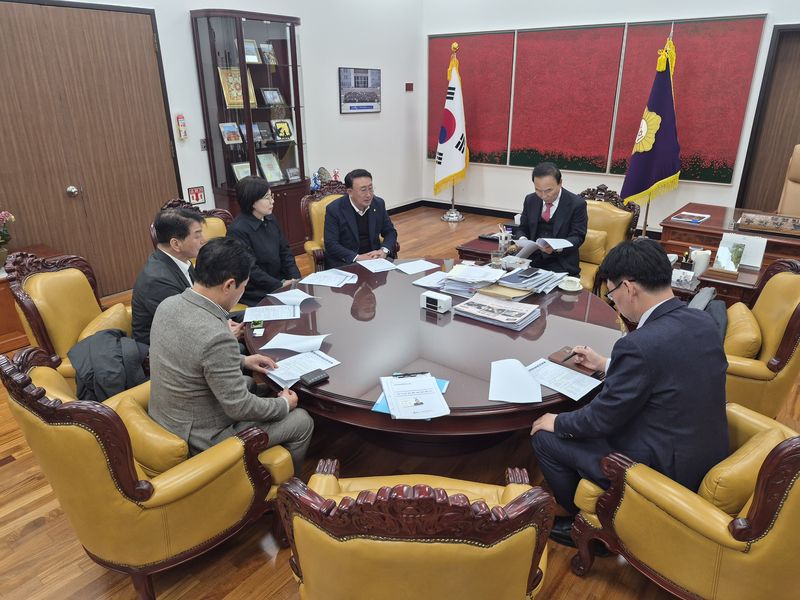
【Financial News Jeju = Jeong Yong-bok】 After a bill to abolish the special provision allowing foreigners to enter Jeju visa-free was referred to a standing committee of the National Assembly, Jeju Province and the tourism industry directly visited lawmakers from both the ruling and opposition parties to call for its withdrawal. The government has also announced measures to strengthen oversight to prevent illegal stays and unauthorized departures from Jeju, making it a key issue whether the effectiveness of immigration controls can be improved while preserving the openness of Jeju’s tourism industry.
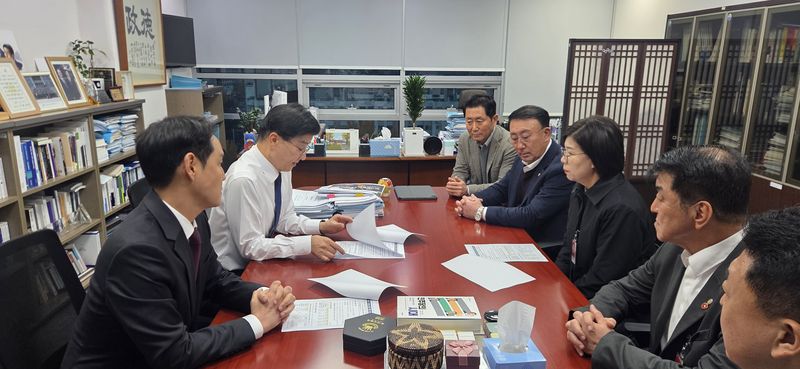
According to Jeju Province and the Jeju Tourism Association on the 21st, a delegation including association chair Kang Dong-hun, Hwang Gyeong-seon, director of Jeju Province’s Tourism and Exchange Bureau, and Jeju Tourism Organization President Moon Seong-jong visited the National Assembly on the 19th to urge the withdrawal of a bill abolishing the visa-free entry provision under the Jeju Special Act.
With Rep. Kim Han-kyu of the Democratic Party of Korea present, the delegation met with Rep. Lee Hae-sik, a member of the National Assembly’s Security and Public Administration Committee. It then met with National Assembly Deputy Speaker Park Deok-heum, conveying concerns in Jeju about the bill and explaining the need to maintain the system.
Rep. Song Eon-seok of the People Power Party, the bill’s lead sponsor, was absent, so the delegation could not meet with him directly. It delivered materials making its case to Song’s office and also visited the offices of Reps. Jung Chun-saeng and Kwon Young-jin to state that the visa-free entry provision should be maintained.
The visit to the National Assembly was a response to the issue of abolishing the visa-free entry provision entering the legislative process.
An amendment to the Jeju Special Act introduced on the 13th by 10 People Power Party lawmakers, including Rep. Song Eon-seok, would remove the special provisions related to foreigners’ visa-free entry to Jeju. The amendment targets Articles 197 through 203 of the Jeju Special Act.
The bill was referred to the National Assembly’s Public Administration and Security Committee on the 16th. The amendment has not yet been finalized and must go through further legislative procedures, including review by the committee with jurisdiction.
Jeju’s current visa-free entry system is a special provision that allows foreign nationals entering through Jeju’s airports or ports for tourism and other purposes to enter without a visa, subject to certain requirements. However, nationals of countries designated by the Minister of Justice, among others, are excluded. Those required to obtain permission to expand their permitted area of stay must get separate authorization to travel to areas outside Jeju.
The amendment introduced by Rep. Song cites cases in which the visa-free entry provision has been exploited for illegal stays and unauthorized employment, as well as safety concerns over crimes involving foreign nationals and violations of basic public order, as reasons for abolishing it.
Jeju Province and the tourism industry, by contrast, say the visa-free entry provision has played an important role in Jeju’s international free city policy and in developing the foreign tourism market. They are concerned that scrapping it could make entry less convenient for foreign tourists and affect the local tourism industry and consumer market.
Foreign tourists are accounting for a growing share of Jeju’s tourism market and their spending is increasing. According to Jeju Province, 11.717 million tourists visited Jeju from January through October this year, up 1.9% from the same period last year. The number of domestic tourists fell 0.6% to 9.489 million, while the number of foreign tourists rose 14.2% to 2.228 million.
A similar gap was seen in tourist spending. From January through September this year, tourists’ card spending in Jeju totaled 2.0512 trillion won, up 3.4% from the same period a year earlier. Spending by domestic tourists fell 4.8% to 1.5311 trillion won, while spending by foreign tourists rose 38.7% to 520.1 billion won.
The increase in foreign tourists is helping support visitor numbers and spending in Jeju’s tourism market. However, not all foreign tourists use Jeju’s visa-free entry provision, so the direct economic impact of abolishing the system must be analyzed separately by factors such as visitors’ countries of origin and spending patterns.
Jeju Governor Wi Seong-gon also emphasized at the Jeju Tourism Strategy Meeting on the 16th, “The bill should be withdrawn,” adding, “I will persuade the government and the National Assembly based on substantive evidence.”
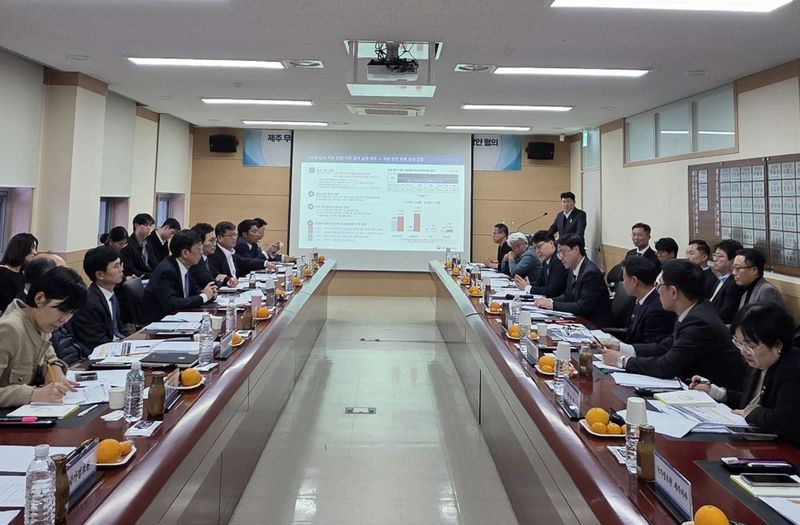
Jeju Province has commissioned the Jeju Research Institute to study the economic effects of the visa-free entry system. It plans to use the findings as supporting evidence during future National Assembly deliberations to explain the system’s impact on the tourism industry and local economy.
Separately from the proposed abolition of the visa-free entry system, the government is pursuing measures to strengthen immigration controls and crack down on illegal stays.
The Ministry of Justice held a joint meeting with relevant agencies at the Jeju Immigration Office on the 19th and decided to consider checking, when domestic flight tickets departing Jeju are issued, whether passengers have permission to expand their permitted area of stay. The aim is to link a check of eligibility to leave Jeju with the ticketing process to prevent unauthorized travel.
Crackdowns will also be strengthened on foreign nationals working or staying illegally, illegal employers and job-placement brokers. The Ministry of Justice said it had operated a 32-member intensive enforcement team in Jeju since October 7 and, by November 17, had identified 450 foreign nationals working or staying illegally and 90 illegal employers.
However, these enforcement figures do not distinguish visa-free entrants from others. Separate verification is needed before enforcement figures for all foreign nationals staying illegally or statistics on crimes involving foreign nationals can be interpreted as direct side effects of the visa-free entry system.
The National Assembly is also expected to weigh these issues in making its decision. Since stronger immigration controls are needed to reduce illegal stays and unauthorized employment, it will be necessary to compare the effects of abolishing the provision with measures to improve oversight while maintaining access to the tourism market.
Jeju Province and the Jeju Tourism Association plan to continue monitoring the bill’s progress in the National Assembly and coordinate their response with tourism-related organizations. The bill’s eventual course is likely to be influenced by assessments of the economic effects of the visa-free entry provision and the state of immigration controls.
[email protected] Jeong Yong-bok Reporter