Anthropic Employee Says “Proved the Riemann Hypothesis”... Could Be a Milestone for AI Singularity if True
- Input
- 2026-11-21 05:09:53
- Updated
- 2026-11-21 05:09:53
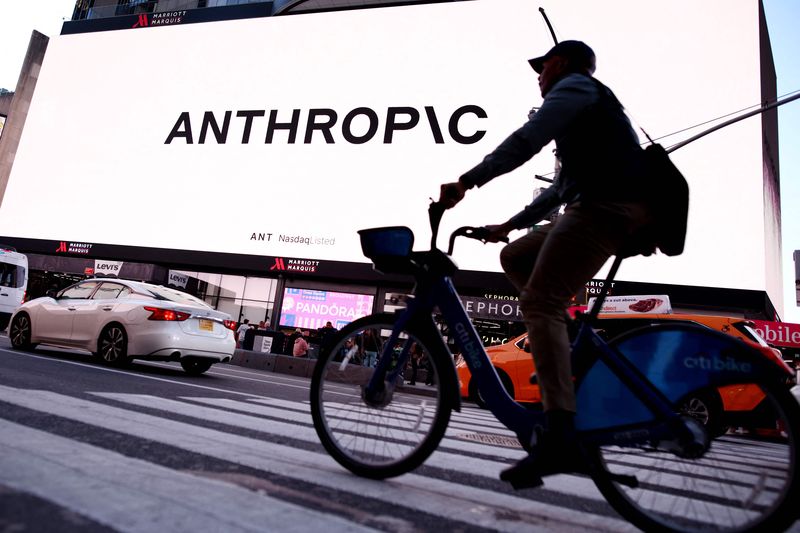
An Anthropic employee claimed on the 20th (local time) to have succeeded in proving the Riemann hypothesis using artificial intelligence (AI), a problem that mathematicians had been unable to solve for 167 years. Extensive scrutiny is expected, and if the proof withstands it, the result could affect everything from mathematical theory to prime-based cryptography and the AI industry.
It could also become one of the decisive milestones showing that AI has made exponential advances and reached the threshold of the technological singularity (Singularity).
The singularity is the point at which machine intelligence surpasses human intelligence and independently produces new knowledge and technologies at a pace humans cannot keep up with.
According to the Financial Times (FT), Levent Alpöge, an Anthropic employee and mathematician, claimed that day to have used the Claude AI model to prove the Riemann hypothesis. The work runs to more than 250,000 pages.
The Riemann hypothesis is a difficult problem concerning prime numbers, described in mathematics as one whose “shadow has guided mathematicians for 150 years.”
The effort to prove the Riemann hypothesis has in fact spanned 167 years, beginning in 1859, when German mathematician Bernhard Riemann published a paper. The Riemann hypothesis concerns the distribution of prime numbers. A prime is a natural number greater than 1 that is divisible only by 1 and itself. For this reason, primes are also called “the atoms of numbers.”
Riemann hypothesized that although the gaps between primes such as 2, 3, 5, 7, 11, 13, 17, 19, 23... widen to 2, 4, and 6 and then sometimes skip dozens of numbers, making them appear disorderly, they are in fact arranged in an orderly way according to precise rules.
This eight-page paper laid the groundwork for a stream of unproven theorems in mathematics. Thousands of papers are said to have been written on the premise that “the Riemann hypothesis is true.” If the hypothesis is proven true, these many unfinished theories will instantly be elevated to mathematical facts.
This could also affect cryptography and mathematical research more broadly, since the RSA cryptosystem, widely used in finance and internet security, deals with the distribution and properties of prime numbers.
The RSA cryptosystem is a security system based on the fact that multiplying two large prime numbers is easy, while factoring their product to recover the original primes from the result alone is extremely difficult.
A proof that the Riemann hypothesis is true would not immediately provide solutions, but it could serve as a basis for new research, and new discoveries could also emerge in the course of working through this proof.
In particular, proving the Riemann hypothesis would mean that AI had found a path that even geniuses had failed to find despite working on the problem for 167 years.
In a post claiming to have proved the Riemann hypothesis, Alpöge admitted that AI had far outpaced him. “Near the finish line, Claude was flying far ahead of me,” he said. “I ended up producing a complete proof (with AI’s help) before I had fully mastered the vast mathematical background surrounding the problem.”
This kind of maximization of mathematical and logical reasoning capabilities could lead to the discovery of new knowledge through better algorithms and improvements to AI architectures.
Some observers say the possibility is now beginning to emerge that AI could reach the singularity, where it upgrades its own intelligence.
However, some argue that because the work was still carried out under human direction, this is not “artificial superintelligence (ASI),” which sets its own goals and finds solutions to problems, and therefore cannot be considered to have reached the threshold of the singularity.
[email protected] Song Kyung-jae Reporter