U.S. Trade Representative Says “Section 301 Probe to Be Wrapped Up by Year-End” ... Concerns Over Additional Tariffs and Investment Pressure on South Korea
- Input
- 2026-11-21 01:42:11
- Updated
- 2026-11-21 01:42:11
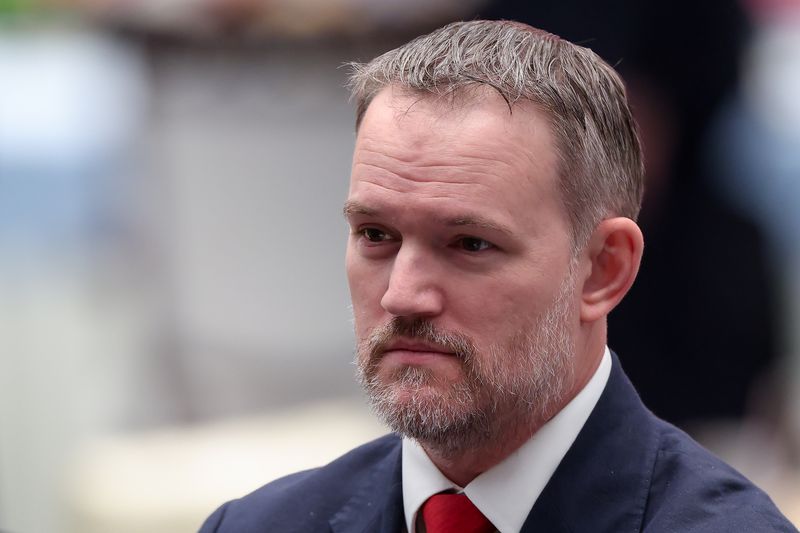
[Financial News] Jamieson Greer, head of the Office of the United States Trade Representative (USTR), said the ongoing Section 301 investigations into major trading partners, including South Korea, would be completed by the end of this year. As the investigations could lead to additional tariffs replacing reciprocal tariffs, they are expected to have significant repercussions not only for negotiations over the U.S.-China tariff truce, which expires next January, but also for South Korea’s investment talks with the United States.
In an interview with Bloomberg Television on the 20th (local time), Greer said the timeline for the ongoing Section 301 investigations was that “they will be wrapped up very soon” and “they will certainly be completed by the end of this year.” He did not, however, provide specifics, such as which countries might face additional tariffs depending on the results.
■ Section 301 probe to be completed this year as a “replacement for reciprocal tariffs” ... Could it be used as leverage to pressure South Korea on investment?
Section 301 of the Trade Act of 1974 is a legal tool that allows the U.S. administration to unilaterally take retaliatory measures, including imposing tariffs, in response to unfair or discriminatory trade practices by foreign countries. After the Supreme Court of the United States ruled the existing reciprocal tariff measures unlawful, the Donald Trump administration launched Section 301 investigations this past March, citing “forced labor” and “overcapacity (structural oversupply)” as grounds for replacing them.
On July 23, the USTR finalized tariffs of 10% to 12.5% on 60 countries in connection with its forced-labor investigation, with a 12.5% rate applied to South Korea. The ongoing overcapacity investigation targets 16 economies, including South Korea, China, Japan, the European Union (EU), India, Mexico and Vietnam.
If the investigation is completed at year-end, South Korea is also expected to come directly within its reach. At a summit in October last year, South Korea and the United States agreed to apply a 15% tariff to South Korean goods exported to the U.S., and the South Korean government has said it confirmed the U.S. position that the tariff rate would not exceed 15%. However, with South Korea’s specific investment plans in the United States not yet finalized, concerns have arisen that the U.S. could use the results of the Section 301 investigation as leverage to compel investment. Trump recently unilaterally announced that South Korea would invest more than $50 billion (about 67 trillion won) in an Alaska liquefied natural gas (LNG) development project, and threatened, “Tell them that if they don’t agree, we’ll double (the tariffs).”
■ “Xi did not raise semiconductor controls ... extension of tariff truce depends on rare earths”
Greer also disclosed some details of this year’s third U.S.-China summit, held the previous day in conjunction with the Asia-Pacific Economic Cooperation (APEC) summit in Shenzhen, China. Asked whether Chinese President Xi Jinping had raised the semiconductor export-control measures against China announced on the 16th by the U.S. Department of Commerce’s Bureau of Industry and Security (BIS)—which restrict remote access to AI semiconductors through overseas data centers—Greer replied, “He did not raise it,” adding, “President Trump and President Xi wanted to maintain their relationship.”
Addressing China’s warning of retaliation, Greer dismissed it, saying, “The recent measures are only intended to close loopholes in existing policies, not impose a blanket ban, and they target 20 to 25 countries, not just China.” He added, “China has virtually no grounds to retaliate, and if it does, that would be an excessive and inappropriate response.”
According to Greer, the two leaders reviewed the implementation of existing agreements, including those on rare earths, and plans for putting the “trade committee” into operation at the summit. President Trump urged China to increase its purchases of agricultural products and honor its rare-earth commitments. On whether to extend the U.S.-China “tariff truce,” which expires next January, Greer stressed, “Much of it depends on whether we receive the necessary volumes of rare earths at the pace we need.” He also predicted that implementation of the tariff cuts on $30 billion (about 40.2 trillion won) worth of non-sensitive goods being pursued through the trade committee would be completed by year-end. The United States has implemented about half of the measures, while China has yet to complete its part.
[email protected] Park Ji-hyeon Reporter