Anthropic Jumps 17%, but AI Stocks Are in the Red—Why?
- Input
- 2026-11-20 19:48:52
- Updated
- 2026-11-20 19:48:52
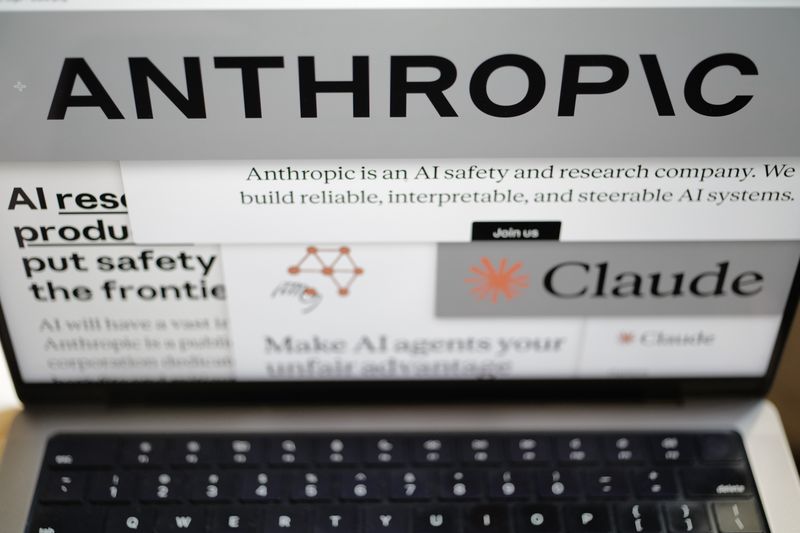
[Financial News] Artificial intelligence (AI) company Anthropic rose more than 17% above its offering price on its first day of trading on the U.S. stock market, but semiconductor stocks including Nvidia and AMD fell across the board. In South Korea, Samsung Electronics and SK hynix also plunged in tandem, sending the KOSPI below the 4,900 mark in a single day. Analysts say the losses deepened as investors sold existing AI-related stocks to buy Anthropic shares.
According to the Korea Exchange (KRX) on the 20th, the KOSPI closed at 4,869.96, down 267.93 points (5.21%) from the previous trading day. Foreign investors and institutions net sold 1.1373 trillion won and 953.5 billion won, respectively, on the main board, while individual investors net bought 1.6053 trillion won. The KOSDAQ also closed down 5.71% at 645.68. Sell-sidecar trading curbs were triggered in succession on both markets during the session.
Samsung Electronics closed the regular session at 183,100 won, down 7.01%, while SK hynix closed at 1,113,000 won, down 5.92%. After regular trading ended, Samsung Electronics traded at 183,200 won and SK hynix at 1,111,000 won.
Earlier, on the 19th local time, Anthropic began trading on the New York stock market at $111.50, 34.3% above its $83 offering price. It rose as high as $115 during the session but pared its gains, closing up 17.1% from its offering price. Nvidia and Micron fell 3.3% and 2.1%, respectively, that day. AMD, which was the subject of a short-selling report, plunged 7.7%.
Analysts say demand from investors selling existing AI-related stocks to buy Anthropic shares on the open market added downward pressure on share prices. They noted that Anthropic’s listing demonstrated investor demand for AI companies, but concerns remained about how quickly the costs of infrastructure such as data centers could be recouped.
There have also been cases in which the KOSPI rebounded after weakening around major initial public offerings (IPOs). An analysis of eight major IPOs in the past found that the KOSPI fell an average of 3.0% over the 10 trading days before listing. It rose an average of 2.8% over the 20 trading days after listing, gaining in six of the eight cases.
Ha Jang-gwon, an analyst at Hanwha Investment & Securities Co., Ltd., said, “In past major IPOs, downward pressure was concentrated before and around the listing, after which the KOSPI tended to rebound,” and analyzed, “This time, financial conditions are worse than they were when Space Exploration Technologies Corp. (SpaceX) went public, making increased volatility in market flows inevitable.”
Concerns also remain about tighter U.S. restrictions on semiconductor exports to China and further tightening by the Federal Reserve System (Fed). Joain, a researcher at Samsung Securities Co., Ltd., forecast that “volatility could persist for the time being due to domestic and external uncertainties.”
[email protected] Bae Han-geul Reporter