Nuclear Submarine Contract Hinges on Reactor Integration and Maintenance Infrastructure: Tender Ships and Docks
- Input
- 2026-11-24 06:59:00
- Updated
- 2026-11-24 06:59:04
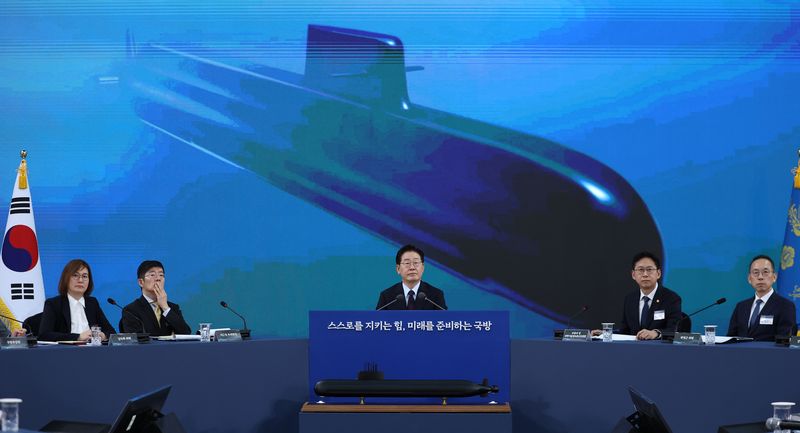
[Financial News] The project to build an 8,000-ton Korean-type nuclear-powered submarine is set to move forward in earnest next year, when a contractor is selected. While the shipbuilding industry sees HD Hyundai Heavy Industries and Hanwha Ocean, both of which have experience building submarines, as leading contenders, observers say the key will be their ability to integrate the reactor with the hull and provide maintenance infrastructure, including submarine tenders and radiation-shielded special docks.
HD Hyundai’s “Nuclear-Powered Ship Design Certification” vs. Hanwha Ocean’s “Basic Design for a Nuclear Submarine”
According to sources in the shipbuilding industry and political circles on the 24th, the Jang Bogo N Project to introduce Korean nuclear submarines faces numerous challenges, from construction to building the necessary infrastructure. As a result, whether a company has the capacity to handle these challenges is expected to be a key consideration in selecting the hull design and construction contractor.A primary requirement is the ability to integrate systems so that the nuclear propulsion system can be installed in the hull. Under the arrangement, the government will directly procure the power source—a small modular reactor (SMR)—and key armaments, then supply them to the shipbuilders as government-furnished equipment. The reactor and armament designs could create variables in the hull design and construction process.
Moon Geun-sik, a special appointment professor at Hanyang University’s Graduate School of Public Policy who formerly headed the Navy Headquarters’ nuclear submarine project team, said at a public hearing on the Nuclear Submarine Special Act held by the National Defense Committee of the National Assembly on the 18th, “The reactor’s size, weight, output and maintenance requirements affect the vessel’s design, while the hull’s space and operational requirements, in turn, constrain the reactor design.” He added, “Nuclear research institutes and industry need to jointly manage the technical requirements between the reactor and the hull.”
HD Hyundai Heavy Industries has received recognition for its reactor-hull integration technology. It obtained Approval in Principle (AiP) from the American Bureau of Shipping (ABS) for a 15,000-TEU nuclear-powered ship design model, and has also signed a contract to supply key equipment for the Natrium reactor, a fourth-generation sodium-cooled fast reactor (SFR) developed by U.S. SMR company TerraPower.
Hanwha Ocean has no record of developing SMR technology in-house, but it has built 17 submarines since its days as Daewoo Shipbuilding & Marine Engineering Co., Ltd. In terms of construction record alone, it is ahead of HD Hyundai Heavy Industries. Hanwha Ocean has also been tasked with the basic design of a nuclear submarine alongside the Agency for Defense Development (ADD), and is considered to have systems integration capabilities independent of SMR technology.
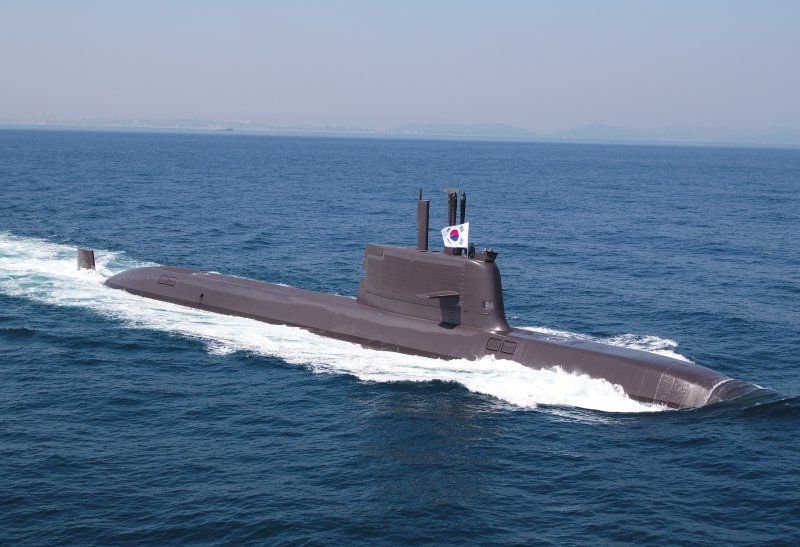
Both companies are strong contenders in tender-ship construction, but their special-dock capabilities remain uncertain
Another challenge is maintenance infrastructure, including submarine tenders and radiation-shielded special docks.Submarine tenders are not included in the Jang Bogo N plan, but some in academia argue they are needed for emergency repairs to nuclear submarines at sea. Both companies have strong track records in this area. HD Hyundai Heavy Industries has delivered the 10,000-ton-class fleet support ship Soyang to the South Korean Navy and has built a 23,000-ton-class fleet support ship for New Zealand. Hanwha Ocean is building a Soyang-class fleet support ship and has delivered the 5,600-ton-class submarine rescue ship Ganghwado. It has also won contracts for large fleet support ships for the United Kingdom and Norway.
HD Hyundai Heavy Industries handles depot-level maintenance for ROKS Yun Bong-gil, ROKS Sohn Won-yil, ROKS Jeong Ji and ROKS Ahn Jung-geun. Hanwha Ocean handles depot-level maintenance for Jang Bogo-class submarines as well as Indonesian submarines. Whether the companies can provide radiation-shielded docks for nuclear submarine maintenance is a separate question. Neither appears to be taking steps in that direction. HD Hyundai Heavy Industries has announced plans to expand its submarine facility, while Hanwha Ocean has established a Jang Bogo N development team and is recruiting nuclear energy specialists.
There is also a possibility that maintenance infrastructure will be developed separately from the construction of nuclear submarines. In other words, the shipbuilder responsible for the submarine hull may not be tasked with all of the maintenance infrastructure.
[email protected] Kim Yun-ho Reporter