“If You Keep Watching YouTube Shorts, I’ll Throw the Phone Away!” Mom’s Nagging Was a Cry to Protect the Brain [Smart Wellness]
- Input
- 2026-11-22 06:00:00
- Updated
- 2026-11-22 06:00:06
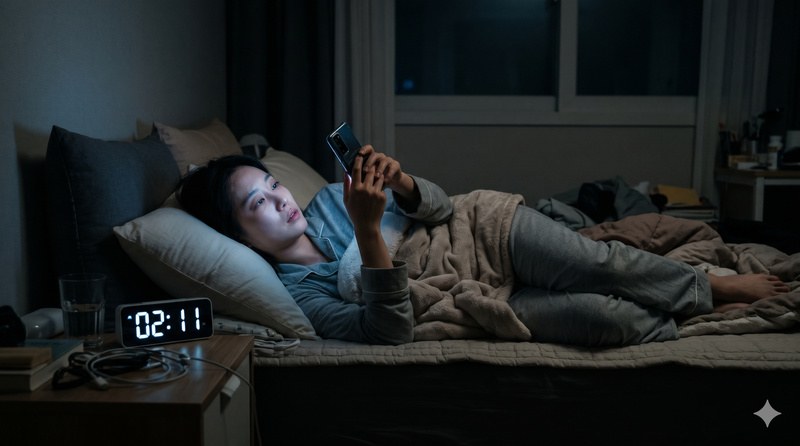
[Financial News] “Mom’s nagging to stop watching YouTube Shorts was not mere meddling. When our brains are repeatedly exposed to intense stimuli lasting less than a minute, they can become hooked on ‘supernormal pleasure.’ As a result, they may stop responding to mild stimuli or fall into brain fog, feeling dazed as if their heads were filled with fog.”
“A dopamine rush”: Short-form videos stay fun no matter how many times you watch them ... the paradox of feeling dazed when you stop
People often look at the clock while watching short-form videos on TikTok, Reels, or YouTube Shorts and are startled by how much time has passed. Before they know it, far more time than expected has gone by, making the thought, “I’ll watch for just 10 minutes,” seem laughable.
We find it hard to stop watching short-form videos because the brain releases dopamine—which provides energy, interest, motivation, and more—while we watch, giving us a sense of “supernormal pleasure.” Rapidly swiping through videos without knowing what the next one will be intensely stimulates our desire for an “unpredictable reward.”
The problem is that when people watch short-form videos for long periods and frequently, their brains become so accustomed to supernormal pleasure that they stop responding to mild stimuli. They may also become bored and lethargic, and experience brain fog that leaves them feeling dazed, as if their heads were filled with fog.
According to Dopamine Nation, a book by Dr. Anna Lembke, a professor of psychiatry at Stanford University in the United States, when supernormal pleasure pours in without pause, the brain triggers down-regulation, forcibly reducing the number of dopamine receptors in order to maintain homeostasis. This is why brain function can stall, leading to chronic lethargy or reduced concentration.
A “10-second brain” with no need for long-term memory ... signs of forgetfulness also emerge
Repeatedly watching short-form videos can also critically deplete the brain’s working memory. Working memory temporarily holds and processes new information. But when audiovisual information from completely different contexts arrives at short intervals, such as every 10 or 15 seconds, the hippocampus and prefrontal cortex do not have enough time to store it as long-term memory.
Neuroscientists say that cognitive functioning can stall when information-processing overload pushes cognitive load past its threshold. This underlies symptoms of forgetfulness, such as forgetting what one was just about to say or struggling because a word does not immediately come to mind.
Ultimately, brain fog caused by excessive immersion in short-form videos can be described not as a matter of individual willpower but as a physical power outage in the brain’s circuits brought on by digital overstimulation. To wake the brain back up, people need to make an effort to switch off their phones and spend time in a stimulus-free daily routine.
Activities that can be done without screens, such as cooking, walking, doing laundry, and meditating, or simple, predictable activities, can bring the brain’s overheated networks to a halt and activate its ability to organize its thoughts on its own.
[email protected] Kim Hyeon-seon Reporter