Next Year's Bar Exam May See Post-Exam Checks of Unusually High Scorers... Full Review of Five Years of Answers Also Under Discussion
- Input
- 2026-11-20 14:25:29
- Updated
- 2026-11-20 14:25:29
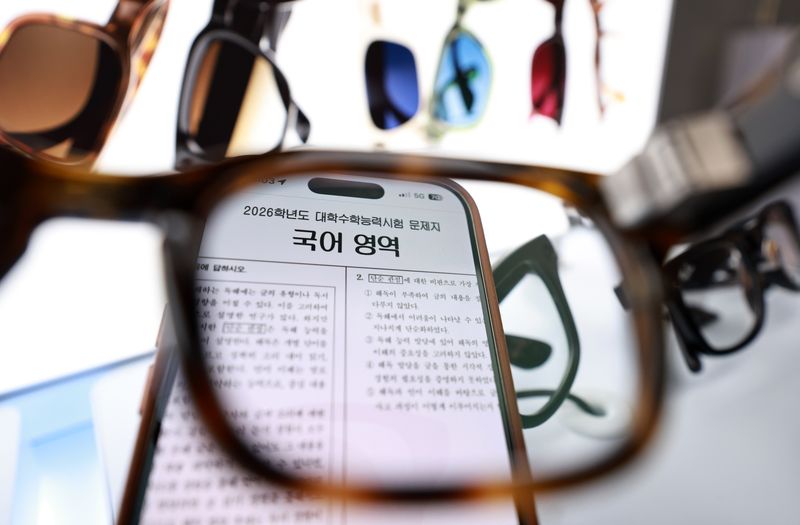
[Financial News] The Ministry of Justice is considering post-exam investigations of unusually high scorers to detect cheating using artificial intelligence (AI) at the 16th bar exam, to be held next January. It is also discussing a plan to examine all essay answers from the bar exam over the past five years for evidence of AI use.
According to legal sources on the 20th, the Ministry of Justice is considering investigating after the exam candidates who score unusually higher than other examinees on the 16th bar exam, scheduled for January 12–16 next year. The aim is to check whether they cheated using generative AI, smart glasses, ultra-small cameras, and other devices.
A Ministry of Justice official said, “All the measures currently being discussed are still under consideration, and nothing has been decided yet.”
A comprehensive review to determine whether cheating occurred in past exams is also under consideration. One proposal is to analyze with an AI detection program all essay answers from the bar exam over the past five years that are held by the Ministry of Justice. An approach being discussed would statistically analyze features such as awkward sentence structures and the use of particular words found in AI-generated text, then identify cases suspected of cheating.
There are also limitations concerning the accuracy of AI detection technology and the scope of the investigation. For multiple-choice exams, the Ministry of Justice collects only the OMR answer sheets, while examinees take home the test papers containing their working, making post-exam verification difficult. It is also challenging to determine whether cheating actually occurred based solely on AI detection results.
Enforcement at exam sites is also being strengthened. The Ministry of Justice instructs examinees to hand over electronic devices, including smart glasses, before the exam begins, and has proctors patrol the rows of examinees to check whether they have any. Proctors also monitor the use of electronic devices at the front and back of exam rooms and check for devices when examinees use the restroom. The ministry is also considering introducing separate detection equipment, such as radio-wave detectors.
Specific measures are expected to take shape following discussions at a pan-government task force (TF) on responding to cheating, scheduled for next week.
Meanwhile, the Korean Association of Legal Professionals, a young lawyers’ organization chaired by Yonghyun Chae, welcomed the plan to review all essay answers from the past five years in a statement issued that day, while calling for effective investigation methods to be developed.
The association pointed out, “A comprehensive review conducted without specific investigative methods and verification standards could instead end up granting a free pass by suggesting that no cheating occurred.”
The association also stressed that the bar exam consists of multiple-choice, case-based, and record-based sections, and that scores on the multiple-choice section significantly affect whether candidates pass. As a result, it would be difficult to get to the bottom of cheating by examining only essay answers.
[email protected] Choi Eun-sol Reporter