U.S. Took Venezuela's Oil—Could Disputed Essequibo Be the Compensation? [Park Jong-won's Then and There]
- Input
- 2026-11-21 06:00:00
- Updated
- 2026-11-21 06:00:11
[Financial News] On the 19th (local time), foreign media outlets, including The Jerusalem Post, cited sources to report shocking news: Jeremy Lewin, former director of the U.S. State Department's Policy Planning Staff, had proposed a territorial transfer during a meeting last September with Guyana's Foreign Minister Robert Persaud. According to sources, Lewin proposed that Guyana hand over some control of the Essequibo region to Venezuela, while also saying the United States could mediate the territorial dispute between Venezuela and Guyana. Lewin left the State Department at the end of last month.
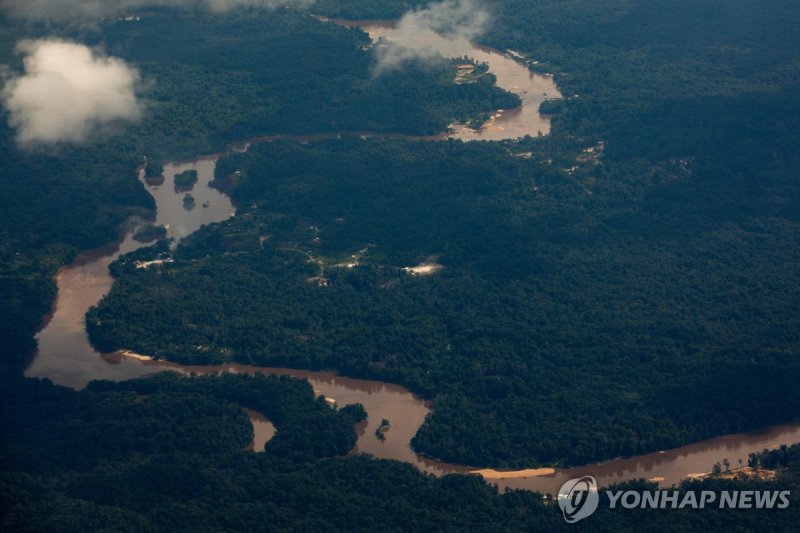
The history of the territorial dispute over Essequibo between Venezuela and Guyana dates back hundreds of years. Guyana, a small country in northeastern South America, is crossed from north to south by the Essequibo River. The region called Essequibo in English and “Guayana Esequiba” in Spanish refers to the area west of the Essequibo River. Essequibo covers about 159,500 square kilometers, or about 71% of the entire Korean Peninsula. It accounts for two-thirds of Guyana's total land area, but with a population of about 125,000, compared with Guyana's total population of about 800,000, it is a sparsely populated jungle region.
The recorded history of Essequibo begins with Christopher Columbus's third voyage in 1498. Columbus discovered the coasts of Guyana and Venezuela and declared the surrounding region to be territory of the Spanish Crown. The Spanish authorities, however, largely neglected Essequibo, which was covered in jungle. Dutch merchants later established the first settlement in Essequibo in 1616 and effectively controlled the area.
There was little conflict during the early settlement because the Netherlands was also part of the “Spanish Netherlands” at the time. But the Netherlands continued its rebellion for 80 years and gained independence from Spain in 1648. Under the Treaty of Münster, Spain recognized the independence of the Dutch homeland and also acknowledged Dutch control over the territories its people occupied in the Americas.
Essequibo, which had become Dutch territory, changed hands soon afterward. When French forces led by Napoleon Bonaparte occupied the Netherlands in 1795, Britain attacked and seized Dutch overseas colonies first in an effort to stop French expansion. After Napoleon's fall and the Netherlands' restoration of independence, the country formally ceded Essequibo to Britain under the Anglo-Dutch Treaty in 1814.
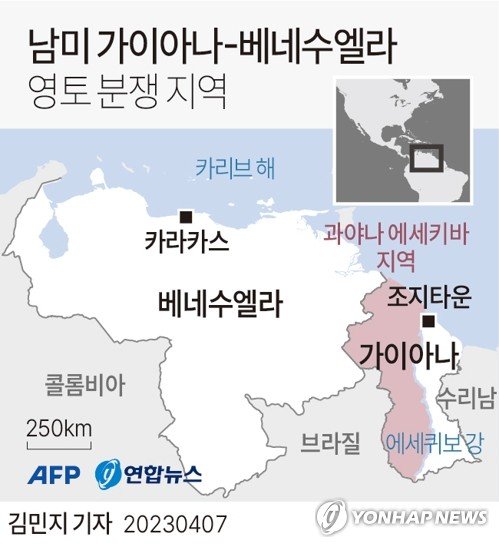
The territorial dispute between Venezuela and Guyana began with this treaty. It did not precisely define the boundary between Dutch Essequibo and Spanish Venezuela. When the Anglo-Dutch Treaty was signed, Spain was preoccupied with putting down Venezuela's war of independence and had no time to focus on the agreement between Britain and the Netherlands. Britain established the colony of British Guiana, which included Essequibo, and unilaterally drew its western border in 1841 based on its own survey.
Venezuela, whose independence was internationally recognized in 1845, soon began a territorial dispute with British Guiana. Venezuela argued that the Netherlands had ceded to Britain only the land east of the Essequibo River and that Britain was illegally occupying the area west of the river. The United States, Russia and Britain held an arbitration proceeding in Paris, France, in 1899 and ruled that Essequibo belonged to Britain. Since Guyana gained independence in 1966, the region has continued to be recognized as Guyanese territory.
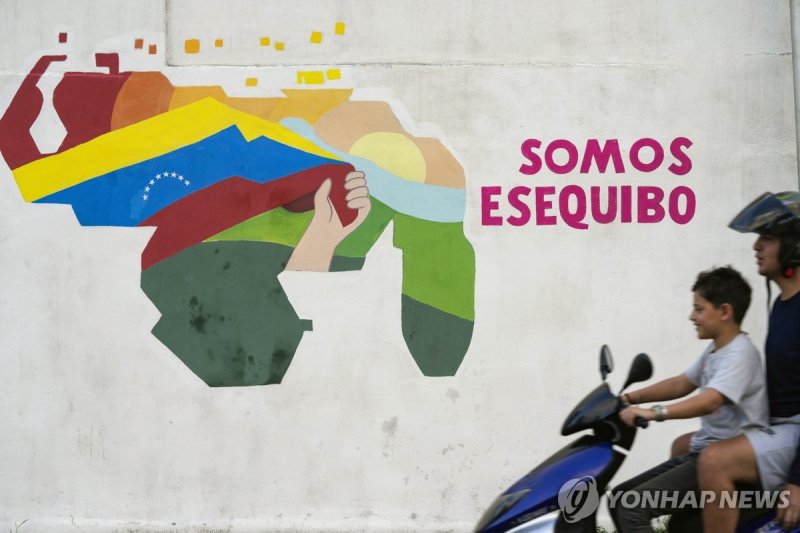
But at the 1962 U.N. General Assembly, Venezuela argued that the 1899 ruling was invalid because no Venezuelan officials had participated in the proceedings. Venezuela's claim to sovereignty over Essequibo intensified after oil was discovered offshore from the region in 2015. In a December 2023 referendum, Venezuela voted to incorporate Essequibo into its territory and establish a new state, with 95% voting in favor, but the move had no effect under international law.
Guyana, which is weaker than Venezuela in national power, filed a case with the U.N.'s International Court of Justice (ICJ) in 2018, arguing that the 1899 Paris arbitration ruling was valid. In 2023, the ICJ also issued provisional measures prohibiting Venezuela's unilateral move to incorporate Essequibo. Proceedings in the case before the ICJ concluded in May, and a ruling is pending.
On the 19th, foreign media focused on the U.S. government's direct involvement in the dispute. After attacking Venezuela in January and capturing President Nicolás Maduro Moros, U.S. President Donald Trump has drawn close to Venezuela's interim president, Delcy Rodríguez, and is working to develop the country's oil sector. In August, the Trump administration secured rights to a major oil-field project through a contract with the Venezuelan government. In an interview on the 30th of last month, Trump claimed, regarding the funds spent on the attack on Iran, “We've recovered more than 10 times what we spent from Venezuela.”
Rodríguez also appears to be using Trump's support to her advantage. In an interview on the 19th, Lewin claimed that Rodríguez had sent Trump a letter in May asking the United States to mediate the Essequibo dispute. Anonymous sources said Rodríguez raised the issue again with Lewin at a meeting in July. The meeting also included discussion of potential business opportunities for U.S. companies in the Essequibo region. In addition to offshore oil fields, Essequibo is believed to have large deposits of gold, diamonds and various other underground resources.
[email protected] Park Jong-won Reporter