High Scorers on Tax Accountant Exam Surge 33-Fold as AI Performance Improves... “A Full Investigation Is Needed”
- Input
- 2026-11-20 14:16:57
- Updated
- 2026-11-20 14:16:57
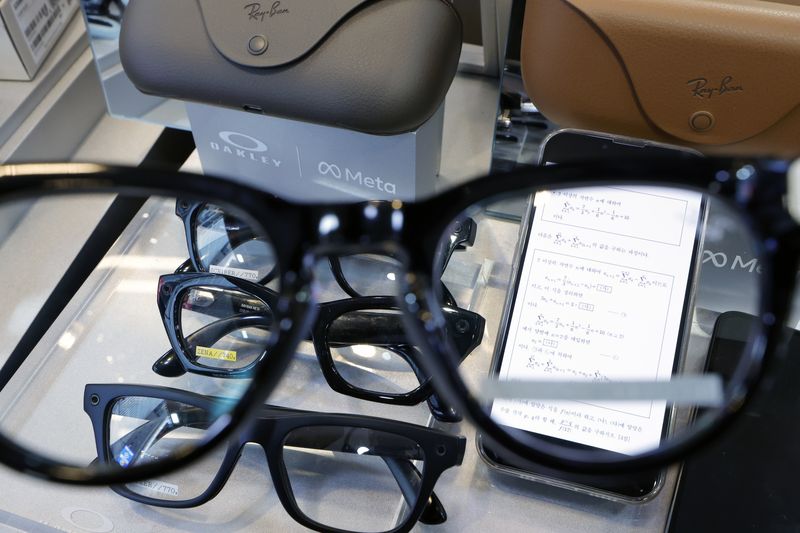
[Financial News] Artificial intelligence (AI) was found to have earned a perfect score by answering all 40 questions in the Introduction to Accounting section of this year’s first-stage tax accountant exam. Meanwhile, the number of test takers who scored 90 or higher in the subject rose 33-fold, from two last year to 66 this year. Although no link between the two developments or actual AI-assisted cheating has been confirmed, some say the cause of the sharp increase in high scorers should be investigated.
On the 20th, according to Yonhap News Agency and the office of Hwang Jeong-a, a Democratic Party of Korea (DPK) lawmaker on the National Assembly’s Science, ICT, Broadcasting, and Communications Committee, the AI model Claude, developed by U.S. company Anthropic, was given the questions from the 63rd first-stage tax accountant exam, held on April 25 this year. Claude Opus 4.7, released on April 16—nine days before the exam—answered all 40 questions in Introduction to Accounting correctly. The lawmaker’s office showed the model only images of the exam paper, without answers or explanations, and graded its responses against the final answer key released by the Human Resources Development Service of Korea.
AI capabilities improved sharply in a short period. Claude Sonnet 4.5, Claude Haiku 4.5, and Claude Opus 4.5, released last year, scored only 62.5, 25, and 75 points, respectively. But Opus 4.6 and Sonnet 4.6, released in February this year, both earned perfect scores.
An unusual rise in high scorers was also seen in the actual exam around the same time. According to the Human Resources Development Service of Korea, the number of test takers who scored 90 or higher in Introduction to Accounting surged from one in 2024 and two in 2025 to 66 this year. The highest score also rose from 90 to 95 and then 100 over the same period, with one perfect score this year. By contrast, in Introduction to Tax Law, the only test taker to score 90 or higher this year earned a perfect score. In effect, high scorers were unusually concentrated in the subject where AI earned a perfect score after seeing only the exam questions.
AI was also found to be capable of answering every question in Introduction to Tax Law and the Law School Admission Test (LEET) when given additional instructions. Opus 4.7 scored 72.5 in Introduction to Tax Law when shown only the exam questions, but earned a perfect score when instructed to consult the original text of the relevant laws.
On the 2027 academic-year LEET, held last July, the AI model Claude Fable 5, released 40 days before the exam, answered all 30 questions in the reading comprehension section correctly and got 39 of 40 questions right in logical reasoning and argumentation when shown only the exam questions. After it was trained on past questions from the previous three years and asked to solve the questions in separate batches, it also earned a perfect score in logical reasoning and argumentation. However, the experiment was conducted after the exam, and it has not been confirmed whether actual test takers used AI to cheat.
Fable 5.2, released this month, scored 100 in both Introduction to Accounting and Introduction to Tax Law without any additional training, and answered all 70 LEET questions correctly.
“It is difficult to dismiss as a coincidence that the number of high scorers increased more than 30-fold as AI models’ problem-solving capabilities improved,” Hwang said. She argued that “a full-scale investigation should be conducted into statistical anomalies among high scorers to clearly determine whether cheating took place.”
She added, “AI reached the point of earning perfect scores in tax law and the LEET seven months after the exam, and its capabilities will continue to improve.” She urged officials to “review the oversight measures applied to this year’s College Scholastic Ability Test and consider extending them to all national qualification exams, among other ways to ensure fairness.”
[email protected] Kim Su-yeon Reporter