U.S. Maritime Administration Visits HD Hyundai Heavy Industries ... NGLS Competition Set to Heat Up
- Input
- 2026-11-20 12:21:07
- Updated
- 2026-11-20 12:21:07
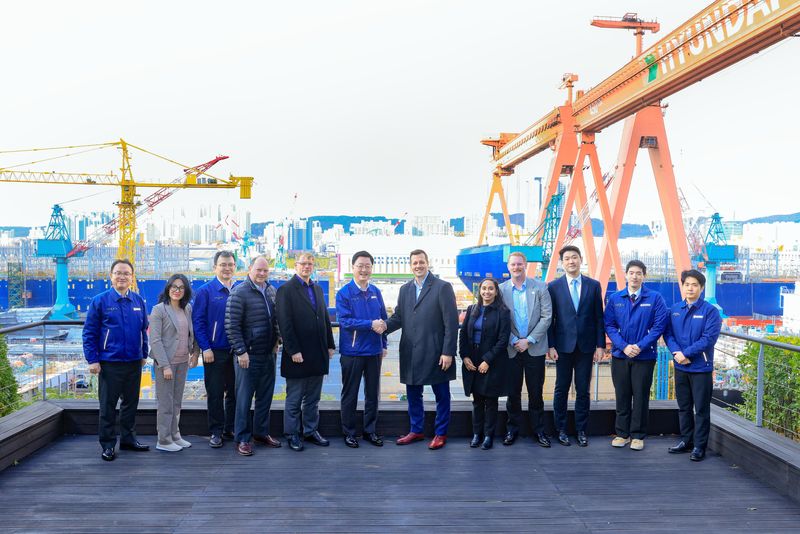
[Financial News] The U.S. Maritime Administration visited HD Hyundai Heavy Industries to discuss a program to secure ships for military use. Competition for the U.S. Next-Generation Logistics Ship (NGLS), a project worth 8 trillion won, appears to be heating up.
U.S. Maritime Administration deputy administrator visits Ulsan Shipyard in person and tours a PCTC
HD Hyundai said on the 20th that the deputy administrator of the U.S. Maritime Administration, Mark D. Johnson, had visited HD HHI’s Ulsan Shipyard.Joo Won-ho, president and head of HD HHI’s naval ships and mid-sized ship business, received him, introduced the company’s shipbuilding capabilities, and discussed participating in the Maritime Administration’s program to secure ships for military use and ways to cooperate on port infrastructure.
Afterward, Deputy Administrator Johnson and other Maritime Administration officials toured a car carrier (PCTC) under construction at Ulsan Shipyard. The Ro-Ro vessels the U.S. Maritime Administration aims to procure for military logistics are intended to transport tanks and military trucks, so they use the same design approach as PCTCs.
According to the Congressional Research Service, the NGLS is scheduled to complete its conceptual design next year, with contracts set to be signed in 2028. The plan calls for 13 ships, with procurement costs of about $450 million per ship; the total project cost is expected to exceed 8 trillion won.
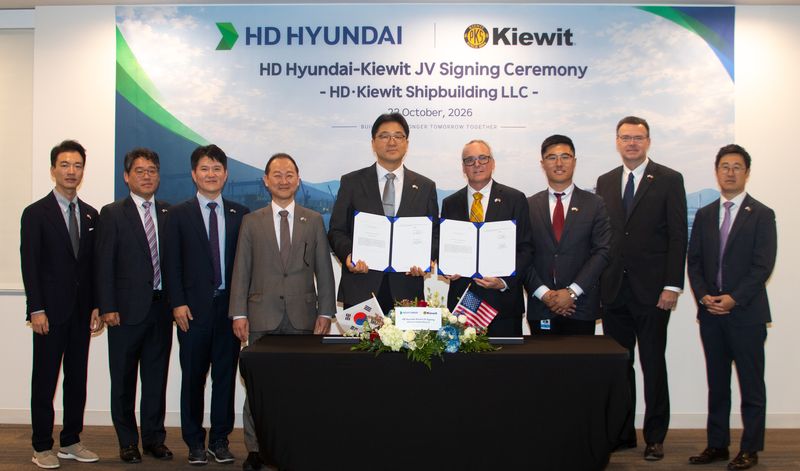
HD Hyundai recently formed a joint venture, HD Kiewit Shipbuilding, with Kiewit, the largest U.S. engineering, procurement and construction (EPC) company, and will build a new shipyard in the United States next year. This will meet the U.S. government’s “Bridge Strategy” and help highlight the company’s contribution to modernizing U.S. ports. The strategy allows the first two ships to be built in a foreign shipbuilder’s home country only if that company has a shipyard in the United States.
Joo Won-ho, president of HD HHI, said, “Building on a new shipyard here, we will work with the U.S. Maritime Administration to produce the ships and port equipment the United States needs,” and added, “We will contribute to rebuilding the U.S. shipbuilding industry and modernizing its ports.”
NGLS and frigates: ‘High-tech’ HD Hyundai faces off against ‘experience’-backed Hanwha Ocean
Hanwha is also a strong contender for the NGLS contract. Hanwha Defense USA and Hanwha Philly Shipyard have been involved since the conceptual design stage alongside U.S. naval ship designer Vard Marine US, and have a track record of winning contracts to build U.S. Navy vessels at the Philly Shipyard in the United States.HD Hyundai, however, stands out because it plans to deploy its full range of AI-based autonomous manufacturing technologies at the shipyard to be built by HD Kiewit Shipbuilding. The plan is to create a “shipyard of the future,” and the company is seen as well positioned to support the shipbuilding and port modernization goals of the U.S. side.
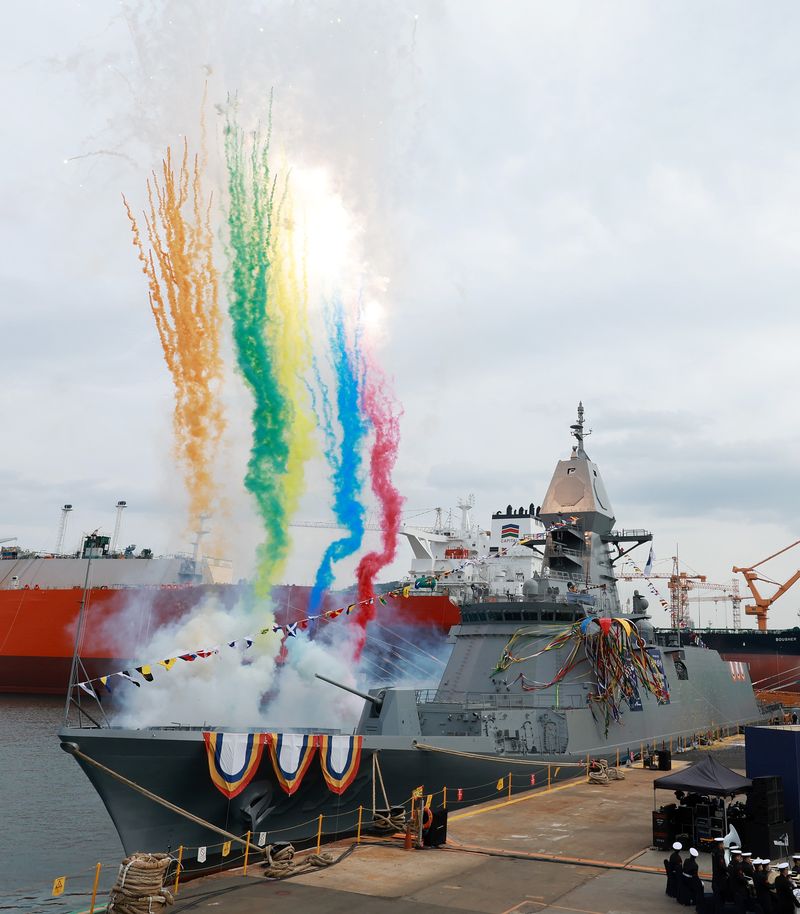
The U.S. competition between HD Hyundai and Hanwha involves frigate projects as well as the NGLS. The 3,600-ton Ulsan-class frigate Batch-III (Chungnam-class), which both HD HHI and Hanwha Ocean have experience building, is being discussed as a leading candidate. The fifth ship of the Chungnam class, Pyeongtaek, was launched on the 18th at Hanwha Ocean’s Okpo Shipyard in Geoje City.
Earlier, U.S. Senator Dave McCormick visited Hanwha Ocean’s Geoje facility in October and inspected the Chungnam-class Pyeongtaek, which was under construction. Acting U.S. Secretary of the Navy Hung Cao mentioned the pace of Chungnam-class construction at the U.S. Senate Armed Services Committee on the 17th local time, in connection with ways to secure frigates quickly.
[email protected] Kim Yun-ho Reporter