111 Cases of Cheating Involving Electronic Devices Detected on the CSAT... 5 Cases Involving the Use of AI Glasses, Cameras, and Other Devices [2027 CSAT]
- Input
- 2026-11-20 11:23:49
- Updated
- 2026-11-20 11:23:49
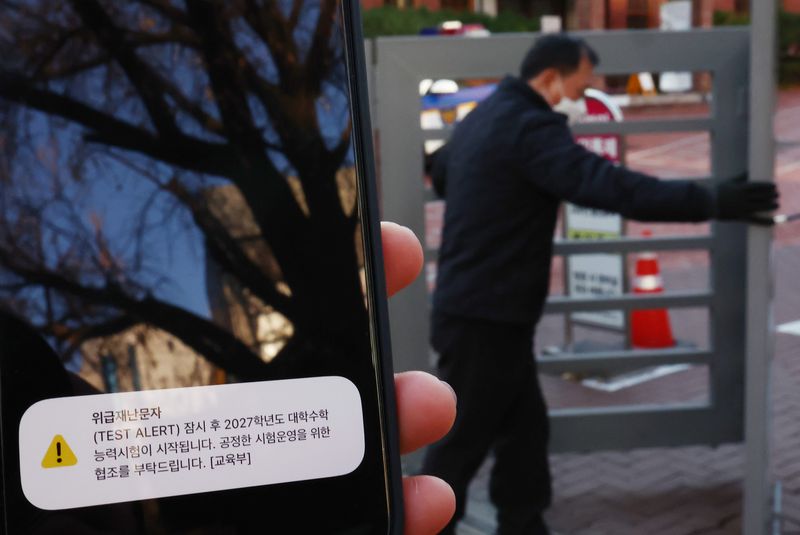
[Financial News] A total of 111 cases of cheating involving electronic devices, including smart devices, were detected during the 2027 College Scholastic Ability Test (CSAT). Of these, 106 were cases in which electronic devices were found; more than half, 54, were confirmed through emergency disaster text alerts sent by the government. Five cases involving the actual use of devices to cheat were also detected, including the use of smart glasses and the photographing of exam questions with a mobile phone.
According to the Ministry of Education on the 20th, a total of 111 cases of cheating involving electronic devices were recorded during the CSAT held the previous day. The figure announced the previous day was a provisional tally compiled through the fourth session. The number of detected cases increased after additional reports from each test site through the fifth session and verification results were incorporated.
Of the 111 cases detected, 54 involved electronic devices being found through emergency disaster text alerts. In 52 cases, electronic devices were detected independently of the alerts. The remaining five cases involved smart devices actually being used to cheat.
Not all cases detected via emergency disaster text alerts involved using a device during the exam. In the CSAT, merely possessing an electronic device without handing it in at the test site constitutes cheating.
The government sent emergency disaster text alerts three times on the day of the CSAT: at 8:30 a.m., 2:21 p.m., and 2:57 p.m. Thirty-one cases were detected after the first alert and 11 after the second. The third alert was sent unexpectedly at 2:57 p.m., seven minutes after the fourth-session Korean history exam began. Inspections conducted while the exam was underway uncovered 12 additional cases.
There were five cases in which smart devices were actually used to cheat. In South Chungcheong Province, a case involving the use of smart glasses was detected, while in Gyeonggi, a case involving a miniature camera and wireless earbuds was detected. In Seoul, a case involving the photographing of exam questions with a mobile phone was confirmed. One case each of mobile phone use in a bathroom was also reported in Seoul and Gyeonggi.
By region, Seoul had the most cases detected overall, with 40. There were 22 in Gyeonggi and 12 in Incheon, bringing the total in the Seoul metropolitan area to 74, or 66.7% of all cases. This was followed by North Chungcheong Province with seven; Daejeon and North Gyeongsang Province with five each; Daegu, South Chungcheong Province, and South Gyeongsang Province with four each; Busan and South Jeolla Province with three each; and Ulsan and Jeju with one each. No cases were detected in Gwangju, Sejong, Gangwon Province, or North Jeolla Province.
Among the 54 cases detected after emergency disaster text alerts were sent, Seoul had the most, with 20. There were eight in Gyeonggi, six in Incheon, four in North Chungcheong Province; three each in South Jeolla and South Gyeongsang provinces; two each in Busan, Daegu, Daejeon, and North Gyeongsang Province; and one each in Ulsan and Jeju. No cases were detected in Gwangju, Sejong, Gangwon Province, South Chungcheong Province, or North Jeolla Province.
The 52 cases detected independently of the emergency disaster text alerts comprised 18 in Seoul, 12 in Gyeonggi, six in Incheon, three each in Daejeon, North Chungcheong Province, South Chungcheong Province, and North Gyeongsang Province, two in Daegu, and one each in Busan and South Gyeongsang Province. No cases were detected in Gwangju, Ulsan, Sejong, Gangwon Province, North Jeolla Province, South Jeolla Province, or Jeju.
However, the specific types of violations in the 106 cases in which electronic devices were found have not yet been determined. The Ministry of Education is conducting further checks into the types of devices found and the types of cheating involved.
[email protected] Lee Bomi Reporter