“The Cut I Took From a Breach of Trust I Planned Can’t Be Punished Again as Acceptance of Benefits in Breach of Trust”... Supreme Court Upholds Ruling
- Input
- 2026-11-20 11:19:52
- Updated
- 2026-11-20 11:19:52
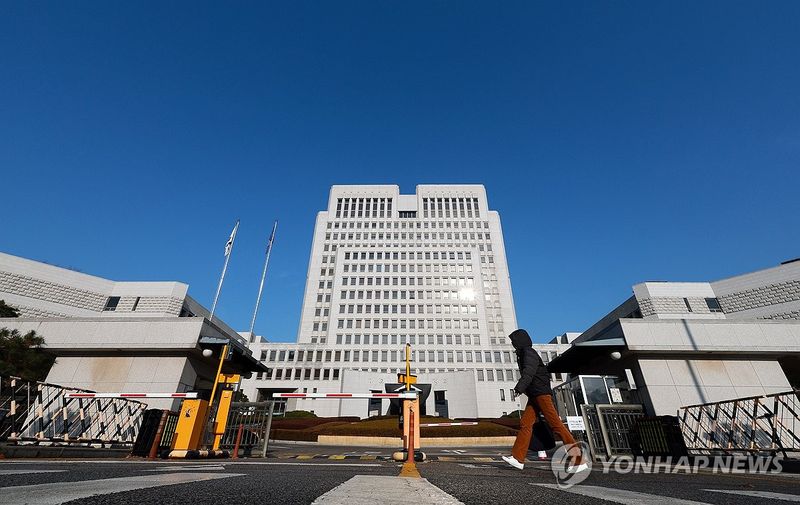
According to legal sources on the 20th, the Second Division of the Supreme Court of Korea, with Justice Park Young-jae as the justice assigned to the case, dismissed all appeals on the 30th of last month in the final appeal of Park Young-tae, former vice chairman of MediCox, and Lee Seung-seok, executive president of Noble M&B. They had been indicted on charges of breach of trust and embezzlement under the Act on the Aggravated Punishment, etc. of Specific Economic Crimes, accepting benefits in breach of trust, violating the Financial Investment Services and Capital Markets Act, and occupational embezzlement. As a result, Park’s sentence of three years and six months in prison and a fine of 100 million won was finalized, as was Lee’s sentence of seven years and six months in prison and a fine of 200 million won. Lee was also a former vice chairman of MediCox.
The two were indicted on suspicion of conspiring to siphon off company funds while serving as executives of MediCox, a company listed on KOSDAQ (Korea Securities Dealers Automated Quotations). The charges also included breach of trust for buying unlisted shares at inflated prices, violations of the Financial Investment Services and Capital Markets Act during a paid-in capital increase, and embezzlement of company funds.
The transaction at issue began in October 2021. They asked the actual operator of a corporation to have the corporation issue 5 billion won in convertible bonds, which MediCox would purchase, on the condition that 2 billion won of the purchase price be returned to accounts they designated. The operator agreed. On November 5 that year, MediCox bought the convertible bonds for 5 billion won and transferred the payment; three days later, 2 billion won was returned. Prosecutors charged them with breach of trust under the Act on the Aggravated Punishment, etc. of Specific Economic Crimes for the bond purchase, and with accepting benefits in breach of trust for receiving the 2 billion won as consideration for an improper solicitation from the other party.
The issue was whether they could be separately punished for accepting benefits in breach of trust when they pocketed a share that they had set in advance as part of a breach of trust they planned themselves. The offense of accepting benefits in breach of trust is established when a person handling another’s affairs receives an improper solicitation in connection with their duties and obtains property or a pecuniary benefit.
In January, the Seoul Central District Court, the court of first instance, found them guilty of accepting benefits in breach of trust. It ruled that because the convertible bonds had no real value and the two had planned to take the 2 billion won for themselves, the other party’s request that they purchase the bonds was an improper solicitation that ran counter to social norms and the principle of good faith. Park was sentenced to four years in prison and ordered to pay an additional 62 million won in collections; Lee was sentenced to eight years and ordered to pay an additional 428 million won in collections.
In June, the Seoul High Court overturned that ruling on appeal. It found that the two had designed the transaction structure first, while the other party appeared to have passively accepted their proposal. The appellate court said, “Receiving the 2 billion won, which had been designated from the outset as the defendants’ share, was the completion of the plan and was itself punishable as breach of trust,” and therefore could not be treated as consideration for an improper solicitation and punished again. The additional collections were also vacated.
The Supreme Court of Korea reached the same conclusion. The panel said the appellate court had made “no error in its understanding of the law concerning improper solicitation under the offense of accepting benefits in breach of trust, or the relationship between occupational breach of trust and accepting benefits in breach of trust.” The point was not that the 2 billion won had been excluded from punishment, but that it had already been treated as part of the breach of trust involving the purchase of the convertible bonds.
[email protected] Kim Dong-gyu Reporter