“From Detecting Signs of Sinkholes to Repair and Prevention,” Busan Facilities Corporation Prepares Manual
- Input
- 2026-11-20 10:53:04
- Updated
- 2026-11-20 10:53:04
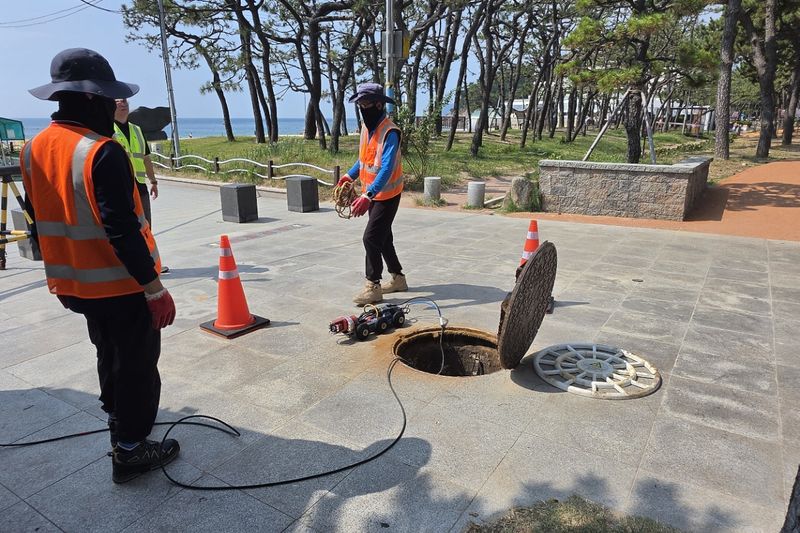
[Financial News] A manual has been prepared to speed up initial responses to road sinkhole incidents in Busan by ensuring that information is relayed within five minutes. A system has also been established to enable systematic damage assessments and safety inspections after repairs to prevent recurrence.
Busan Facilities Corporation said on the 20th that it had established the “Field Response Action Manual for Ground Subsidence Disasters” to ensure a swift and systematic response to ground subsidence incidents.
The manual was prepared following revisions to the Enforcement Decree of the Framework Act on the Management of Disasters and Safety and the Ministry of Land, Infrastructure and Transport’s establishment of the “Standard Manual for Crisis Management of Ground Subsidence Disasters.” To that end, the corporation specified response procedures for each facility and duties for each department after reviews by Busan City’s Social Disaster Division and relevant departments from August through last month.
The manual divides responses to ground subsidence disasters into four stages: detecting warning signs, initial response, emergency response, and recovery. It sets out procedures to ensure that warning signs are identified in a timely manner through reports via e-People, CCTV monitoring, and regular patrols, and that information is relayed, sites are controlled, and emergency repairs are carried out promptly when an incident occurs.
In particular, it sets the initial notification of an incident within five minutes of recognizing the situation as the standard, to speed up the initial response. At the scene, officials will work with police to control traffic and secure detour routes, while using electronic road signs and other means to provide the public with traffic information.
An emergency response system was also established based on the scale of an incident and the extent of damage. If ground subsidence of a certain scale or greater or casualties occur, the situation will be reported to relevant agencies and emergency repairs undertaken. When necessary, a response headquarters will be set up to oversee operations at the scene.
After repairs, damage assessments and safety inspections will be conducted. Measures to prevent recurrence will also be drawn up, including, when necessary, using ground-penetrating radar (GPR) surveys to check for voids beneath roads.
The corporation also specified on-site response guidelines for the departments in charge, including the Road Facilities Team and Tunnel Management Team, and clarified the roles of each function, such as situation management, initial response, on-site repairs, and traffic control. It plans to strengthen cooperation among departments, as well as coordination with police and relevant agencies, when incidents occur.
[email protected] Byun Ok-hwan Reporter