HUG Corporate Guarantee System Reforms Bring Welcome Relief to Busan Construction Industry
- Input
- 2026-11-20 10:24:55
- Updated
- 2026-11-20 10:27:15
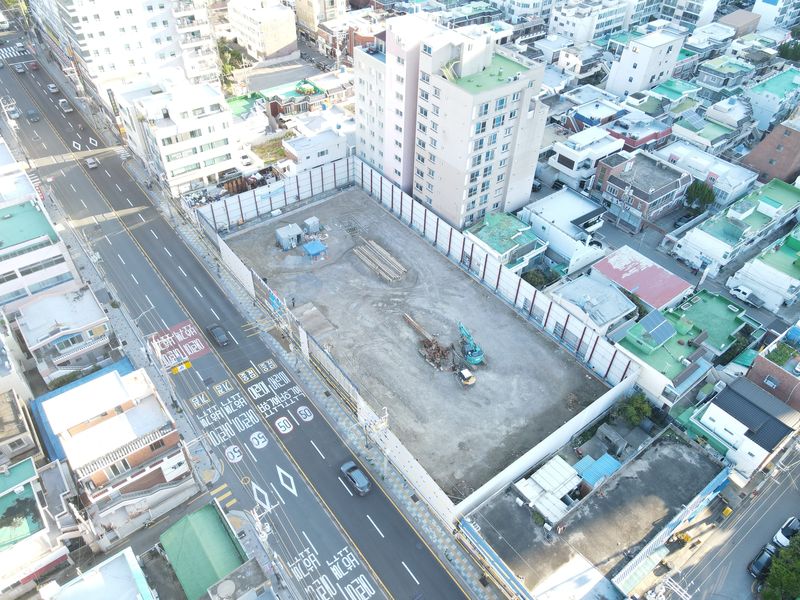
[Financial News] The Korea Housing & Urban Guarantee Corporation (HUG) recently announced reforms to its corporate guarantee system, which have emerged as welcome news for the Busan construction industry, struggling amid a prolonged downturn.
Local construction companies that have focused on building at small and midsize sites, particularly those involving street housing and small-scale housing redevelopment projects, are broadly welcoming the changes, saying they will make it easier to secure additional construction costs and finance project expenses.
According to the local construction industry on the 19th, the Busan chapter of the Construction Association of Korea recently shared key details of HUG’s corporate guarantee system reforms in a notice to its member companies.
The reforms, which reflect requests from construction industry participants, center on updating the review criteria for appropriate sale prices, introducing one-stop integrated reviews for PF (Project Financing) guarantees, providing real-time updates on PF guarantee reviews, and extending the special measure raising the guarantee limit for loans covering redevelopment project costs.
The industry is paying closest attention to the plans to bring appropriate sale prices in line with current conditions and to extend the special measure raising the limit on loan guarantees for redevelopment project costs.
As sale-price calculations have failed to keep pace with soaring construction and material costs, local companies specializing in street housing and small-scale housing redevelopment projects have struggled to negotiate increases in construction costs and ensure project viability.
Under HUG’s reforms, a basis will be established for calculating the “short-term surge in material costs”—the increase in the latest standard construction costs regularly announced by the Minister of Land, Infrastructure and Transport minus the average increase over the past three years—and reflecting it in appropriate sale prices.
The adjustment amount will be calculated by multiplying the capped sale price by an adjustment rate, set at 40%, the average ratio of construction costs to total project costs at PF project sites.
In addition, when transaction prices for older complexes that were completed some time ago are used as benchmarks for comparable projects, age-based premium rates will be applied to adjust them to the standard for newly built complexes. This will also address limitations in calculating sale prices arising from price gaps between new and older complexes.
The special measure raising the limit on loan guarantees for redevelopment project costs has also been extended by one year, through 2027.
The special measure, which raises the limit from 50% to 60% of total project costs, will remain in place. It will also allow project sites approved before the measure was introduced in February 2024 to raise their guarantee limits to as much as 60% of total project costs if their current limits are insufficient.
The changes are expected to provide practical help in easing funding constraints at small-scale and street housing redevelopment sites and sustaining momentum for their projects.
Measures to speed up projects and improve procedural transparency are also being revised.
When the “one-stop integrated review,” which runs project-plan approval (building permit) applications and PF guarantee reviews in parallel, is implemented, the guarantee approval process will be shortened. Previously, it proceeded sequentially after project-plan approval and took three months or longer, partly because of requests for supplementary documents. Under the new system, the full review and guarantee approval will take place as soon as permits are completed, cutting the approval period by two months.
The changes are expected to reduce financing costs by shortening project timelines and enable construction to begin earlier.
Users will also be able to log in to HUG’s online guarantee website with the customer number of the developer or contractor and check in real time how reviews are progressing for sites that have applied for PF guarantees. This is expected to ease concerns about so-called “black-box reviews” and improve convenience and transparency.
Onlife Construction CEO Kim Yeon-chan, whose company is a midsize builder in the Busan area, said, “Rising material costs combined with financial burdens had made conditions extremely tough at small-scale and street housing redevelopment sites. With short-term surges in material costs reflected in sale-price calculations and the special measure raising the guarantee limit for redevelopment project costs extended, we expect it will be much easier to secure additional construction costs at our sites and manage funds.”
[email protected] Byun Ok-hwan Reporter