Seven More ‘Critical’ PHP Vulnerabilities Discovered in a Wave... ‘Websites at Risk of Hacking’
- Input
- 2026-11-20 12:39:26
- Updated
- 2026-11-20 12:40:57
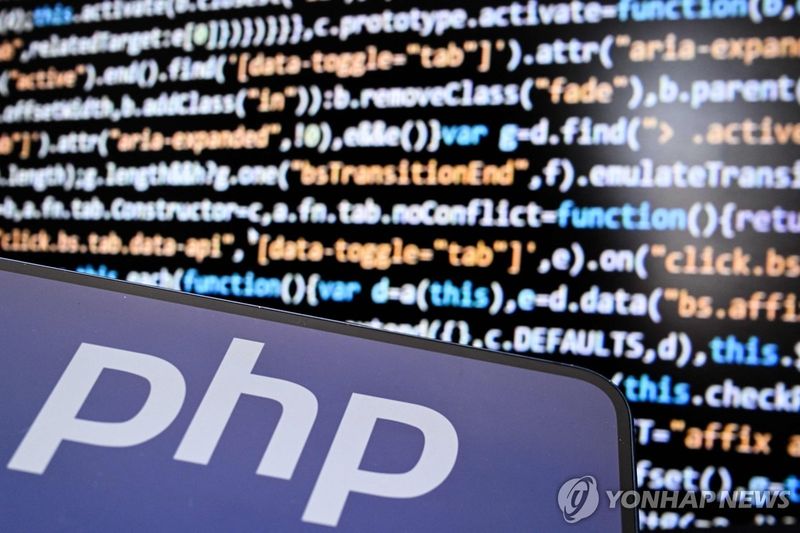
[Financial News] A wave of critical security vulnerabilities has once again been discovered in PHP, a programming language widely used on websites around the world, following a similar discovery in October. Some of the vulnerabilities could be exploited under certain conditions even in ordinary website operating environments, raising concerns about damage such as malware execution.
According to security industry sources on the 20th, the PHP development team announced the previous day an update fixing 18 security vulnerabilities.
Seven of them scored 9.2 under the Common Vulnerability Scoring System (CVSS), placing them in the ‘Critical’ category, the highest risk rating. They are at the same severity level as major vulnerabilities previously discovered in PHP and Java.
“‘Critical’ vulnerabilities could also be exploited on WordPress websites”
The PHP development team said some critical vulnerabilities arise under specific server configurations, but global cybersecurity firm Patchstack found that two of them could be exploited under certain conditions even in server environments used to run websites such as WordPress.
The first is a memory vulnerability (CVE-2026-129496) involving the memory for timezone information used to log errors during server startup. The flaw causes the system to reference memory that has already been freed; an attacker could exploit it to shut down a server or execute arbitrary code.
Another vulnerability (CVE-2026-129289) occurs while the server processes users’ connection requests. It is a vulnerability (CVE-2026-129289) that occurs while the server processes users’ connection requests. The flaw causes the server to mistakenly interpret data it could not process as a new request. Under certain configurations, an attacker could exploit it to bypass the normal request-processing procedure and execute arbitrary code.
Patchstack found that the vulnerability could also potentially be exploited on WordPress-based websites. WordPress is a major website creation and management tool built on PHP. It is used in a wide range of settings, including corporate websites and personal blogs, because websites can be built with it without developing separate, complex software.
Promptly update to a version with security patches
The PHP development team advised users to promptly update to versions with security patches, including PHP 8.5.13, 8.4.28, 8.3.37 and 8.2.36, to address the vulnerabilities. In particular, technical support for PHP 8.1 and earlier has already ended, so this security patch will not be provided for them. Website operators using those versions should promptly switch to a supported version.
Patchstack advised temporarily restricting server features that could be exploited in a hack if an immediate update is difficult. This can be done by turning off the feature that automatically logs file upload progress and the feature that reuses server connections. It also said that server error logging should be changed and session storage should be separated so that multiple websites do not use the same storage.
[email protected] Choi Hye-rim Reporter