U.S. Tech Stocks Plunge Despite Anthropic Listing ... Samsung Electronics Co., Ltd. Down 5%, SK hynix Around 6% Lower [Stock NOW]
- Input
- 2026-11-20 09:51:56
- Updated
- 2026-11-20 09:51:56
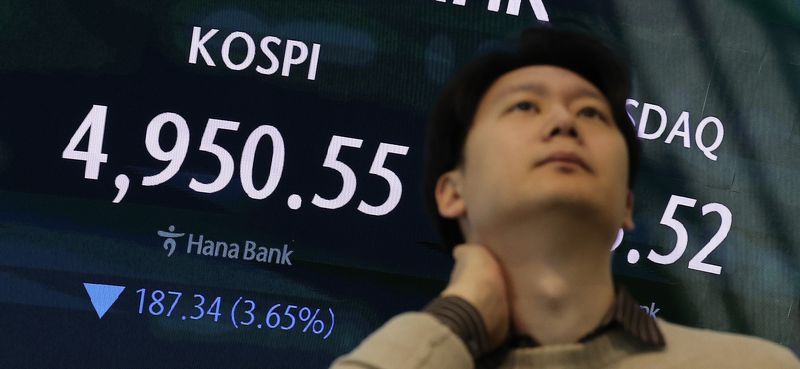
[Financial News] South Korea’s stock market is reeling from the shock of a sharp drop in U.S. tech stocks. Large-cap semiconductor stocks, including Samsung Electronics Co., Ltd. and SK hynix, are down 5–6%, widening the KOSPI’s losses.
After the IPO of U.S. artificial intelligence (AI) company Anthropic, waves of profit-taking in existing tech stocks, combined with concerns about further tightening by the U.S. Federal Reserve (Fed), have sharply chilled investor sentiment toward domestic semiconductor stocks.
As of 9:42 a.m. on the 20th, Samsung Electronics Co., Ltd. was trading at 186,700 won, down 10,200 won (5.18%) from the previous trading day. SK hynix was also down 78,000 won (6.59%) at 1,105,000 won.
The simultaneous plunge in leading semiconductor stocks pushed the KOSPI below the 5,000 mark. At the same time, the KOSPI stood at 4,929.60, down 208.29 points (4.05%) from the previous trading day. The KOSDAQ was also down 4.05%, with strong selling pressure across South Korea’s stock market.
The sharp overnight drop in U.S. stocks is cited as the immediate backdrop to this decline. On the 19th (local time), the Dow Jones Industrial Average, the S&P 500 and the Nasdaq Composite all fell by more than 2% in the New York stock market. The Nasdaq fell 2.25%, while the PHLX Semiconductor Sector (SOX) dropped 2.41%.
Analysts also say Anthropic’s large-scale IPO spurred profit-taking in existing AI and tech stocks. Investment funds shifted from existing tech stocks to newly listed shares, increasing selling pressure on related stocks.
The possibility of another U.S. Fed rate hike also weighed on investor sentiment. Concerns about monetary tightening grew as Fed officials did not rule out the possibility of a 50-basis-point hike in December, while inflation data further fueled concerns that inflationary pressures remained persistent.
Risk aversion across tech stocks appears to have spread amid doubts about whether AI companies’ massive data center investment costs can translate into actual profits.
Selling by foreign investors and institutions was also pronounced. As of 9:42 a.m., individual investors had net bought 914.7 billion won on the KOSPI market, while foreign investors and institutions had net sold 566.4 billion won and 429.8 billion won, respectively. Individual investors are absorbing the shares put up for sale, but their buying is not enough to prevent the index from falling amid simultaneous selling by foreign investors and institutions.
Because Samsung Electronics Co., Ltd. and SK hynix account for a large share of the domestic stock market’s total market capitalization, their sharp declines exert considerable downward pressure on the broader indices. In particular, market volatility is increasing further as key stocks that had led the domestic market’s rise on expectations for growth in AI semiconductors falter alongside the correction in U.S. tech stocks. For the time being, the performance of U.S. tech stocks and foreign investor flows are seen as key factors that will determine the direction of domestic semiconductor stocks.
[email protected] Kang Jung-mo Reporter