AIDCs Outside the Capital Region Exempt From Power System Impact Assessments Up to 50 MW; Regulatory Easing Takes Wing
- Input
- 2026-11-20 13:41:00
- Updated
- 2026-11-20 13:41:03
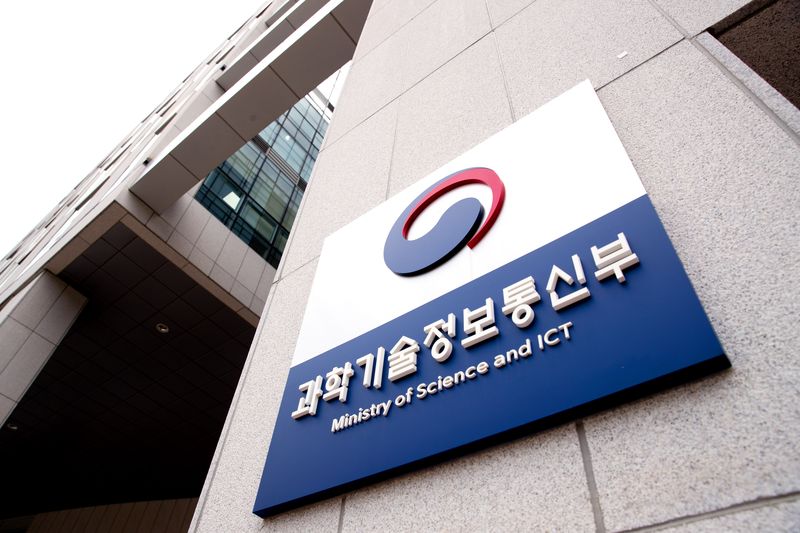
[Financial News] Artificial intelligence data centers (AIDCs) located outside the capital region will be exempt from power system impact assessments if their contracted power is 50 MW or less. The government plans to reduce the burden of building AIDCs by shortening permitting procedures and easing facility installation standards, among other measures, and accelerate infrastructure expansion centered outside the capital region.
The Ministry of Science and ICT announced that it will open for public comment, from the 20th through the 30th of next month, draft enforcement decrees and enforcement rules for the Special Act on the Promotion of the Artificial Intelligence Data Center Industry (AIDC Special Act).
The key aims of the subordinate legislation are to clarify the criteria for recognizing AIDCs and reduce regulatory burdens on facilities outside the capital region. First, AIDCs built or expanded, or converted from existing facilities, outside the capital region will be exempt from power system impact assessments if their contracted power is 50 MW or less.
To qualify as an AIDC, a facility must have the power and cooling systems needed to operate AI accelerators and a design power usage effectiveness ratio of 1.5 or less. A facility will be recognized as an AIDC if its AI equipment power is at least 250 kW and accounts for at least 50% of the total power used by its information and communications equipment, or if its AI equipment power is at least 5 MW. Colocation facilities that provide other businesses with space to install servers and power and cooling systems are also eligible for support.
The government is also pursuing separate support measures for large-scale AIDC construction. In consultation with the Ministry of Climate, Energy and Environment (MCEE), the Ministry of Science and ICT plans to introduce an “AIDC Fast Track” that gives priority to power system impact assessments for large projects and AIDCs eligible for one-stop permitting. It is also pursuing a plan to exempt facilities in designated AIDC zones from the non-technical portion of power system impact assessments.
Administrative procedures required to build AIDCs will also be simplified. When a business operator applies for one-stop permitting, the Ministry of Science and ICT must ask relevant agencies to review the application within seven days. The agencies must respond within 10 days on matters including whether the documents need to be supplemented, and the ministry must complete its review within 30 days before requesting deliberation and a resolution by the National AI Strategy Committee. The process may proceed based on the submitted documents even if relevant agencies do not respond by the deadline.
Costs incurred during construction will also be reduced. Given that AIDCs have fewer on-site staff and visiting vehicles than ordinary buildings, the requirements for on-site parking will be eased by 20% from the current standard, with local government ordinances able to provide an additional reduction of up to 50%. For the requirement to install artworks in buildings, the areas of computer rooms and cooling equipment rooms will also be excluded when calculating gross floor area. However, in the capital region, only 50% of the computer room area will be excluded, giving greater benefits to areas outside the capital region.
Measures have also been put in place to prevent abuse of special provisions introduced through regulatory easing. To block so-called “paper operators” seeking benefits without any real intention to build, AIDC reporting will be divided into construction, operation and change reports, and operators will be required to set and report a construction start date within one year of filing a construction report. An operation report must be filed no later than 30 days before operations begin, and a change report within 30 days after the reason for the change arises.
The Ministry of Science and ICT plans to hold a public hearing on the 9th of next month at Nuri Kkum Square in Seoul’s Mapo District to gather views from the field. In the first half of next year, it will also draw up regional coexistence guidelines that include procedures for gathering opinions from residents in areas around AIDCs.
Deputy Prime Minister and Minister of Science and ICT Bae Kyung-hoon said, “During the public comment period, we will carefully gather views from the field and prepare to ensure that AIDCs can serve as a foundation for the growth of the AI industry.”
[email protected] Choi Hye-rim Reporter