17% Make Hunger Response a Climate Policy Priority... World Vision Presents Findings at COP31
- Input
- 2026-11-20 09:30:15
- Updated
- 2026-11-20 09:30:15
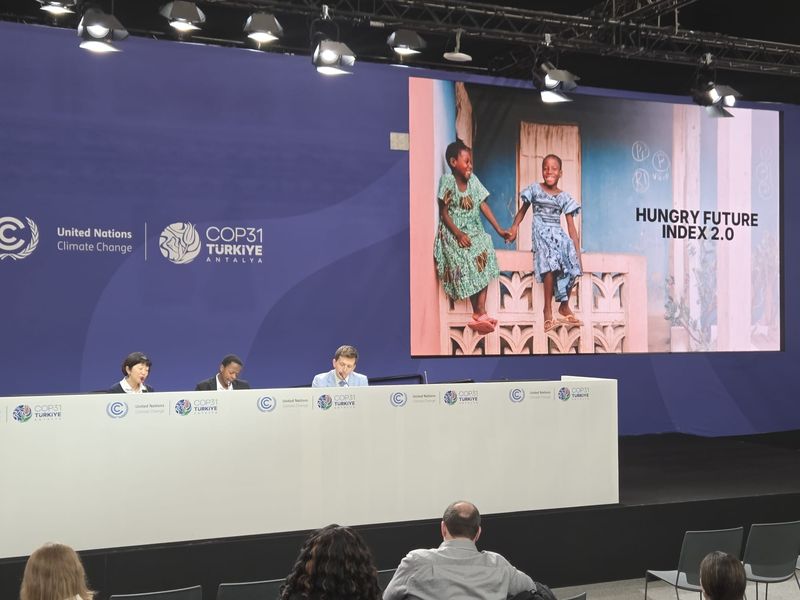
According to World Vision on the 20th, the study, conducted jointly with the University of Galway in Ireland, covered 83 jurisdictions, including the European Union (EU). Of these, 73% mentioned hunger in their climate policies. The findings, compiled in the “Hungry Futures Index 2.0,” were unveiled at COP31 in Antalya, Türkiye.
World Vision said that the effects of climate change on children’s access to food and nutritional status are not adequately reflected in countries’ policies. It also found that specific action plans to address nutritional deficiencies among growing children are lacking.
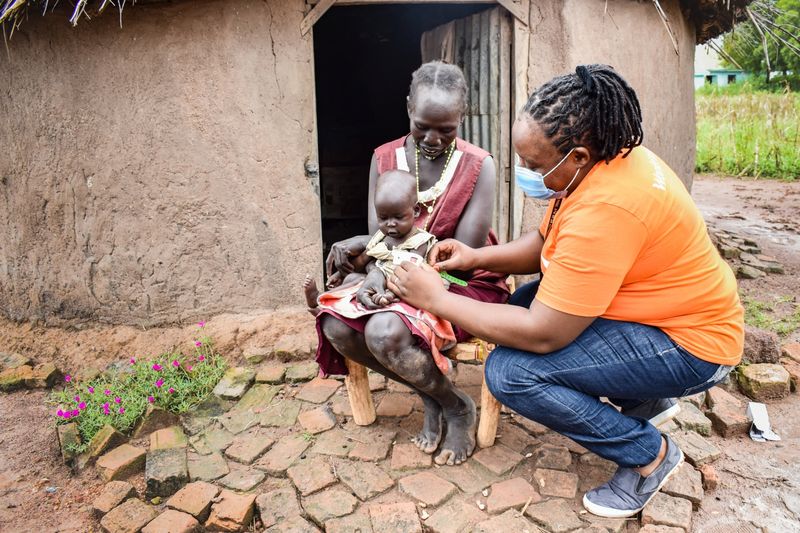
According to joint estimates by UNICEF, the World Health Organization (WHO) and the World Bank, 150.2 million children under the age of five worldwide were stunted in 2024, representing 23.2% of that age group. An estimated 42.8 million children, or 6.6%, suffered from wasting, a condition in which a child’s weight is too low for their height.
Richard, 15, who lives in Tanzania, told World Vision, “When drought occurs in our area, agricultural production drops sharply, leaving most children without enough to eat.” Jocelyn, 11, from Guatemala, said, “Because there isn’t enough rain, crops don’t grow well, and the cost of food for families keeps going up.”
World Vision called on governments and the international community to ensure that the UN’s Fund for responding to Loss and Damage (FRLD) takes into account child hunger and malnutrition caused by climate disasters. It also said that child-support organizations and communities should be able to access the fund directly.
Before the conference, World Vision Korea submitted its “Five Policy Recommendations for Climate Action at COP31” to the South Korean government. The recommendations included institutionalizing children’s participation in climate policymaking and expanding international cooperation on agriculture and food security. They also called for stronger protections for children and vulnerable groups during the transition to a low-carbon economy, increased funding for climate disaster prevention and multi-year funding, and greater contributions to the Fund for responding to Loss and Damage.
Myung-Hwan Cho, chair of World Vision Korea, stressed, “We should make ending child hunger a priority in responding to the climate crisis and ensure that the voices of children and young people are meaningfully reflected in policymaking.”
[email protected] Jang In-seo Reporter