“Demand Is Strong and We Can Name Our Price” ... Hyundai Glovis Set to Ride the Car Carrier Super-Boom
- Input
- 2026-11-20 08:33:06
- Updated
- 2026-11-20 08:33:06
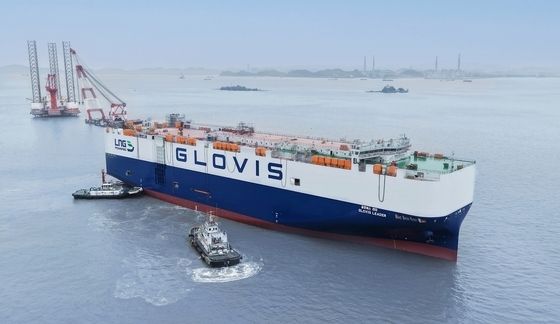
[Financial News] Hyundai Glovis is expected to post stronger earnings as the car carrier market benefits from both a structural supply shortage and expanding exports from China.
China's auto exports are growing rapidly, but securing pure car and truck carriers (PCTCs) to transport them is proving difficult. Analysts say Hyundai Glovis, which has proactively expanded its fleet in a market with limited vessel supply, stands to benefit from higher freight rates and increased cargo volumes.
On the 20th, Meritz Securities maintained its Buy rating and target price of 340,000 won for Hyundai Glovis. Compared with the previous day's closing price of 203,500 won, that implies 67.1% upside. The report was titled “Super-Boom” and said both the supply-and-demand environment in the car carrier market and Hyundai Glovis's competitiveness were positive.
Kim Jun-seong, an analyst at Meritz Securities, wrote in the report, “Demand is strong and we can name our price. Hyundai Glovis is prepared for differentiated growth.” The point is that the market has moved beyond a simple increase in cargo volumes and entered a phase in which vessel shortages are driving up freight rates and shipping companies' pricing power.
China's auto exports are the biggest growth driver. Following a meeting with Shanghai Haitong, the world's largest vehicle import and export terminal, Meritz Securities said local forecasts put China's auto exports at more than 11 million vehicles this year and 13 million to 14 million next year. Exports are expected to peak at around 20 million vehicles a year in the early 2030s.
China's auto exports are in fact rising sharply. According to the report, cumulative exports this year reached 9.27 million vehicles, up 66% from the same period a year earlier, while monthly exports have topped 1 million vehicles for five consecutive months.
Volumes are growing so quickly that a shortage of open yards to store export vehicles is becoming a bottleneck. Shanghai Haitong is moving quickly to introduce automated multistory warehouses that can increase space utilization sixfold within the same footprint.
The supply shortage in maritime transport is even more acute. Of the 11 million vehicles China is expected to export this year, only 6 million will be carried by PCTCs. Excluding 1 million transported by land, the remaining 4 million are being shipped on container vessels.
With the risk of vehicle damage high and container freight rates rising, demand is shifting toward dedicated car carriers. Meritz Securities believes that the increase in demand for PCTCs could outpace the overall growth in auto exports.
By contrast, vessel supply cannot increase quickly. Of the approximately 800 PCTCs in the global fleet, 200 are more than 25 years old, accounting for 25% of the total. As scrapping becomes more likely for economic and regulatory reasons, a significant increase in China's fleet is not expected until after 2030.
Because the sharp rise in auto exports was not anticipated, there were not enough advance vessel orders. Uncertainty over securing return cargo for vessels heading back to China is also limiting new orders.
In the short term, a reduction in the value-added tax refund rate for China's exported vehicles is also expected to spur shipments. The rate is scheduled to fall from 13% to 9% on April 1 next year. For a vehicle priced at 25 million won, a 4-percentage-point reduction in the refund rate would mean an additional cost of 1 million won per vehicle. This could prompt exporters to rush shipments ahead of the change, resulting in a front-loaded increase in volume.
Hyundai Glovis's competitive edge comes from expanding its fleet. The number of PCTCs it operates is expected to rise from 96 at the end of the second quarter this year to 110 by year-end, 120 by the end of next year, 130 by the end of 2028, and 139 by the end of 2029.
Having expanded its operating fleet while vessel supply remains limited, the company has considerable room to translate increased cargo volumes and higher freight rates into stronger earnings, analysts say.
Earnings forecasts are also trending upward. Meritz Securities estimates Hyundai Glovis will post revenue of 34.3882 trillion won and operating profit of 2.1516 trillion won this year. For next year, it forecasts revenue of 37.1486 trillion won and operating profit of 2.6193 trillion won. Those figures represent year-on-year increases of 8% and 22%, respectively, and the company could set record results.
[email protected] Kang Jung-mo Reporter