International Energy Agency: Data Center Electricity Consumption to Double by 2030
- Input
- 2026-11-20 07:34:37
- Updated
- 2026-11-20 07:34:37
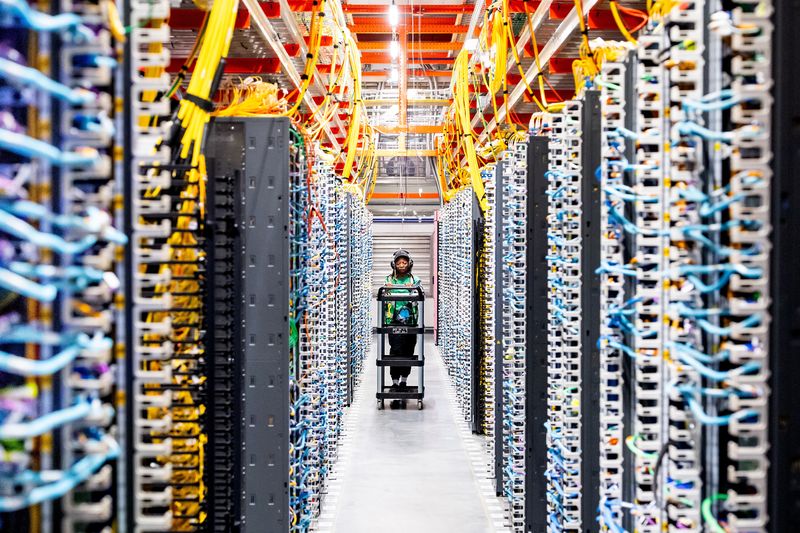
[Financial News] Global data center electricity consumption could surge to twice its current level by 2030, raising concerns that it may place a severe strain on existing power grids.
On the 19th (local time), business news channel CNBC reported, citing a report released by the International Energy Agency (IEA), that annual electricity consumption by data centers worldwide could reach about 1,000 terawatt-hours (TWh) by 2030. It said that even new data center construction projects could be delayed if power infrastructure is not expanded in time. The IEA analyzed that tight supply chains, opposition from local residents and limited grid capacity would be major obstacles slowing data center construction. The forecast was based on the IEA’s “Announced Pledges Scenario,” which incorporates policies announced by various countries but not yet formally adopted.
The report noted a succession of large-scale data center construction projects, particularly in Texas and Virginia in the United States, Finland and the United Kingdom. In some areas, the combined capacity of data centers waiting for grid connections already exceeds the region’s current peak electricity demand.
The IEA warned that without grid upgrades, congestion across power networks would worsen and the reliability of supply would deteriorate significantly. New projects would face much longer waits for grid connections, and if the grid cannot meet demand, power plants could be forced to curtail generation, the agency explained.
The IEA forecast that global peak electricity demand would increase by 40% to 50% by 2035. According to the “Announced Pledges Scenario,” 26 million km of new transmission and distribution lines would need to be built by 2035 to meet this demand, while about 16 million km of existing power lines would also need to be replaced or refurbished. However, supplies of key raw materials and equipment, including copper, cables and transformers, are already tight.
Even under the “Current Policies Scenario,” which is based on existing energy policies and regulations, spending on power grids is forecast to surge by 75% over the next decade. The IEA described grid construction as “one of the biggest investment stories in the energy sector over the next decade.”
The IEA said the acceleration of renewable energy and electrification would also be notable. The increase in renewable power generation over the next decade is expected to be 85% greater than in the previous decade, and solar power is expected to become the world’s largest source of electricity from the late 2030s. The IEA also analyzed that electricity’s share of global final energy consumption would approach 30% by 2035, far exceeding the 23% forecast in previous major scenarios.
[email protected] Yoon Jae-joon Reporter