“Even an Agreement Won’t Reassure”: Japan Wary of Regular US-China-Russia Talks
- Input
- 2026-11-20 08:47:50
- Updated
- 2026-11-20 08:47:50
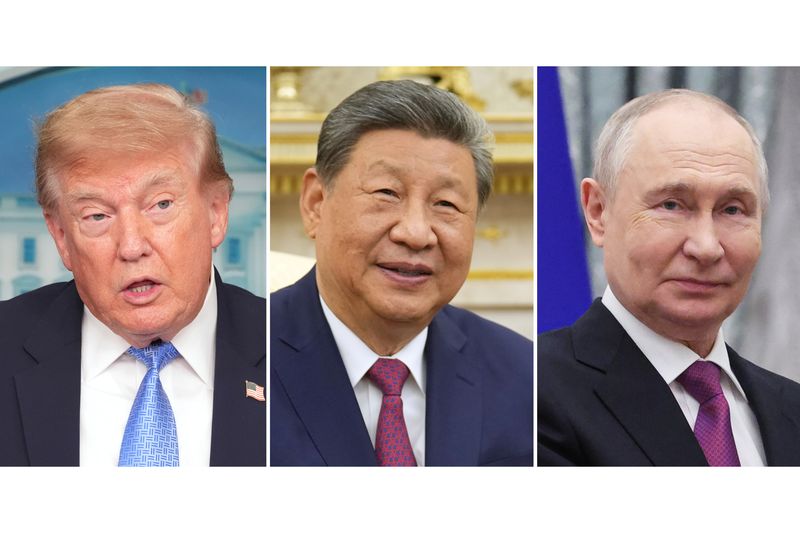
【Financial News, Tokyo = Correspondent Seo Hye-jin】Japan is voicing concern over the actions of its ally, the United States, in the wake of the first-ever US-China-Russia summit. Although there was no clear agreement, Japan could be excluded from discussions on security issues such as North Korea’s nuclear program if talks among the three countries become routine. There were also warnings that China and Russia could invoke their shared view of history as victors in World War II to draw the United States into pressuring Japan.
“A political show for now”: Whether the talks become regular is key
According to the Nihon Keizai Shimbun (The Nikkei) on the 20th, Japan’s Foreign Ministry is wary that talks among the US, China and Russia could expand to include ministerial-level meetings.
A senior Foreign Ministry official described the summit as “more than half a ceremonial event” but also voiced concern about discussions on North Korea that exclude Japan. If US President Donald Trump accepts North Korea’s possession of nuclear weapons, issues such as the abduction of Japanese citizens could be pushed to the back burner.
Many assessments see clear limits to the summit’s achievements. The three leaders issued a “peace declaration” that included reducing nuclear risks and dialogue on nonproliferation, but did not agree to hold regular meetings. The Asahi Shimbun noted that “the declaration omitted the issue of Ukraine and left room for each country to interpret the nuclear-related language differently.”
Shin Kawashima, a professor at the University of Tokyo, told the Yomiuri Shimbun that “this summit is not a turning point in the international order,” adding that there is not much the three countries can decide.
However, repeated summits could take on a different significance. Ryo Sahashi, a professor at the University of Tokyo, predicted that if the three countries meet again at next month’s G20 summit in the United States, the perception could spread that the US has embarked on a new diplomatic course, potentially weakening its ties with Europe and others.
“Putin the biggest winner”: Japan wary of historical alignment
Experts focused less on the agreements than on the political gains made by the leaders. Professor Sahashi assessed that “the biggest winner is President Putin.” The analysis is that Russia, isolated since its invasion of Ukraine, gained an opportunity to stand alongside the US and China on the diplomatic stage of the great powers.
Yuichi Hosoya, a professor at Keio University, offered a similar forecast in an interview with the Asahi Shimbun before the summit. For President Putin, who is subject to an arrest warrant issued by the International Criminal Court (ICC), simply joining forces with President Trump, who criticizes and sanctions the ICC, is itself an achievement, he said.
There was also analysis that President Trump wants a diplomatic legacy after his midterm election defeat, while Chinese President Xi Jinping wants to project the image of a leader who mediates between the US and Russia. Professor Kawashima said, “Their interests aligned in that all three wanted to be photographed together.”
Japan’s concern is that their meeting could lead to a shared message to the outside world, going beyond political gains. At the summit, President Xi and President Putin stressed that, as victors in World War II and permanent members of the UN Security Council, they share responsibility for international peace.
The Asahi Shimbun’s China bureau chief, Norihiko Saito, interpreted this as a claim that they, as victors, should lead the international order. Since China criticizes Japan as “a country challenging the postwar international order,” such solidarity could be aimed at Japan. Professor Hosoya also said China and Russia might try to secure President Trump’s support in denouncing Japan as “a new form of militarism.”
The Nikkei’s editorial writer Hiroyuki Akita also warned of the risk that deals among great powers could allow changes to the status quo by force. If Russia returns to the diplomatic stage while retaining the gains it made through aggression, it would send a signal that the use of force is rewarded, and China could also take a harder line on Taiwan and the South China Sea, he argued.
“Maintain the alliance with the US while expanding cooperation with South Korea and Europe”
Experts recommended that Japan broaden its partners while maintaining US security engagement in East Asia. Professor Kawashima stressed that Japan should consistently explain its grave security situation, saying that if the US aligns with China and Russia, countries that need to counter them will find it harder to rely on the US.
Professor Sahashi said Japan is not diplomatically isolated and should take concrete action based on its ties with the US, Europe, South Korea, Australia and Southeast Asia.
Professor Hosoya spoke positively of the Quad and cooperation among Asian countries on oil stockpiling and emergency procurement. He said that rather than going along with deals among great powers, countries that share values should strengthen practical cooperation and contribute to stabilizing the international order.
[email protected] Seo Hye-jin Reporter