“The Engine Is Just There to Help”... 300 km in the BYD Sealion 6 DM-i [Gittongchan Mobility]
- Input
- 2026-11-21 06:59:00
- Updated
- 2026-11-21 06:59:00
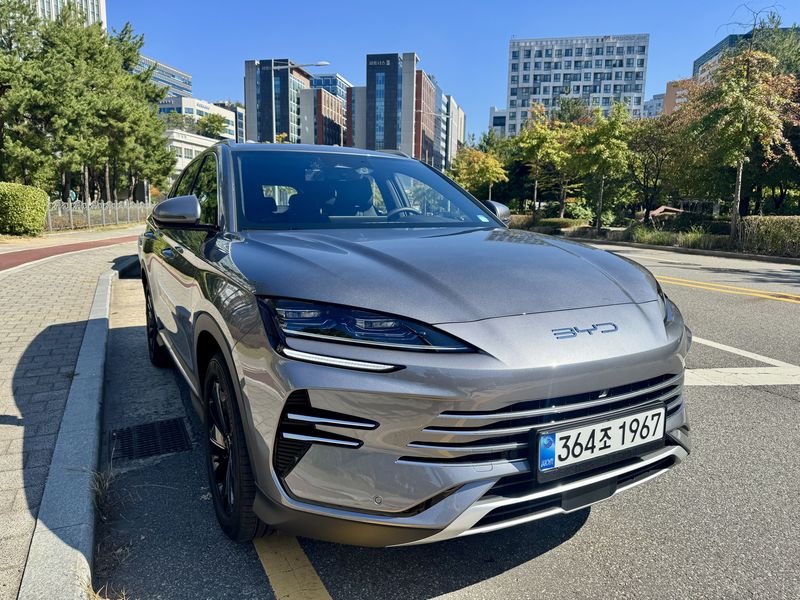
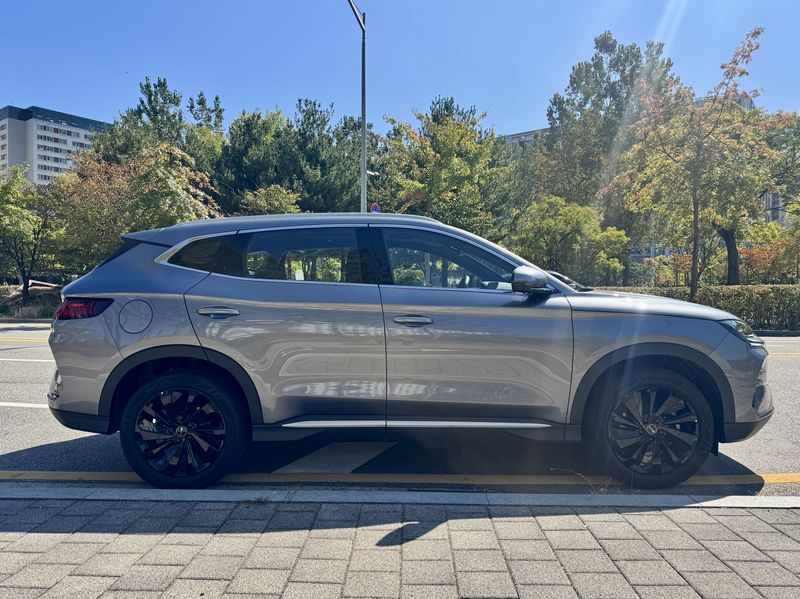
The drive covered about 300 km, mainly around Seoul. It used as much as it could in electric (EV) mode first, then continued in hybrid (HEV) mode.
BYD has a long history with PHEVs. In 2008, it became the first company in the world to mass-produce a PHEV, with the F3DM, and has built at least 8 million over the following 18 years. The Sealion 6 DM-i is a key model in BYD’s SUV lineup and has sold more than 1.1 million units worldwide. BYD describes it as the world’s top-selling hybrid SUV (J.D. Power AutoVista24, 2025 figures).
In the Sealion 6’s DM-i system, the motor does most of the work of turning the wheels, while the engine stays in the background as a generator or auxiliary power source. The front motor produces a maximum output of 204 hp and peak torque of 300 Nm. The engine is a 1.5-liter gasoline turbo called “Xiaoyun,” developed specifically for hybrids, and produces 130 hp and 220 Nm. Its thermal efficiency reaches 40.12%. When the battery charge drops below 25%, the engine drives a generator instead of the wheels to replenish the battery. Above 70 km/h, the engine directly powers the wheels, with the motor assisting when more power is needed. BYD says the system is programmed to keep the charge from falling to 0%.
Efficiency is the figure this car touts most. With its 18.3-kWh Blade battery, it can travel 70 km on electricity alone under the Ministry of Environment’s certification standards. Combined fuel economy is 15.2 km/L, and combined energy efficiency is 4.2 km/kWh. The fuel tank holds 60 liters. I didn’t separately record the actual fuel economy during this test drive, but the impression of its efficiency remained clear throughout the 300 km.
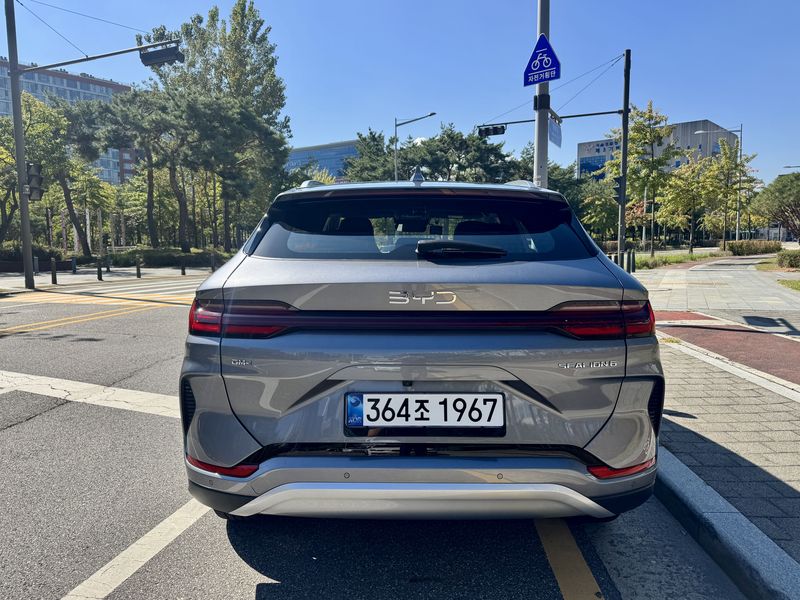
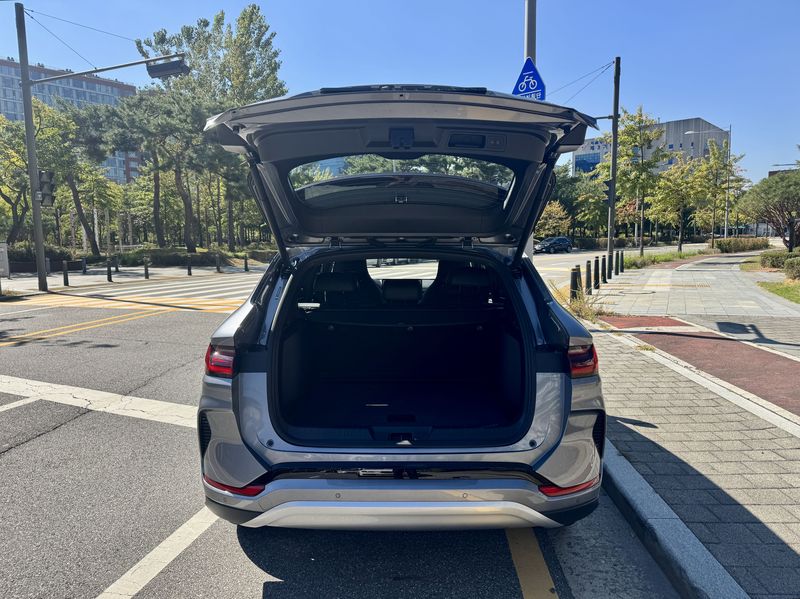
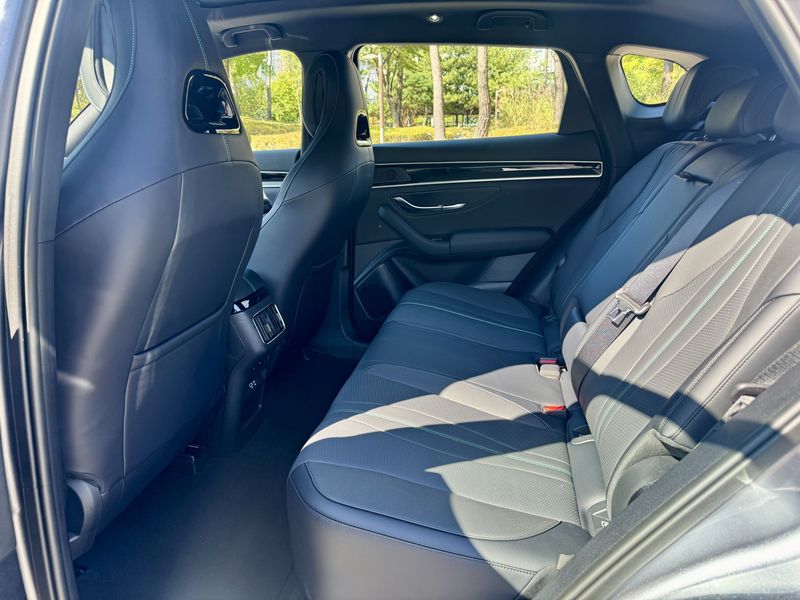
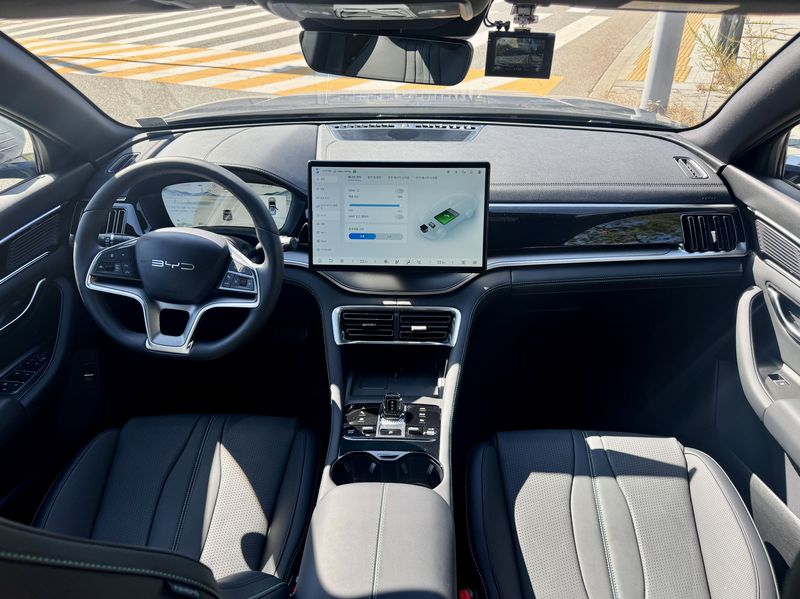
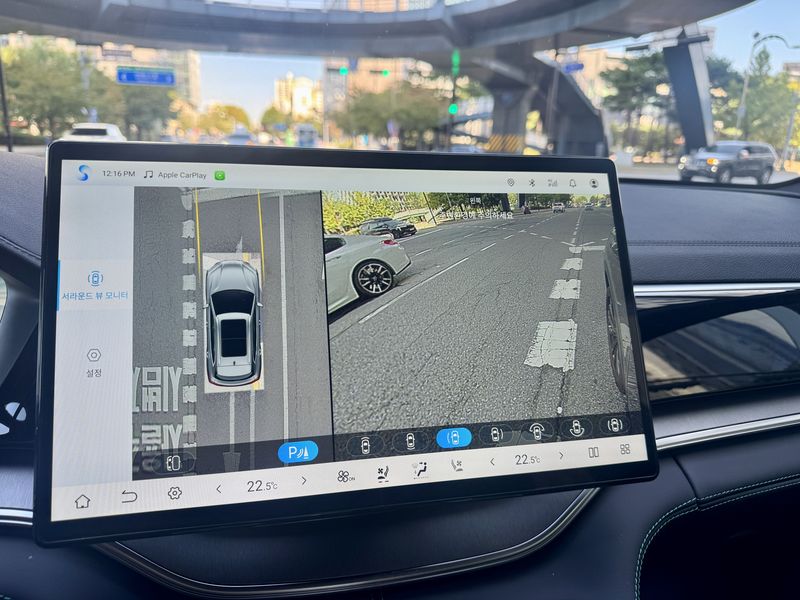
The cabin centers on a 15.6-inch central display and a 12.3-inch instrument cluster. Kakao Map comes standard for navigation. The second row has heated seats and adjustable backrest angles, and the 1.085 m2 panoramic glass roof has a power sunshade. The trunk holds 425 liters, expanding to 1,440 liters when the second row is folded down.
Unlike most existing PHEVs, which generally support only slow charging, this one also supports DC fast charging. At 18 kW, charging the battery from 30% to 80% takes about 30 minutes; slow charging takes 2.8 hours for a full charge. It also offers V2L, supplying up to 3.3 kW for external use. For safety, it has seven airbags and earned Euro NCAP’s top five-star rating, with scores of 90% for adult occupant protection and 86% for child occupant protection. Driver-assistance features such as Intelligent Cruise Control are standard.
The front-wheel-drive model is priced at 37.5 million won. In October, an all-wheel-drive version with a larger battery and more convenience features was added at 41.9 million won. According to BYD Korea Company Ltd., the Sealion 6 DM-i ranked first in monthly registrations among imported PHEVs for three consecutive months, from August through October, based on figures from the Korea Automobile Importers & Distributors Association (KAIDA), and completed delivery to its 1,000th customer in Korea on the 5th.
Over 300 km, this car did two main things. When the battery had charge, it drove without engine noise; as the charge fell, the engine stepped in before the battery ran dry, keeping it from bottoming out. There was almost nothing the driver had to manage. Meanwhile, the suspension let the road pass beneath it with an easy, compliant motion. It’s not a flashy car. It quietly gets on with the job it’s given.
[email protected] Kim Dong-chan Reporter