[Editorial] China–South Korea FTA That Loosened the ‘Hallyu Ban’ Lock Must Lead to a Trade Surplus
- Input
- 2026-11-19 18:35:35
- Updated
- 2026-11-19 18:35:35
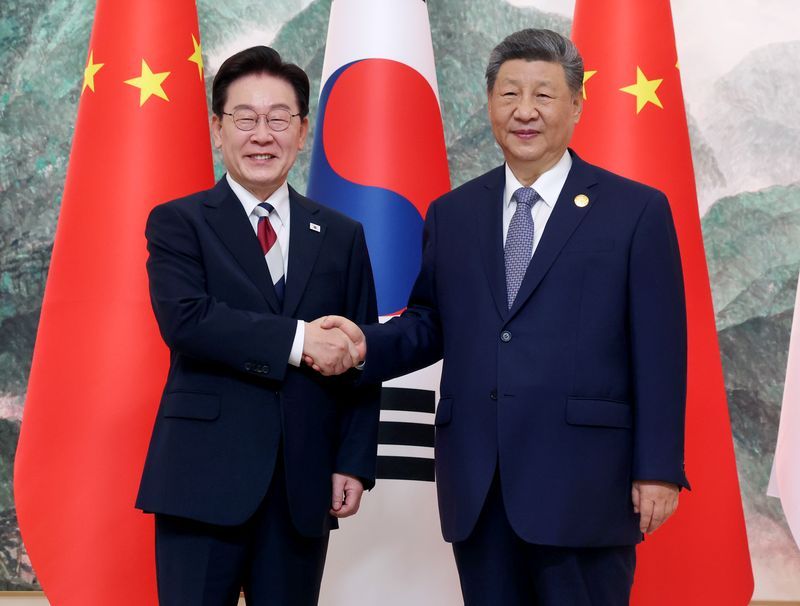
The road to concluding the negotiations was long. The China–South Korea FTA, which took effect in December 2015, was in practice little more than an agreement centered on goods. Negotiations on services and investment, left as an unfinished task, began in 2018 but were stalled for more than four years by setbacks including the fallout from the THAAD (Terminal High Altitude Area Defense) dispute, the hegemonic rivalry between the United States and China, and COVID-19. The negotiations were eventually concluded following the resumption of the China–South Korea diplomatic and security dialogue in 2024.
The scope of the opening is also substantial. In construction, restrictions on Korean companies’ participation in foreign-investment projects in China have been abolished, while the requirement for local joint ventures has been eliminated in distribution. In finance, “future most-favored-nation treatment” has been introduced, meaning South Korea will automatically benefit if China further opens its market to a third country. In tourism, Korean travel agencies operating in China can now sell overseas travel packages to Chinese nationals and foreigners and recruit tourists. In law, Tianjin, Qianhai in Shenzhen and Hainan have been added to the locations where Korean law firms can partner with Chinese law firms.
The significance of the negotiations’ conclusion is that it has created an opening to reduce South Korea’s trade deficit with China. Last year, trade between the two countries totaled $272.7 billion, making China South Korea’s largest trading partner, but South Korea recorded a trade deficit of $11.1 billion and a current account deficit of $25.3 billion.
But it is too early to be optimistic. We need to consider which side will benefit from the doors opening in both directions. This is all the more important because the Hallyu ban—China’s restrictions on Korean Wave content—is an “invisible regulation.” We cannot ignore that, just as the door has opened for Korean companies to enter China, it has also become easier for Chinese fintech and travel platforms to enter South Korea. In gaming, Korean game companies remain hamstrung by the issuance of game licenses (panhao, permits to provide games in China). Approval for large-scale K-pop concerts was not included in the agreement.
The South Korean and Chinese media showed a subtle difference in tone. South Korean media described the deal as “effectively lifting the Hallyu ban,” but Chinese state media reported that President Xi had said, “Let us gradually develop healthy and beneficial cultural exchanges.” Specific provisions concerning the Hallyu ban or films and games were not included in China’s official announcement.
The government should now focus its support on areas where South Korea has a competitive edge, such as intellectual property (IP) in gaming, variety show formats and K-pop co-production systems. It should also put data protection and fair competition rules in order to guard against Chinese platforms and capital eroding the domestic market. China still holds the leverage over the Hallyu ban. We must not let our guard down until the results are confirmed in the numbers.