“Didn’t Receive the CSAT Emergency Alert” ... Controversy Over Failure to Receive Alerts Despite Three Nationwide Transmissions
- Input
- 2026-11-19 16:44:28
- Updated
- 2026-11-19 16:44:28
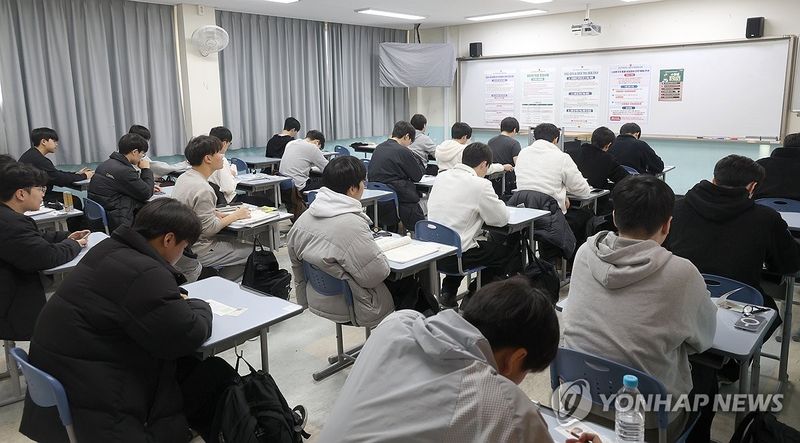
[Financial News] The government sent emergency disaster text alerts nationwide to detect cheating on the College Scholastic Ability Test (CSAT), but claims emerged that alerts did not sound on some mobile phones. The Ministry of the Interior and Safety (MOIS) said there had been no officially reported cases of nonreceipt, while noting that alerts may fail to arrive depending on network conditions or phone model.
At 8:30 a.m. on the 19th, the government sent the first emergency disaster text alert nationwide. The aim was to make hidden mobile phones that test-takers had not handed over to proctors sound an alert, thereby identifying devices that could be used for cheating.
The government sent additional disaster alerts without warning at 2:21 p.m. and 2:57 p.m., while the exam was in progress. Emergency disaster text alerts cannot be blocked through ordinary mobile phone settings. When received normally, they are designed to sound for 10.5 seconds at maximum volume, with an alert volume of at least 40 decibels (dB).
However, immediately after the first disaster alert was sent that morning, people shared accounts on online communities of whether alerts were received varying from phone to phone.
While some posts said alerts sounded simultaneously on family members’ phones, others claimed that only one member of a family did not receive the message, or that alerts failed to sound even on phones with active service.
In response, the Ministry of the Interior and Safety said that no cases of disaster alerts not being received had been officially reported by 9:20 a.m. that day.
In an explanatory statement issued later, MOIS said that, unlike ordinary text messages delivered to specific recipients, disaster alerts are broadcast to all mobile phones connected to a base station. It said phones released in accordance with relevant domestic and international standards can receive emergency disaster text alerts.
However, it said there may be exceptions involving older phones that use third-generation mobile communications (3G) or illegally modified devices. It added that alerts may also fail to arrive if a phone is in an area with a weak signal or has a software error.
MOIS said it was conducting inspections with mobile carriers to reduce areas where receiving disaster alerts is difficult, including by improving base station conditions in remote areas.
The mobile telecommunications industry also said that situations in which disaster alerts are not received can occur. Messages may fail to arrive if a phone is in a place with unstable network conditions, such as an underground space or an elevator, or if the connection is temporarily lost while the phone is moving.
However, the industry said it was difficult to determine the exact cause because it was hard to verify whether phones alleged to have missed alerts were actually connected to the network when the messages were sent.
Alongside the controversy over whether disaster alerts were received, claims continued that users could avoid the alert by altering their phones in advance. From the day before the CSAT, posts circulated online saying that disabling operating system restrictions or removing certain components could prevent the alert from sounding.
However, it has not been confirmed whether these methods actually work. The government also said it was difficult to determine accurately whether modifying a device could enable receipt of disaster alerts or block the alert sound.
A MOIS official said that sending emergency disaster text alerts was one of several measures implemented to prevent cheating and ensure fairness in the CSAT.
[email protected] Han Seung-gon Reporter