Can Korean-Made Helicopters Take Off With Lockheed Martin Technology?
- Input
- 2026-11-20 06:29:00
- Updated
- 2026-11-20 06:29:00
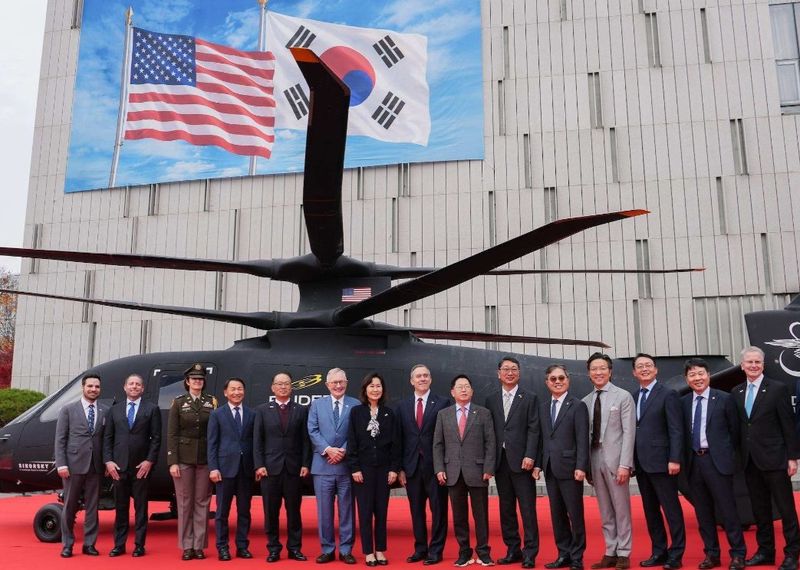
[Financial News] Lockheed Martin Corporation, the world’s largest defense contractor, has repeatedly made overtures to jointly develop and produce a high-speed medium utility helicopter (HSMUH). It has also made an unprecedented promise to transfer up to 90% of the intellectual property (IP) for its next-generation rotorcraft technology (Sikorsky X2). Attention is focused on whether receiving the coaxial rotor, a core component of X2, could give Korean-made helicopters a chance to take a leap forward.
According to industry sources on the 20th, Lockheed Martin Corporation displayed an S-97 Raider helicopter equipped with X2 while co-hosting an event with the U.S. Embassy in South Korea to mark the 250th anniversary of the founding of the United States. Sikorsky Aircraft, Lockheed Martin Corporation’s helicopter business, has recently expressed its willingness on several occasions in public to jointly develop the HSUMUH with South Korea, and made another pitch at the event.
This time, it made an unprecedented promise. Dylan Landis, Sikorsky Aircraft’s head of strategy and business development for the Indo-Pacific region, said at the event, “Over the past 15 years, we have invested more than $1 billion in developing X2, and we will transfer to South Korea’s industry up to 90% of the intellectual property acquired in the process.”
The industry’s attention focused on whether the coaxial rotor, a core component of X2, would also be included in the transfer. The system generates lift with a pair of rotors mounted together that rotate in opposite directions, and produces thrust with a pusher propeller at the tail. If transferred, it could provide momentum for the indigenous development of medium- and large-sized high-speed helicopters, a capability Korean-made helicopters have yet to achieve.
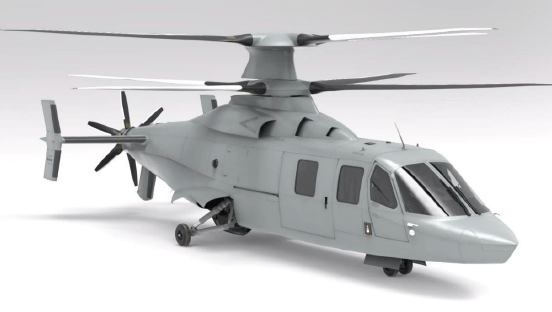
It remains unclear whether the coaxial rotor will be included in the transfer. The specific technologies to be transferred can only be determined through consultations once joint development moves forward. However, if the project proceeds, there is a strong likelihood that core technologies, including the coaxial rotor, will be transferred. X2 is not currently used by the U.S. military, leaving considerable scope for approval of a technology transfer.
Back in 2022, the X2-based SB-1 Defiant was passed over in the U.S. Army’s Future Long-Range Assault Aircraft (FLRAA) program. The Bell V-280 Valor, which uses Bell Textron’s tiltrotor technology, was selected. Among the key technologies for high-speed helicopters, tiltrotor technology is unlikely to be transferred, making the coaxial rotor almost the only technology with a real prospect of transfer.
The South Korean military plans to field a next-generation HSMUH in the late 2030s to replace the UH-60 Black Hawk. It is expected to be jointly developed by Korea Aerospace Industries (KAI) and a foreign defense contractor with helicopter technology. Unlike Bell, which cannot access core technologies, Sikorsky Aircraft is positioning itself to win the HSMUH contract by emphasizing that it can lay the groundwork for Korean-made helicopters to take a leap forward.
[email protected] Kim Yun-ho Reporter