Delay Damages on Enforcement Costs to Accrue From the Day After the Decision Becomes Final... Supreme Court En Banc Changes Precedent
- Input
- 2026-11-19 16:06:26
- Updated
- 2026-11-19 16:06:26
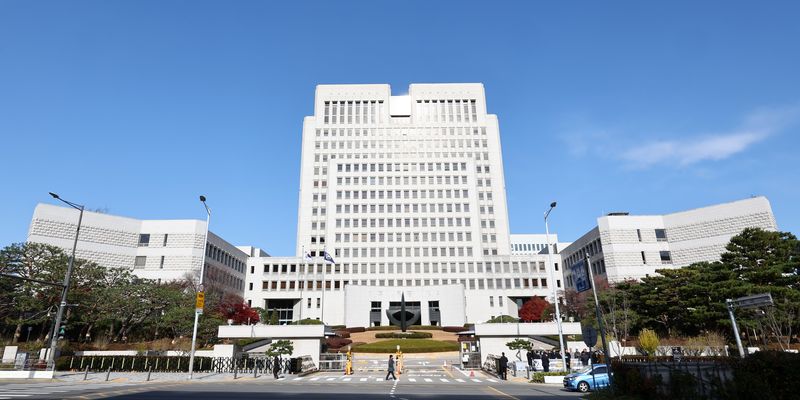
[Financial News] The standard for determining when delay damages become payable after late repayment of litigation costs and enforcement costs has changed for the first time in 18 years. Liability for delay now arises the day after the decision becomes final, not when the debtor learns that the decision fixing the amount of costs has become final.
The Supreme Court Grand Bench, with Justice Shin Sook-hee serving as the justice in charge, on the afternoon of the 19th set aside the part of the lower court ruling on the claim for delay damages in an appeal by Company A in a suit against limited partnership B and its general partner C seeking reimbursement of costs. The court ruled on the claim itself and granted it. The trial court and appellate court had dismissed the entire suit. The decision was unanimous among all justices, with a supplementary opinion by Justice Shin Sook-hee.
The precedent being changed was established by a Supreme Court ruling issued in July 2008. Under the previous view, liability for delay arose once the decision fixing the amount of costs became final and the debtor learned of that fact. This interpretation followed the Civil Act, which provides that a debtor whose debt has an uncertain due date becomes liable for delay from the time the debtor learns that the due date has arrived. The Supreme Court overturned that view, holding that liability for delay arises immediately on the day after the decision becomes final.
The basis for the ruling was the nature of the claim. The Supreme Court held that the right to reimbursement of litigation costs and enforcement costs is “a claim with no fixed due date for performance, for which the creditor may seek a determination of the amount of costs at any time,” and that the effect of the demand made through an application to determine the costs continues until the decision becomes final. It said that recognizing liability for delay “regardless of whether the debtor is aware” was not harsh, since procedural safeguards, including notice, had already been provided to the debtor during the determination process.
The courts also differed on whether there was a legal interest in bringing a separate suit. The Supreme Court held that there is a legal interest in filing a separate suit for delay damages on the finalized amount of costs. In compulsory execution, the scope of the enforceable claim is determined by what is stated in the enforceable title; if the order in the decision fixing the amount of costs does not specify delay damages, that portion is not enforceable.
Practice had diverged on this point. The prevailing view in enforcement practice was that claims for delay damages were not enforceable claims, while in litigation practice many lower courts had denied a legal interest in a separate suit, reasoning that the enforceability of the decision fixing the costs also extended to delay damages. The Supreme Court said this inconsistency had created “a gap in the protection of rights.”
As a solution, the court introduced a new form of order. Going forward, if an applicant seeks a determination of both the amount of costs and delay damages, the order in the decision fixing the costs must specify not only the amount to be reimbursed but also the extent of the delay damages. Requiring parties to bring another suit to obtain a separate enforceable title could generate further costs in that proceeding and lead to “an endless cycle of disputes,” the court said.
Company A is developing a public golf course in Chuncheon, while B is a company that provides intermediate treatment of construction waste and occupies part of the project site. Using an earlier decision recommending settlement as an enforceable title, A obtained a decision authorizing substitute execution and removed B’s equipment. The enforcement costs, totaling KRW 1,057,842,590, were finalized on February 15, 2023. B paid only that amount on the 24th of the same month and did not pay delay damages. The amount A sought in this suit—remaining principal plus delay damages—was KRW 201,637,824.
The Supreme Court found that delay damages began accruing on February 16, the day after the decision became final, and held that B must pay delay damages at an annual rate of 5% on the remaining principal of KRW 1,304,189, from February 25, 2023, after statutory appropriation of the payment. It upheld the dismissal of the claim for the remaining principal itself, holding that it must be enforced using the decision fixing the costs as the enforceable title. The appeal against general partner C was dismissed for lack of proof of the requirements for claiming secondary liability.
[email protected] Kim Dong-gyu Reporter