“We Have Core Secrets, Too”... Food Industry Grapples With AI Glass Technology Leaks
- Input
- 2026-11-22 12:59:01
- Updated
- 2026-11-22 12:59:01
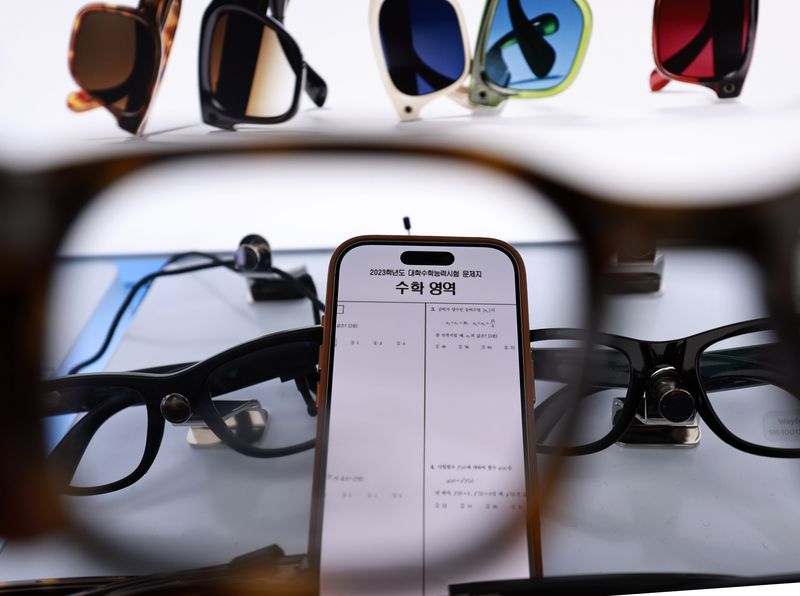
[Financial News] As cheating on exams using wearable devices such as AI glasses comes to light, the food industry is working on countermeasures amid concerns about confidential information leaks. Wearable devices that are hard to distinguish from ordinary glasses can be used to film or record research labs and production sites and transmit the footage or audio externally in real time. Food companies, in particular, are generally reluctant to disclose their formulas and manufacturing know-how, so most manage them as trade secrets instead of registering patents. This has deepened their concerns, as leaked technology can be difficult to protect legally.
According to industry sources on the 22nd, as concerns about industrial secrets being leaked through wearable devices such as AI glasses spread across industries, food companies are also updating security rules for research labs and production lines.
CJ CheilJedang plans to establish detailed and specific security rules for wearable devices at its research labs and business sites, following the recent attention surrounding AI glasses. The plan is still at the internal review stage, however. Samyang already controls the entry and use of unauthorized devices, but is reviewing related developments and the need for additional security measures in response to recent concerns about AI glasses. Lotte Chilsung Beverage follows the group’s AI guidelines for security and encrypts key files to prevent them from being viewed externally. Other major food companies, including Orion, Pulmuone and hy, have so far put in place rules limiting the entry of portable devices capable of taking pictures or recording audio.
Industry figures and experts agree that the existing rule banning the entry and use of unauthorized devices capable of taking pictures or recording audio is not enough to prevent increasingly sophisticated methods of leaking technology and critical information.
An industry source said, “Research labs inspect devices only when they are taken out, so someone can bring a device in, leak confidential information, and then simply not take the device back out,” adding, “Under the current rules and systems, it is entirely possible to leak confidential information using wearable devices.” Park Choon-sik, a former professor in the Department of Information Security at Seoul Women’s University, said, “Companies cannot make rules fast enough to keep up with the pace of technological development,” adding, “The time has come for stronger regulations to prevent technology leaks, rather than legislation tailored to portable devices such as smartphones.”
Food industry trade secrets may appear less important for security than those in advanced industries such as semiconductors and batteries, but the risks felt on the ground are far from insignificant. Given the nature of food manufacturing, which combines fine variables such as moisture content, ingredient ratios, processing steps, drying conditions and particle size to achieve a particular taste and texture, it is important to possess substantial research and development (R&D) data and confidential information.
Even so, food companies are extremely reluctant to register their manufacturing methods as patents. Filing a patent requires publicly disclosing approximate ingredient ratios and production processes, clearly revealing the direction of the core technology. Competitors can readily make similar copycat products using only the disclosed information, and once a certain period has passed, the exclusive rights expire, allowing anyone to follow the recipe. As a result, most companies manage their technology as internal trade secrets instead of registering patents. But without the legal protection of a patent, it is much harder to protect their rights if the information leaks outside the company.
In particular, companies have recently been conducting research into high-value-added areas such as room-temperature storage technology for home meal replacements (HMR), alternative sweeteners, microorganisms and biotechnology, increasing the impact of a technology leak. Without the legal protection of a patent, companies may not even be able to obtain redress if confidential information is leaked externally.
Hwang Seok-jin, a professor at the Graduate School of International Information Security, Dongguk University, added, “Many small and medium-sized companies possess core technologies, but the high cost of security equipment makes it difficult for many of them to invest in preventing technology leaks,” and “It is also important to strengthen criminal penalties to cover technology leaks and prevent the leakage of core technologies.”
[email protected] Park Kyung-ho Reporter