14-Year-Old Convenience Store Medicine Regulations Set for Overhaul... Conflict Resolution Put to the Test Amid Pharmacists' Association Opposition
- Input
- 2026-11-19 15:33:23
- Updated
- 2026-11-19 15:33:23
[Financial News] Expanding the range of safe, nonprescription medicines sold at convenience stores has become a full-fledged subject of discussion. Current law allows up to 20 types of these medicines to be sold at convenience stores, but in practice only 11 types are available for purchase there. The government says sales should be expanded to ease consumers’ difficulties in buying medicines and address supply gaps in vulnerable areas. The Korean Pharmaceutical Association, however, is opposing the move, including by boycotting the forum, arguing that sales are not being properly managed and supervised.
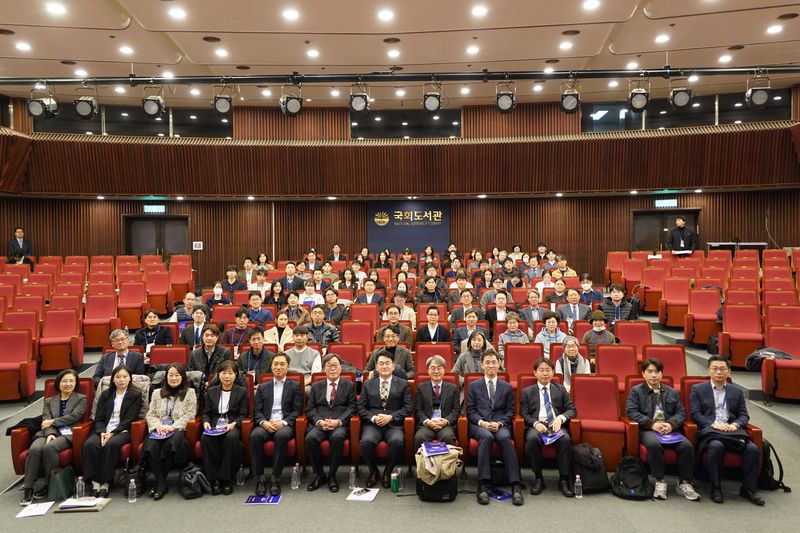
The Public-Private Joint Regulatory Rationalization Task Force at the Office for Government Policy Coordination and the National Assembly Futures Institute held the first session of the “Regulatory Conflict Resolution Forum” at the National Assembly Library on the 19th, discussing ways to improve the system for selling safe, nonprescription medicines outside pharmacies. The forum was established to help build social consensus through discussion on issues where the positions of various stakeholders clash.
In the opening remarks, Park Yong-jin, vice chair of the Regulatory Rationalization Committee under the president, stressed, “While the government delays decisions out of concern about conflict, institutions can fail to keep pace with changes in reality, and the resulting inconvenience and costs sometimes fall entirely on the public.” He added, “Necessary changes should not be delayed simply because there is conflict.” Seemingly mindful of the Korean Pharmaceutical Association’s declaration that it would not attend the forum, he said, “Of course, this concerns the lives and health of the public and therefore requires careful review,” and, “We must do more than listen to differing positions; we must develop reasonable alternatives and responsibly work toward a conclusion.”
Expanding the range of medicines sold at convenience stores was mentioned in the president’s policy briefing last July. At the time, Health and Welfare Minister Jung Eun-kyeong said the number of types available at convenience stores would be increased to as many as 20, and that the criteria would be relaxed to allow stores that do not operate 24 hours a day to sell them in areas without pharmacies or 24-hour retail outlets. The system for selling medicines at convenience stores was introduced in 2012 to make it easier to buy medicines late at night and on public holidays, and 13 items were designated at the time. However, after supplies of two products were discontinued, only 11 items are currently on sale. Under current law, up to 20 types may be sold, leaving nine items absent from the lineup.
The forum highlighted that the list of items had not been updated in 14 years and that even discussions on adding new ones had not proceeded smoothly. Some argued that items with confirmed safety and strong consumer demand, such as fever reducers for children, should be added. The forum also heard calls for special exemptions in vulnerable areas, including rural and depopulating regions, where access to medicines is limited because there are neither pharmacies nor 24-hour stores.
Participants also agreed that the safety of medicines sold at convenience stores needs to be thoroughly reviewed. An on-site survey of 1,033 locations in July 2025 found that 97.2% violated requirements, including failing to report business suspensions or closures, falling short of the 24-hour operating requirement, and selling more than one item per transaction. The National Assembly Futures Institute agreed that sales outlets need to be adequately managed and supervised.
The push to expand convenience-store medicine sales has gathered pace, led by the Ministry of Health and Welfare and the Regulatory Rationalization Committee, among others. But fierce opposition from the Korean Pharmaceutical Association and others remains an issue to be resolved. The association was invited to the forum but did not attend, as it viewed participation as “a token role, with attendance serving as justification after the answer had already been decided.” That same day, its members held a press conference at the National Assembly Building and said, “We condemn the Office for Government Policy Coordination’s irresponsible policy push to expand sales before correcting failures in safety management.” They also argued, “The government must take responsibility for a full investigation into how the current sales system is operating and put safety management measures in place first.”
[email protected] Lee Hae-ram Reporter