Land Ministry Accepts Seocho-gu’s View That Reconstruction Charge Deadline Cannot Be Extended ... Banpo Hyundai Likely to Be Charged This Year
- Input
- 2026-11-19 14:39:36
- Updated
- 2026-11-19 14:45:35
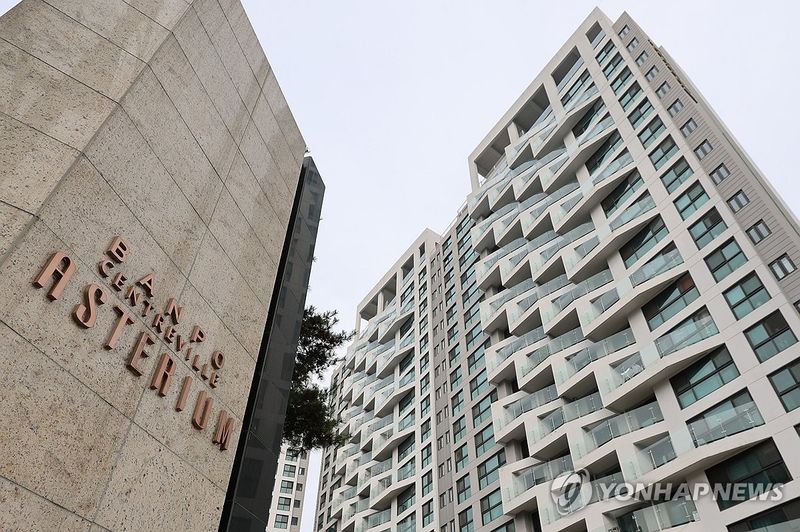
[Financial News] The Ministry of Land, Infrastructure and Transport concluded that the deadline for imposing the reconstruction excess profit recovery charge should be calculated as five years and five months after the date of approval of completion. It accepted the interpretation of Seocho-gu, Seoul. The Banpo Hyundai reconstruction complex, which was notified by Seocho-gu of a projected levy of 17.9 billion won, must complete the levy process by the end of this year.
On the 19th, the Ministry of Land, Infrastructure and Transport said in a press release that it had informed Seocho-gu and others of its legal interpretation of the exclusion period for imposing reconstruction charges. The exclusion period is the period set by law for exercising a right; once it expires, the charge can no longer be imposed.
The reconstruction excess profit recovery system recoups excess profits as a charge when the average excess profit earned through reconstruction exceeds 80 million won per association member, applying a levy rate of 10 to 50 percent depending on the amount of excess profit.
The issue at the center of this case is Article 3 of the supplementary provisions to the Act on Restitution of Excess Profits from Reconstruction, amended in December 2023. Its key provision states, “The reconstruction charge may be determined and imposed within five months of the date this Act takes effect.” Opinions were divided over whether this clause reset the starting point of the five-year exclusion period to March 2024, when the amended law took effect.
At the time, Seocho-gu objected, arguing that the supplementary provision established an “exception to the levy period” allowing charges to be determined for projects completed before the amendment. It argued that the provision was not intended to extend or newly establish the five-year exclusion period. The district’s position was that the exclusion period should be five years from the date five months after the approval of completion.
The Ministry of Land, Infrastructure and Transport, however, argued that the five-year period should run from March 2024, when the amended law took effect. In other words, it interpreted the law to mean that charges could be imposed through August 2029.
If a complex was completed in 2021, the deadline for imposing the reconstruction charge would be 2029 according to the Ministry of Land, Infrastructure and Transport, but the end of this year according to Seocho-gu.
The Ministry of Land, Infrastructure and Transport accepted Seocho-gu’s argument. It said that resetting even the starting point of the exclusion period for imposing reconstruction charges to the date the amended law took effect would go beyond the wording of the law. The supplementary provision was an exception concerning the deadline for processing cases, not a measure that changed the starting point of the period.
The ministry also said it had taken into account that imposing a reconstruction charge is itself an administrative disposition that obliges members of the public to make a payment under public law (a monetary obligation citizens owe to an administrative authority), and that rules on the basis and period for imposing the charge must therefore be interpreted and applied strictly. In other words, because a charge is an order requiring the public to pay money, its legal basis and the period for imposing it should be interpreted narrowly and conservatively.
With the Ministry of Land, Infrastructure and Transport siding with Seocho-gu, future reconstruction charge cases have drawn attention. Seocho-gu sent prior notice to Banpo Hyundai, completed in 2021 and now known as Banpo Centerville Asterium, of a projected charge totaling 17.9 billion won, setting December 30 as the deadline for imposing it. The average per association member is around 220 million won. The final charge is expected to be determined after the association’s objections and relevant materials are reviewed. With imposition by the end of this year effectively confirmed under this interpretation, attention is focused on the final amount.
There are also concerns that litigation could spread on a large scale, beginning with Banpo Hyundai. While associations are calling for the abolition of the reconstruction charge, major law firms have also begun preparing in earnest by setting up task forces (TFs) for related lawsuits. Banpo Hyundai is expected to begin legal action early next year after receiving its final charge. Now that the Ministry of Land, Infrastructure and Transport has issued a specific interpretation, experts predict a succession of lawsuits involving individual complexes.
Experts predicted that the Ministry of Land, Infrastructure and Transport’s decision could reduce uncertainty surrounding future redevelopment projects. Ham Young-jin, head of Woori Bank’s Real Estate Research Lab, said, “Clarifying the levy deadline will reduce uncertainty for projects,” while predicting that “complex-specific levy risks and price differentiation are expected to persist.”
[email protected] Jeong Gyeong-su Reporter