“You Have to Wait Two and a Half Hours to Get In” ... Crowds Flock to Overseas Game Companies [G-STAR 2026]
- Input
- 2026-11-19 15:53:32
- Updated
- 2026-11-19 15:53:32
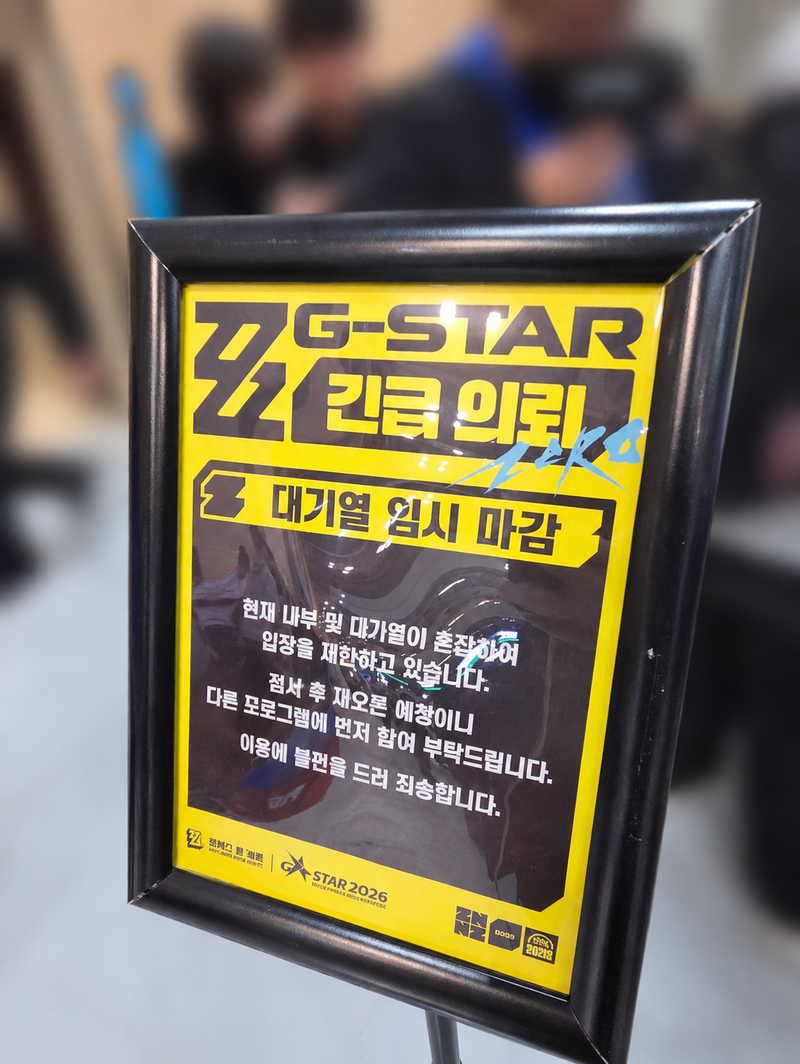
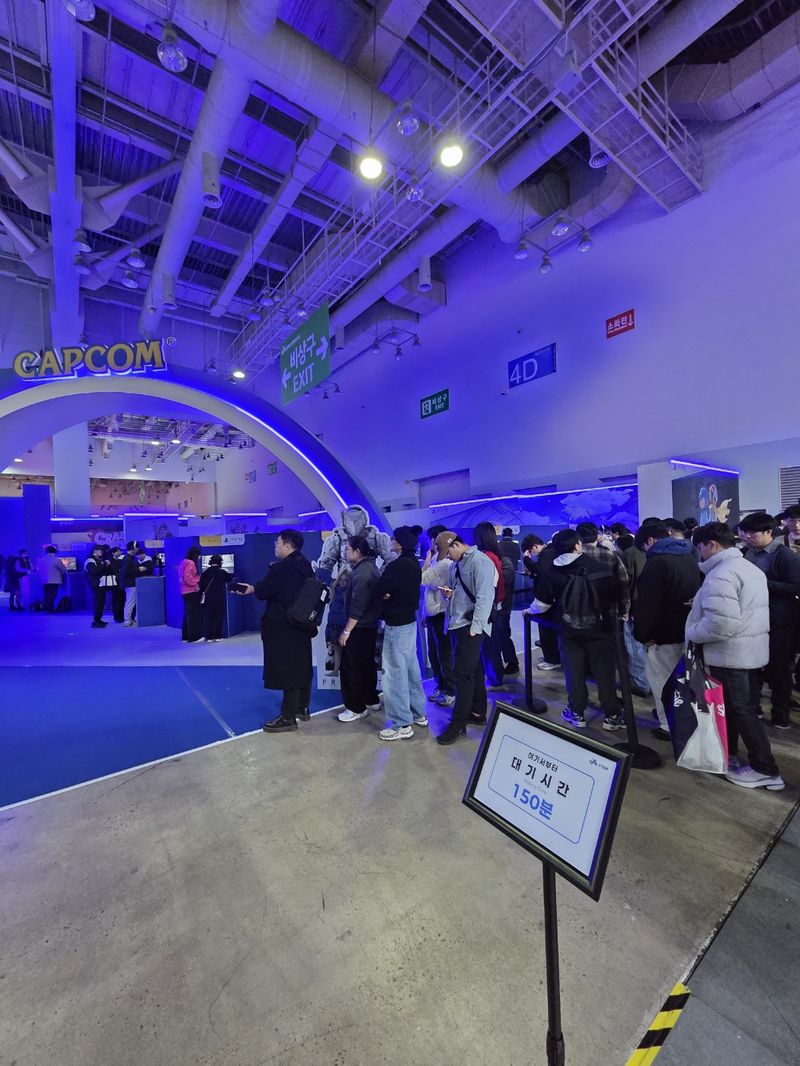
A sign reading “Queue Temporarily Closed” was put up outside the Zenless Zone Zero experience area, set up by Chinese game company HoYoverse in Exhibition Hall 1 at G-STAR 2026, the country’s largest game exhibition, which opened on the 19th at BEXCO in Busan. The entry queue closed early as visitors flocked to experience the game’s world firsthand. The sign said, “Entry is being restricted because the area inside and the queue are congested,” and added, “We expect to reopen shortly, so please enjoy another program first.” A Zenless Zone Zero representative explained, “Even if everyone currently waiting gets in, we can’t say exactly when we’ll be able to reopen the queue.” Capcom, the Japanese company that set up demo areas for new games due out next year, including Mega Man: Dual Override and Monster Hunter Wilds Ascendance, also put up a sign indicating a 150-minute wait as visitors formed a long line at its booth.
This year’s G-STAR appeared to be a showcase where overseas game companies filled the space left by major Korean game companies. With major domestic companies such as Nexon, NC, and Netmarble absent from the exhibition floor, Chinese companies HoYoverse and NetEase Games, Japanese companies Sega Corporation and Capcom, and Poland’s CD Projekt RED (CDPR), among others, sought to attract visitors with popular games and new releases. Chinese game companies focused on on-site events built around the fan bases of existing games, while Japanese and European companies emphasized hands-on experiences with new titles.
HoYoverse put considerable effort into experiential events that drew on the fan bases of its popular games. A café themed around Zenless Zone Zero sold baked goods and drinks inspired by the game. On the Honkai: Star Rail stage, the company offered various interactive programs, including “Welcome to Sparky’s Broadcast!”, in which participants described a given word while avoiding terms banned on air. It also held the first offline demos in Korea for its new games Honkai: Nexus Anima and Petit Planet, seeking to attract new users as well.
The Russian game industry is also seeking to make inroads into the Korean market. The Moscow Game Hub (MGH) held a briefing at BEXCO in Busan that day, introducing 14 projects from 10 Moscow-based game and technology companies, including Russian Boxing Legends, which recreates the fighting styles of Russian boxing champions. At this year’s G-STAR, the Moscow Game Hub plans to arrange more than 100 business meetings with overseas publishers, distributors, developers, and others, and to explore cooperation on overseas publishing and local promotion. Gulnara Agamova, head of the Moscow Agency for Creative Industries, said, “Korea is one of the world’s largest video game markets,” adding, “At last year’s G-STAR, we saw Korean visitors’ interest in projects that reflect Russia’s cultural identity.” She emphasized, “Our role is to create opportunities for Moscow studios to reach new audiences and sign contracts with overseas partners.”
Game engine company Unity ran the indie showcase Unity World, presenting 30 indie games from Korea and abroad.
[email protected] Jang Min-kwon Reporter