Hyundai Mobis Sets Sights on Future Mobility Leadership... R&D Spending Nears 2 Trillion Won
- Input
- 2026-11-19 14:24:56
- Updated
- 2026-11-19 14:24:56
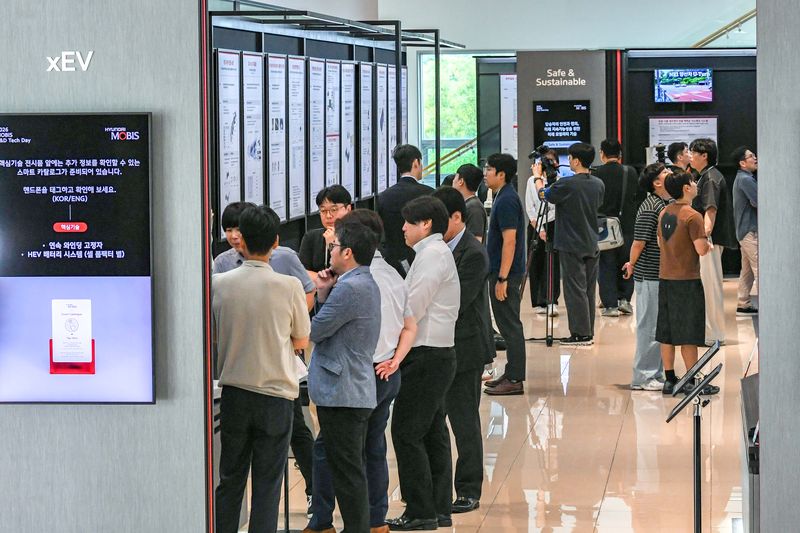
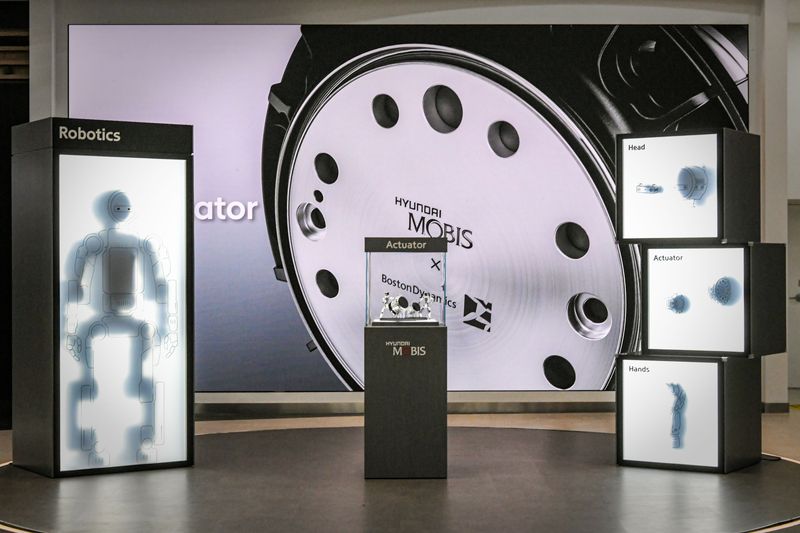
According to industry sources on the 19th, Hyundai Mobis held its 2026 R&D Tech Day at its Technical Research Institute in Yongin from Sept. 9 to 18. The event, themed “Expanding from Mobility Components to Future Robotics,” was attended by industry officials, partner companies and global customers. Hyundai Mobis unveiled about 60 next-generation technologies in electrification, SDVs and robotics.
The company also showcased 10 “Hero” products selected to bolster its competitiveness in winning future orders. Hyundai Mobis said its next-generation hybrid battery system offers customers a wider range of choices because it can accommodate pouch, prismatic and cylindrical cells.
The company also presented a rear-facing occupant protection airbag designed for the era of PBVs and fully autonomous driving. Exhibits included a four-wheel independent steering system, highly fire-resistant materials and a new process for boosting electric vehicle motor output. Hyundai Mobis said its integrated autonomous driving and parking controller combines information from long- and short-range sensors, improving both convenience and safety.
In user experience (UX), the company unveiled infotainment technologies including a holographic windshield display that received a CES Innovation Award, a virtual reality head-up display (HUD) and a premium audio system.
The company also has research infrastructure in place. In South Korea, it operates research institutes in Mabuk, Uiwang and Gangnam, and has global research hubs in North America, Europe, China and India. Hyundai Mobis said it has established a system linking R&D with validation in actual vehicles, using its driving test facility in Seosan, South Chungcheong Province, and winter test facilities in Sweden, China and New Zealand.
Hyundai Mobis said it is building a platform-based development system and global standard processes in preparation for the SDV era, and focusing on bringing key technologies in electrification, automotive electronics and chassis safety in-house.
Over the past three years, Hyundai Mobis has filed about 7,300 patent applications, about 44% of them related to eco-friendly and future technologies. As of 2025, it held a cumulative total of 10,356 patents and filed 2,678 new applications annually.
The company is also building external innovation capabilities. Through MVSV (Mobis Ventures Silicon Valley), its open innovation hub in Silicon Valley, United States, it has invested in startups in autonomous driving, AI, robotics, connectivity and electrification. Its investments over the past seven years totaled about 197 billion won. Hyundai Mobis also participates in ZER01NE Company Builder, Hyundai Motor Group’s startup incubation program, supporting the commercialization of ideas from employees.
A Hyundai Mobis official said, “We view R&D as a key pillar of future business competitiveness,” adding, “Our plan is to continue the transition into a technology company, based on R&D investment, a global research network, stronger software capabilities and expanded open innovation.”
[email protected] Kim Dong-chan Reporter