Executives Face Trial in Droves Over ‘₩10 Trillion-Scale Starch and Sugar Price-Fixing’ ... ‘Backroom Talks Among Executives and Team Leaders’
- Input
- 2026-11-19 14:16:33
- Updated
- 2026-11-19 14:16:33
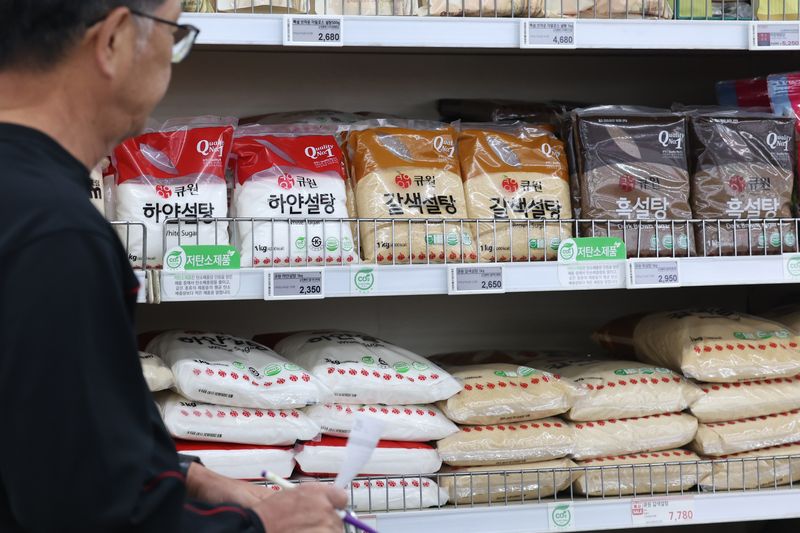
[Financial News] In the first formal trial of major food companies and their current and former executives charged with price-fixing in the starch and sugar market on a scale of around 10 trillion won, a detailed account emerged from an employee of a company involved in the cartel. Whether the heads of each company knew about the arrangement is expected to be a key issue, following testimony from an employee who directly participated in the price-fixing with staff at rival companies, first as a working-level team leader and later as an executive.
Judge Lee Ho-seon of the Seoul Central District Court’s Criminal Division 3 held the first hearing on the 19th for a total of 25 defendants, including three corporations—Daesang Corporation, Sajo CPK and CJ CheilJedang—21 executives and employees, including Daesang CEO Lim Jeong-bae, and Korean Starch and Sugar Association Chairman Myung Hyung-seop. The first prosecution witness at the hearing was an employee who had served at Samyang Corporation as head of End-User Team 1 and head of the Sales PU, an executive-level position.
Under questioning, the witness admitted to colluding on starch and sugar prices with representatives of rival companies, including Daesang, Sajo and CJ CheilJedang, for about seven years from around March or April 2018 until just before the authorities began their investigation in October last year. He testified, “When factors affecting prices arose, executive-level meetings set the general timing and scale of increases. Then, at team leader-level meetings, we reached specific agreements on prices for each customer and product, as well as the dates for sending official notices and applying the increases.”
The cartel meetings were held not only in each company’s conference room but also at the Korean Starch and Sugar Association’s office in Seocho-dong, Seoul, which they rented for the purpose. The witness explained, “To keep the cartel from being discovered, we wrote the prices in the notices at staggered levels—2 to 3 won higher than the actual target price, depending on the company—and set different dates for applying the increases. We organized it on a blackboard and then kept track of it in an Excel file.” He also testified that “individual agreements” were made in tenders for large end-user customers, with the order of winning bidders decided in advance and the other companies submitting higher bids.
Prosecutors pressed the witness on whether these “backroom agreements” among executives and team leaders had been reported to company presidents. Asked whether he thought company presidents knew about the arrangement, the witness also recalled an episode from the time of Samyang Corporation’s 100th anniversary. He testified that he had heard from Choi Nak-hyun, then CEO of Samyang Corporation, that a Sajo representative had complained to Association Chairman Myung at a meeting, saying CJ CheilJedang had begun supplying one of Sajo’s exclusive customers. He added, “I thought that when the tacit rule that neither side would encroach on the other’s exclusive customers was broken, the company heads became aware of it and protested.”
In cross-examination, a lawyer for Association Chairman Myung countered, “The chairman never attended executive-level meetings on prices or received reports on their outcomes. His remarks at the anniversary event were not about mediating between customers or being involved in price-fixing; he meant that it was inappropriate to cause a disturbance at someone else’s celebration.”
The case is considered one of the largest cartel cases ever in South Korea’s food and materials industries. The Korea Fair Trade Commission had previously found that four companies with an oligopoly in the starch and sugar market systematically agreed on the scale and timing of sales price increases and divided up customers from May 2018 through October last year, generating related sales of around 10 trillion won. The commission deemed this a serious violation of the law that fueled increases in consumer prices and the costs of processed food ingredients. It imposed record-high fines totaling around 1 trillion won, issued corrective orders and filed a complaint with prosecutors.
Prosecutors indicted the corporations, top executives at the CEO level and the association chairman, judging their involvement in the price-fixing to be substantial. Samyang Corporation, however, was excluded from prosecution after voluntarily reporting the price-fixing during the investigation and cooperating with investigators, thereby receiving leniency under the voluntary reporting program.
[email protected] Chang-hoon Lee Reporter