KAI to Boost Stealth Performance with Core Technology from KIMM
- Input
- 2026-11-19 12:27:38
- Updated
- 2026-11-19 12:27:38
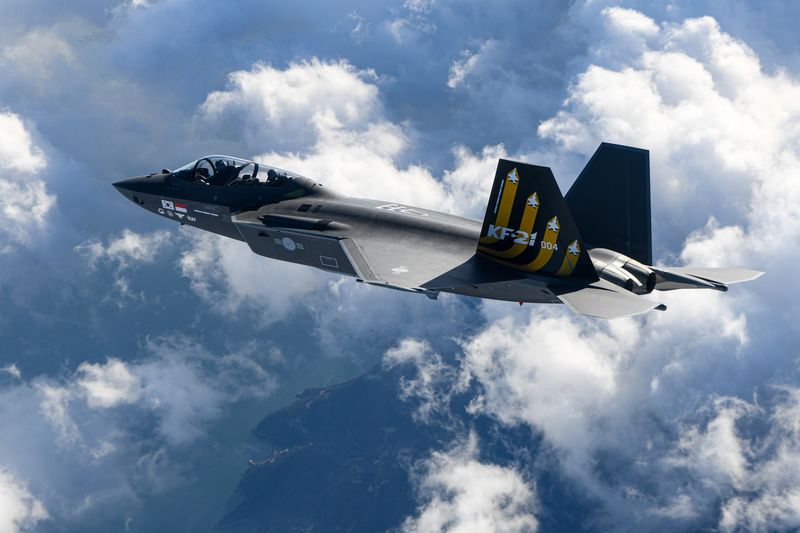
[Financial News] Korea Aerospace Industries (KAI) is leveraging core technology from the Korea Institute of Machinery and Materials (KIMM) to boost fighter jet stealth performance. With the KF-21, South Korea’s homegrown fighter, entering mass production and attention shifting to follow-on development, KAI is moving to strengthen its technological competitiveness.
On the 19th, KAI signed a memorandum of understanding (MOU) with KIMM at its headquarters in Sacheon to strengthen competitiveness in advanced aerospace technologies, and held a technology exchange meeting. The aim is to enhance aerospace technological competitiveness by applying KIMM’s core technologies and research infrastructure to KAI’s aerospace systems development.
KAI is focused on improving stealth performance. Stealth technology uses low-observable surfaces that make aircraft difficult to detect with radar, acoustic sensors and other means. KAI expects to further enhance stealth performance through active control of aircraft radiated energy and transparent meta-displays that use metamaterials to control the properties of light and waves.
The two organizations will also jointly develop metal additive manufacturing process technology. Metal additive manufacturing uses digital designs to create complex shapes. Because it builds up metal powder layer by layer, it offers far greater design flexibility than conventional machining. Further advances in this technology could give them intelligent production and maintenance capabilities using artificial intelligence (AI).
The technology exchange meeting identified several key areas for strengthening KAI’s future aerospace technology competitiveness: reliability assessments of aerospace and defense components to improve the reliability of aircraft fasteners; transparent meta-displays for stealth applications; metal additive manufacturing process technology to strengthen AI-based intelligent production and maintenance capabilities; and active control of aircraft radiated energy to enhance aircraft low-observable performance.
The plan is for KAI and KIMM to flesh out the specific projects and pursue them through participation in government research and development (R&D) programs.
KAI President Kim Jong-chul said, “When preparing for future businesses, securing new technologies ahead of time and internalizing core technologies are more important than anything else. Through this collaboration, we will strengthen our technological competitiveness in aerospace and secure future growth engines.”
As it moves into mass production of the KF-21, KAI is preparing for large-scale procurement by the Korean military as well as overseas exports, including to Indonesia. As it is also time to begin preparing for KF-21 performance upgrades through follow-on development, KAI is seeking to create synergies with KIMM.
[email protected] Kim Yun-ho Reporter