How Will U.S. Semiconductor Regulatory Policy Change? ... Fallout From Tougher Restrictions and Sanctions on China
- Input
- 2026-11-19 13:51:07
- Updated
- 2026-11-19 14:08:20
[Financial News] The scandal involving Jensen Huang, CEO of NVIDIA Corporation, and his departure have ushered in a new phase in which U.S. export controls on AI semiconductors to China are being tightened and expanded.
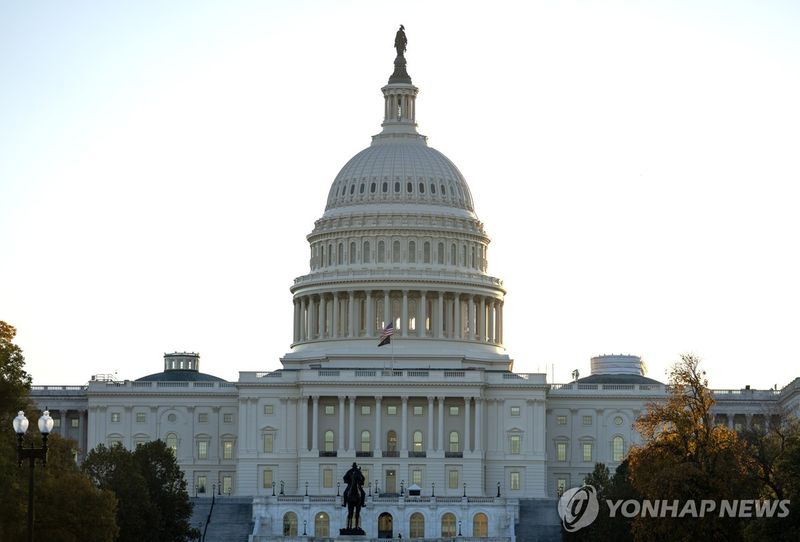
The U.S. Congress and administration are moving swiftly to tighten restrictions on semiconductor exports to China, including by stepping up efforts to block routes through third countries and advancing legislation. The urgency of blocking China’s access to AI chips and limiting its access to chipmaking equipment has also come into sharper focus as a result of the incident, bolstering these efforts.
The discovery of gaps in controls on AI semiconductors and their use in China has weakened the case for easing restrictions. Jensen Huang’s departure has handed the initiative to China hawks, after he had directly influenced President Trump’s decisions and led efforts to ease restrictions on China. Meanwhile, Anthropic and others, which have stressed the technological threat posed by China and called for tighter controls on AI technology, have gained influence in Washington and Congress.
End users and installation sites for computing capacity to be disclosed ... three bills advance toward passage
According to industry sources and others on the 19th, Congress plans to expand export and use restrictions beyond advanced semiconductors themselves to cover the end users of computing capacity, installation sites and actual purposes of use. It is also moving to implement sanctions against third-country companies that helped China evade restrictions, along with stronger measures to add entities to blacklists. The aim is to close loopholes in existing export controls.
To that end, Congress is moving quickly to draft three legally binding bills: the Overwatch Act, the Chip Security Act and the MATCH Act.
The Overwatch Act would give Congress the authority to review in advance and block the executive branch’s approval of exports of advanced AI chips to China and other destinations. The Chip Security Act would require advanced AI semiconductors for export to be equipped with security features such as physical location tracking and remote deactivation. The MATCH Act would pressure allies, including South Korea, to apply the same level of export controls on semiconductor equipment and technology destined for China as the United States. Congress is seeking to strengthen the bills by incorporating them into the National Defense Authorization Act (NDAA).
These efforts have gained further traction because they are being pursued on a bipartisan basis. They have picked up momentum in particular as the Jensen Huang scandal has brought problems with export controls into the spotlight and put national security threats under scrutiny.
Washington think tanks have also backed the effort, calling for the bills to pass. The Center for a New American Security (CNAS) said, “The bills will block channels that allow companies such as MegaSpeed to provide China with computing capacity based on U.S. chips.” The Atlantic Council expected the Democrat-led Congress taking office in January to take up this bill along with the Chip Security Act. The U.S. Department of Justice and the Federal Bureau of Investigation (FBI) have also joined the push for tighter controls, launching formal investigations into allegations of illegal semiconductor diversion and espionage.
Samsung Electronics and SK hynix, with production bases in China, face greater constraints on equipment imports, production expansion and technology upgrades
As U.S. export controls on China tighten, Samsung Electronics and SK hynix—which each play a major role in the global memory supply chain through production bases in China—will face greater constraints on bringing in equipment and upgrading production facilities. They will be more affected by the import, replacement and upgrading of U.S.-made semiconductor manufacturing equipment, as well as investment to expand production capacity.
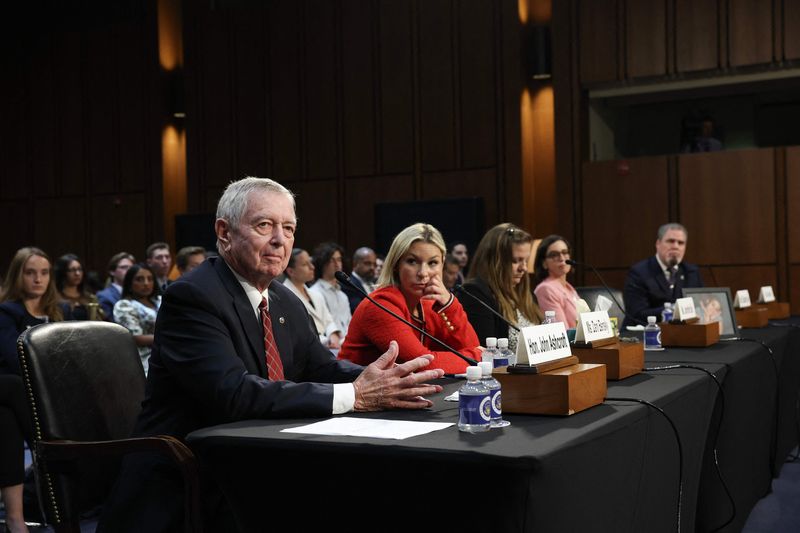
Meanwhile, hardliners in Congress are seeking to use hearings related to the Jensen Huang scandal to speed up passage of the bills and strengthen related measures. Jensen Huang will testify before three congressional committees on December 1 about allegations of semiconductor chip information leaks. On the 17th, Brian Mast, chairman of the U.S. House Foreign Affairs Committee, said, “I expect him to testify about potential national security violations, including his role in allowing access to our most advanced chips and allegations of Chinese intelligence involvement.”
The Trump administration, criticized for neglecting controls on China, took steps on the 16th—soon after the Jensen Huang scandal broke—to restrict China’s remote access to advanced AI semiconductors. The move aims to stop U.S. advanced semiconductor computing capacity from reaching China indirectly through data centers in third countries. It also required prior authorization for exports of advanced chips to Southeast Asian countries such as Singapore, Malaysia, Thailand and Indonesia, as well as to Brazil. The decision was based on the assessment that data centers in these five countries posed a high risk of diversion, including by leasing computing capacity to China. South Africa and Norway are also expected to be added to the list of countries requiring authorization.
The measure was introduced amid criticism that the Trump administration had left loopholes in export controls unaddressed. According to the U.S. think tank Institute for Progress (IFP), about a quarter of China’s total computing capacity this year was accessed through such remote connections.
[email protected] Lee Seok-woo, International Affairs Specialist Reporter