“It’s Not Over Until Trump Returns Home”... Ministry of Unification Still Clinging to Hope for a U.S.-North Korea Summit
- Input
- 2026-11-19 11:22:27
- Updated
- 2026-11-19 11:22:27
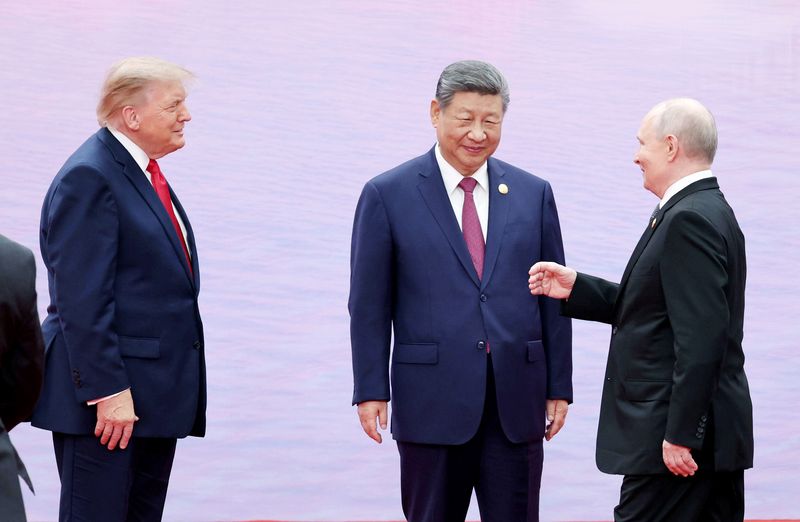
President Trump is attending the APEC summit, which is being held in Shenzhen, China, on the 18th and 19th. The possibility had been raised that Kim would visit China for talks with the United States on the occasion of APEC. However, as Kim stayed out of public view in areas along North Korea’s east coast after passing through Mount Paektu and Hamhung, rather than visiting China, assessments emerged that the summit had effectively fallen through. Even so, the Ministry of Unification maintained that talks between the United States and North Korea had not yet fallen through.
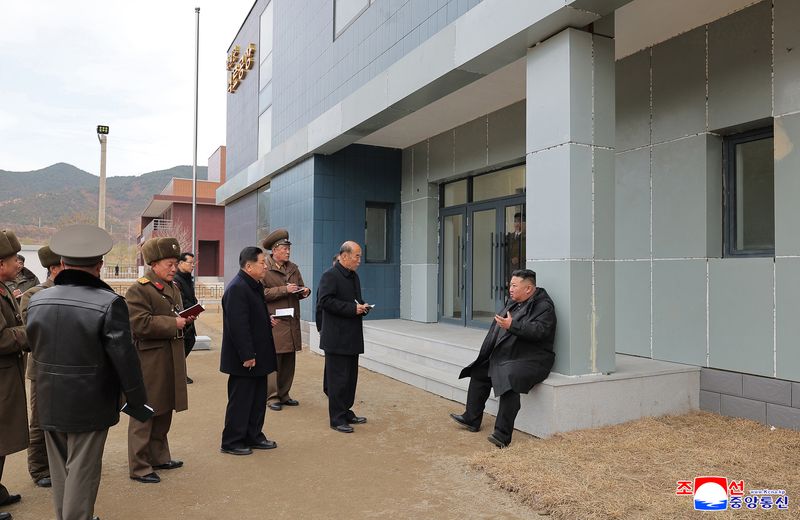
An MOU official met with reporters covering the ministry on the 19th and said, “The possibility of U.S.-North Korea talks is not over,” adding, “We have to wait and see until President Trump boards a plane for the United States.” The official remained unwilling to give up hope. The official also said, “After visiting Hamhung Naval University for the first time, Kim has been making his way around the East Sea,” and added, “We’ll wait and see whether he goes to China.”
Before appearing before the National Assembly’s Foreign Affairs and Unification Committee that day, MOU Minister Chung Dong-young reportedly remarked that U.S.-North Korea talks could take place somewhere other than Shenzhen, China. Kim Min-seok, leader of the Democratic Party of Korea, appeared that day on the party’s YouTube program Minty07 and cautiously raised the possibility of a U.S.-North Korea summit being held in North Korea’s Wonsan Kalma Tourist Zone. Kim said, “At a meeting with President Trump in March, when I was serving as prime minister, I mentioned North Korea’s Wonsan Kalma Tourist Zone as a possible meeting point for the stalled U.S.-North Korea talks, and President Trump also expressed interest.”
It had been suggested that Kim could reach Shenzhen, where the APEC summit is being held, by taking his private plane, Chammae 1, from Pyongyang, or by traveling to a major Chinese city such as Beijing and then flying to Shenzhen on a Chinese commercial flight. However, no such movements have been detected.
President Trump could also travel to the North Korea-China border region, including Dandong in China. Finally, attention is focused on whether Trump will visit North Korea to meet Kim. If he does, he would be the first sitting U.S. president to do so. Should Trump’s visit to North Korea take place, he is likely to visit Pyongyang or the Wonsan Kalma district. Both Pyongyang and the Wonsan Kalma district have international airport facilities capable of accommodating takeoffs and landings by Air Force One, the U.S. president’s plane.
Meanwhile, the United States, which is pursuing talks between the U.S. and North Korean leaders, made a striking move by abstaining from a United Nations resolution on North Korean human rights for the first time in 21 years. The resolution has been adopted annually by the UN General Assembly since 2005, and this was the first time the United States had abstained.
The Third Committee of the UN General Assembly held a plenary meeting at United Nations Headquarters in New York on the 18th (local time) and adopted the resolution on North Korean human rights, with 95 votes in favor, 14 against and 58 abstentions. South Korea, Japan, the United Kingdom, France and Canada voted in favor, while China, Russia, Iran and Cuba voted against. The United States abstained. This prompted speculation that Washington was trying to appease North Korea as President Trump seeks talks with Kim. North Korea has long opposed the UN resolution on North Korean human rights.
North Korea’s representative to the UN was also reportedly surprised by the unexpected development. Kim Song, North Korea’s ambassador to the UN, took the floor and directly asked which country had requested a vote. Kim had earlier denounced the resolution as a political conspiracy pursued by the United States and its followers under the pretext of protecting human rights, and as interference in internal affairs.
The Ministry of Unification declined to state its position that day on the U.S. abstention from the resolution on North Korean human rights. The ministry has refrained from making statements that could provoke North Korea. The Foreign Ministry, by contrast, said, “We will continue to cooperate with the international community so that the human rights of North Korean residents can be substantially improved.”
[email protected] Kim Kyung-soo Reporter