‘Three Gangnam Districts, Seongdong, Yongsan and Gangdong’ Fall, but Seoul Apartment Prices Rise for 93 Straight Weeks
- Input
- 2026-11-19 14:00:00
- Updated
- 2026-11-19 14:00:03
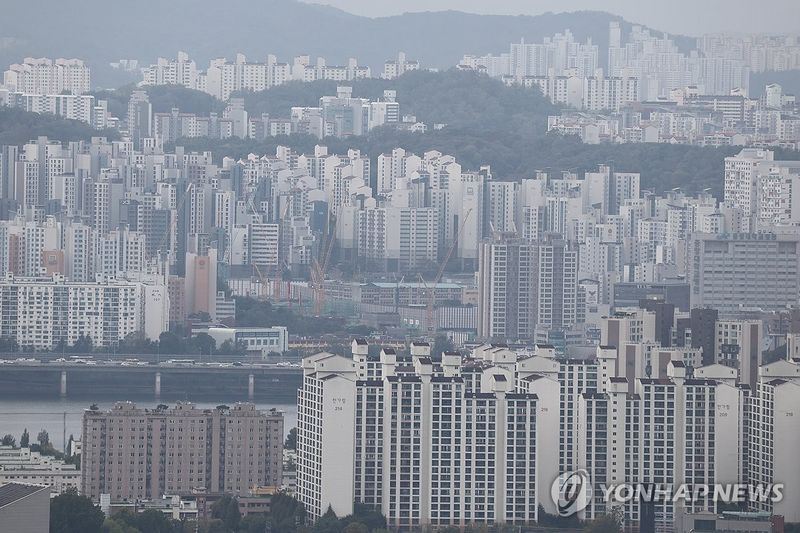
[Financial News] The pace of increase in Seoul apartment sales prices has slowed, but prices have risen for 93 consecutive weeks. The three Gangnam districts, Yongsan District and Seongdong District remain in decline, while outlying areas of Seoul, including Seongbuk District and Dobong District, continue to drive the overall uptrend. The record for the longest streak is being broken every week, and attention is focused on whether it will reach an unprecedented three-digit figure.
According to the Korea Real Estate Board’s weekly apartment price trends released on the 19th, Seoul’s apartment sales price index stood at 0.03% in the third week of November (as of the 16th). That was down 0.04 percentage points from 0.07% the previous week.
Once again, outlying areas drove the increase. Prices rose in the following order: Seongbuk District (0.34%), Jungnang-gu (0.32%), Geumcheon District (0.29%) and Dobong District (0.24%). With high interest rates and lending restrictions still in place, demand appears to be continuing for relatively accessible, lower- and mid-priced areas. The Korea Real Estate Board explained that while contracts at adjusted-down sales prices are being signed in some areas and older complexes, transactions at higher prices have occurred mainly in large complexes with good living conditions and near subway stations.
The most notable feature is the areas seeing declines. The three Gangnam districts remain in a downward trend. Among them, Songpa District (-0.42%) recorded the steepest drop in Seoul, with its decline deepening for the third consecutive week. Seocho District (-0.31%) and Gangnam District (-0.30%) also remain in decline. More specifically, prices fell mainly in major complexes in areas such as Jamsil and Munjeong-dong in Songpa District, and in large complexes in Jamwon-dong and Banpo-dong in Seocho District. Although Gangnam District faced redevelopment issues, declines were seen mainly in older complexes in Daechi-dong and Gaepo-dong that have run into issues with the reconstruction excess-profit recapture system (jaechohwan).
The key focus is the Han River Belt. Seongdong District (-0.04%) and Gangdong District (-0.01%) have declined for two consecutive weeks, following the previous week. Yongsan District (-0.02%), which had shifted from a downward to an upward trend, fell again. Mapo District’s increase also slowed, from 0.25% to 0.10% and then 0.04%. Dongjak District (-0.01%) shifted to a decline for the first time in eight months, since last March. Seongdong District fell mainly in major complexes in areas such as Oksu and Haengdang-dong, while Yongsan District declined mainly in Ichon and Itaewon. Nam Hyuk-woo, a real estate researcher at Woori Bank, said, “As the price gap with the three Gangnam districts narrowed, prospective buyers became more inclined to wait and see.” He added, “This appears to have put downward pressure on asking prices. Also, bargain listings are steadily coming onto the market from buyers looking to purchase a quick-sale property in the three Gangnam districts first and then trade up.”
Southern Gyeonggi led the increase, outpacing Seoul’s rise. Suwon’s Gwonseon District (0.62%) recorded the biggest increase nationwide. It was followed by Anyang’s Dongan District (0.61%), Yongin’s Giheung-gu (0.55%), Gunpo (0.54%) and Gwangmyeong-si (0.51%), which also helped drive housing price increases across the Seoul metropolitan area. Prices appear to have risen broadly in Gyeonggi Province, both in complexes with good living conditions and in complexes consisting mainly of small- and medium-sized units.
Meanwhile, jeonse prices rose 0.08% nationwide. They increased by 0.14% in both the Seoul metropolitan area and Seoul. Gangnam District stood out, with jeonse prices rising 0.22% and moving in the opposite direction from sales prices.
Experts expected the current situation to continue. Researcher Nam said, “Price adjustments in the three Gangnam districts and the Han River Belt, which account for a substantial share of the market value of Seoul apartments, are likely to continue for the time being.” He forecast, “In Seoul, the rate of increase may remain slight or the pace of gains may slow further.”
[email protected] Jeong Gyeong-su Reporter