“One in Two Foreign Apartment Buyers in Vietnam Is Korean” ... Koreans Rank First, Making Up 48% of All Foreign Buyers
- Input
- 2026-11-19 11:49:46
- Updated
- 2026-11-19 13:13:39
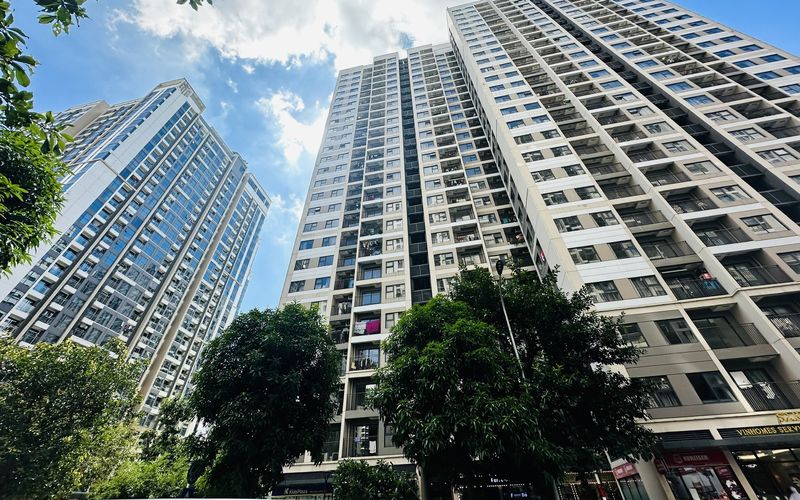
According to local media reports on the 19th, global real estate services firm Knight Frank said in its recently published “2026 Vietnam Real Estate Investment Guidebook” that, as of the end of October, foreigners had purchased a total of 6,188 apartments. The figure was compiled from official data released by Vietnam’s Ministry of Construction and on-site surveys of major housing projects.
By nationality, Koreans led the market, accounting for the largest share at 48%. China came second at 31%, followed by Hong Kong and Taiwan at 10% and Singapore at 2%. Buyers from the four Northeast Asian markets of South Korea, China, Hong Kong and Taiwan together accounted for 89% of all apartments purchased by foreigners.
Knight Frank said this buyer profile reflects the growing appeal of Vietnam’s residential market as Northeast Asian businesses and professional communities expand rapidly in the country’s major cities. It added that, because South Korea and China are key foreign direct investment (FDI) partner countries for Vietnam, demand from locally posted executives and professionals, as well as their accompanying families, for homes to live in and for investment is translating into apartment purchases.
However, compared with the total supply of apartments in major cities, the foreign-buyer housing market remains limited. In Ho Chi Minh City, for example, a total of 158 developments were approved for sale to foreigners from June last year through October this year, with a foreign-buyer quota of 15,841 units. Actual sales contracts were signed for 3,297 units—about 21% of the quota—and formal housing ownership certificates had been issued for just 316 units.
Knight Frank pointed out that the wide gap between the number of units under contract and the number with ownership certificates issued shows that procedures for guaranteeing foreigners’ homeownership still need to be improved. By property type, most foreign buyers focused on apartments that met legal requirements, while villas, townhouses and shophouses accounted for a smaller share of transactions because of legal restrictions, ownership caps and high initial investment costs.
Market access requirements are another obstacle for foreign buyers. In Knight Frank’s survey of how easy it is for foreigners to buy homes in six Southeast Asian countries, Vietnam ranked fourth, behind Thailand, Malaysia and Singapore. Vietnam scored 28.5 out of 50 on the entry-barrier index, with key difficulties including ownership protections, construction quality, the legal framework and market transparency.
Under current regulations, foreign individuals may own homes for up to 50 years only in eligible commercial housing projects, and may apply for a one-time extension when that period expires. In any single apartment complex, foreigners’ total ownership share may not exceed 30% of all units. These institutional constraints mean foreign buyers tend to scrutinize project selection, the remaining ownership term and the possibility of future resale more carefully. Transaction costs, by contrast, are considered a competitive advantage for Vietnam compared with some other markets in the region.
Knight Frank said Vietnam’s real estate market has considerable room to grow by attracting additional investment from foreign individuals. It added that improving the transparency of project information and the process for issuing ownership certificates, as well as making transactions easier, would be key to turning that potential into actual investment.
[email protected] Kim Jun-seok Reporter