Bipartisan-Agreed Flexible Dividend System Fails to Clear National Policy Committee... Fallout from the Democratic Meritorious Persons Act
- Input
- 2026-11-19 15:22:28
- Updated
- 2026-11-19 15:22:28
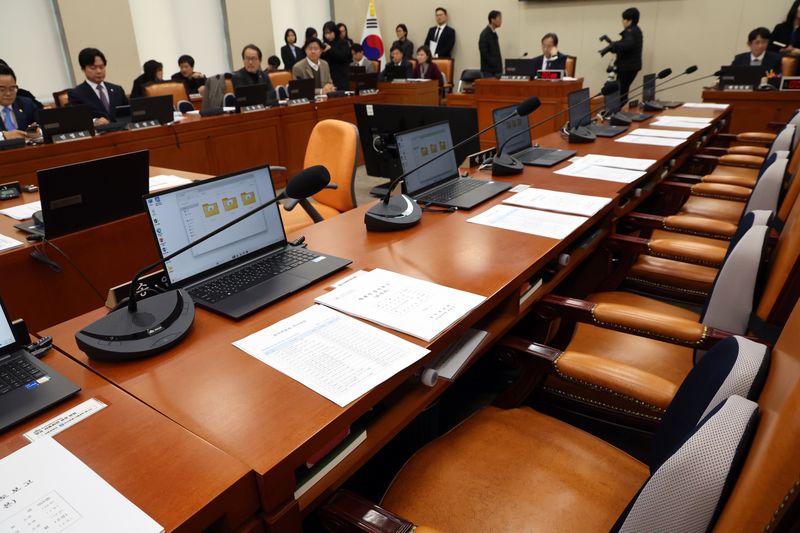
[Financial News] The ruling and opposition parties agreed on a bill to amend the Financial Investment Services and Capital Markets Act to introduce a flexible dividend system, but the bill’s passage through the National Assembly’s National Policy Committee bill review subcommittee fell through on the 19th. This was because the People Power Party launched a boycott after the Democratic Party of Korea (DPK) brought the Democratic Meritorious Persons Act, a bill under the committee’s jurisdiction, before a plenary session without bipartisan agreement. As a result, the introduction of the flexible dividend system has been postponed indefinitely.
The National Assembly’s National Policy Committee planned to hold a bill review subcommittee meeting on the 19th to consider the amendment to the Financial Investment Services and Capital Markets Act introducing a flexible dividend system. The current act provides for quarterly dividends, under which “dividends are paid by board resolution within 45 days of the end of the third, sixth and ninth months from the start of the fiscal year.” The amendment aims to substantially ease these restrictions and allow companies to decide freely when and how often to pay dividends.
Both the DPK and the People Power Party introduced bills to amend the Financial Investment Services and Capital Markets Act to establish a flexible dividend system. Accordingly, the plan was to pass the bill by bipartisan agreement at the committee as well, after a final review at the subcommittee meeting that day. The two parties reached a consensus on increasing shareholder returns to boost corporate value. Their plan is to raise the low shareholder return rate in the domestic stock market and encourage a “value-up” in the capital market.
However, as political clashes between the parties over the Democratic Meritorious Persons Act, which falls under the committee’s jurisdiction, intensified, the introduction of the flexible dividend system also fell through. The act’s core provision is that the state would recognize as democratic meritorious persons people who died or went missing during pro-democracy movements, as well as injured people assigned disability ratings. It would provide meritorious persons and their bereaved families with state support and benefits, including medical care, residential elder care and long-term care.
The People Power Party believes the bill needs to be supplemented and revised. Its lawmakers on the National Policy Committee held a press conference that day and said, “Even people who violate the National Security Act could qualify as democratic meritorious persons.” They warned that “determining who qualifies as a person of national merit without criteria that the public can relate to and find sufficiently convincing risks undermining the historical significance of the pro-democracy movement and public trust in the national veterans’ system.”
The People Power Party boycotted both the National Policy Committee subcommittee and its plenary meeting in opposition to the Democratic Meritorious Persons Act. As a result, the subcommittee did not convene, and the flexible dividend system was not discussed. At present, consideration of the amendment to the Financial Investment Services and Capital Markets Act to introduce the system has been postponed indefinitely.
[email protected] Lee Hae-ram Reporter