Muscle Pain After Exercise in Older Adults: Why Suspect 'Rhabdomyolysis'? [Weekend Health]
- Input
- 2026-11-19 10:21:38
- Updated
- 2026-11-19 10:21:38
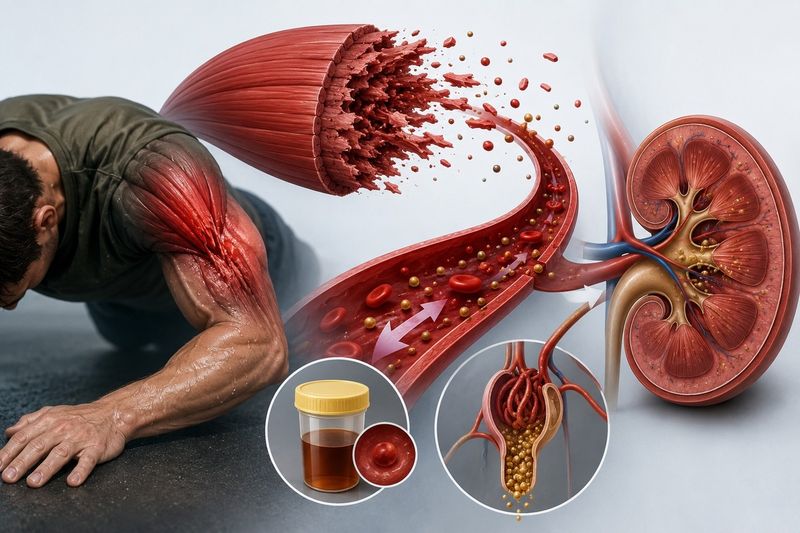
[Financial News] The idea that “the more you exercise, the better” can be dangerous for older adults. Pushing for greater distances and higher intensity when strength and flexibility have declined can lead not only to knee joint disorders but also to rhabdomyolysis, in which muscles break down and can damage the kidneys.
On the 19th, Professor Byeon Jun-u of the Department of Orthopedic Surgery at Ewha Womans University Mokdong Hospital said, “Older adults naturally have less strength and flexibility in the tissues around their joints than younger people, so they can easily develop iliotibial band syndrome or various joint disorders even from activities that repeatedly use the knees, such as light jogging or hiking.” He advised, “It is especially important for older runners and people new to exercise not to push themselves to cover greater distances, but to stretch sufficiently before and after exercising, adjust the intensity to suit the condition of their joints, and get enough rest.”
The problems caused by overexertion are not limited to the joints. Rhabdomyolysis is a condition in which muscle cells are damaged by trauma, strenuous exercise, medication, infection, or other causes, allowing substances inside the cells to leak into the bloodstream. When muscles are damaged, myoglobin, potassium, creatine kinase (CK), and other substances are released into the blood. Myoglobin can strain the kidneys and cause acute kidney injury. In severe cases, the condition can progress to kidney failure and may require dialysis.
The causes are broadly divided into traumatic, exertional, and nontraumatic/non-exertional. Older adults are susceptible to all three. Exertional rhabdomyolysis can occur when someone who is usually inactive suddenly does high-intensity exercise, or exercises strenuously for a long time, as in a marathon or cycling. The risk increases further when exercise takes place in hot, humid conditions or is accompanied by dehydration. It can also occur when muscles are directly injured in a fall or traffic accident, or when they remain compressed because a person has fallen and been unable to move for a long time. Remaining in the same position for an extended period during surgery can also be a cause. Some medications, including cholesterol-lowering drugs, as well as alcohol, infectious diseases such as influenza, metabolic disorders, and electrolyte imbalances can also damage muscles.
The main symptoms are muscle pain, muscle swelling, muscle weakness, and changes in urine color. The pain is more severe than ordinary post-exercise muscle soreness, and muscles may become stiff or swollen enough to make movement difficult. When myoglobin is excreted in the urine, it can turn red, cola-colored, or dark brown. However, not every patient develops the typical symptoms, so normal-colored urine should not be a reason to feel reassured. If severe muscle pain or swelling, reduced muscle strength, or changes in urine color occur, seek medical care promptly rather than dismissing them as “just a consequence of age.”
Diagnosis is made through blood tests that assess the extent of muscle damage, kidney function, and electrolyte imbalances. A key marker is creatine kinase (CK); rhabdomyolysis may be suspected when its level rises to at least five times the upper limit of normal or, generally, to 1,000 IU/L or higher. Blood levels of myoglobin and creatinine, as well as electrolytes such as potassium, are also assessed. A urine test may show a positive result for occult blood, but microscopy confirms that no red blood cells are actually present, helping distinguish the condition from glomerulonephritis or bleeding in the urinary tract.
The key to treatment is preventing complications such as acute kidney injury and electrolyte imbalances. First, the cause—such as exercise, medication, or trauma—is identified and removed. Intravenous fluids are given to maintain blood flow to the kidneys and urine output and help clear myoglobin and other substances released by damaged muscles. During treatment, kidney function and potassium levels are monitored continuously through blood tests, and issues such as hyperkalemia and metabolic acidosis are corrected. Hemodialysis may be needed if kidney function declines significantly or complications such as hyperkalemia, acidosis, or fluid overload develop. If muscle swelling leads to compartment syndrome that obstructs blood circulation, emergency surgery may also be required.
Professor Heo Ga-yeong of the Department of Nephrology at Asan Medical Center advised, “To prevent rhabdomyolysis, it is important to gradually increase exercise intensity in line with your fitness and physical ability.” She added, “People who are usually physically inactive should avoid suddenly doing high-intensity exercise or pushing themselves to exercise for much longer.”
Older adults should take particular care to check in advance whether any medications they are taking are associated with muscle damage, and avoid strenuous exercise when they have an infection or an underlying condition. They should drink plenty of water in hot, humid weather and stop and rest immediately if they feel unwell during exercise. Dehydration and high temperatures increase the risk of developing the condition.
Do not dismiss muscle soreness after exercise. If the pain is more severe than expected, or occurs along with muscle swelling, weakness, or changes in urine color, seek medical attention right away. Early diagnosis and appropriate treatment can prevent serious complications, including kidney damage.
[email protected] Jung Myeong-jin, medical correspondent Reporter