SK Broadband to Build Quantum-Secure Test Network on South Korea-Singapore Submarine Cable
- Input
- 2026-11-19 10:31:00
- Updated
- 2026-11-19 10:31:01
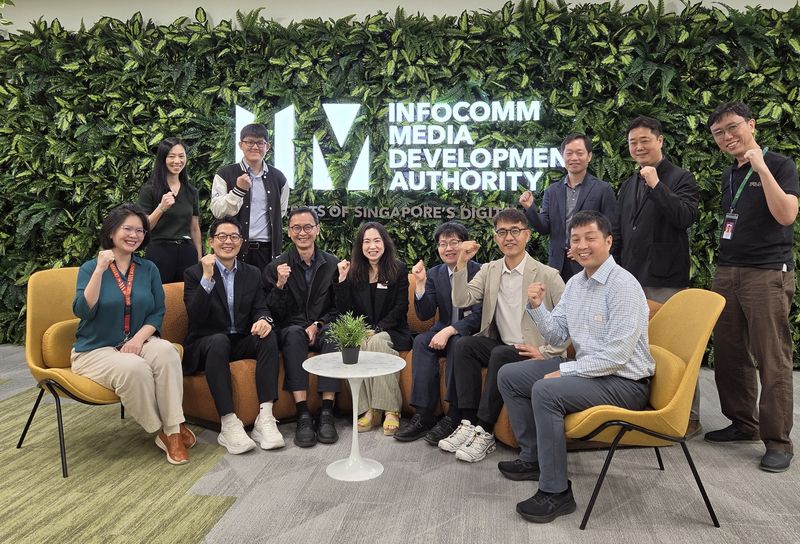
The plan is to apply technology combining quantum key distribution (QKD) and post-quantum cryptography (PQC) to verify the security of long-distance international telecommunications networks and lay the groundwork for Korean quantum-security technologies to expand overseas.
Combining QKD and PQC to strengthen security on long-distance submarine cables
According to SK Broadband on the 19th, the company plans to establish a quantum-security test network on the Busan-Singapore section of SJC2 (Southeast Asia-Japan Cable 2), a submarine cable connecting locations across Asia.SK Broadband was selected last month as the operator of the “Open Quantum Testbed Advancement and Expansion” project led by the Ministry of Science and ICT and the National Information Society Agency (NIA). An open quantum testbed is a demonstration environment where companies and research institutions can jointly use quantum-encrypted communications test networks and expensive measurement equipment to verify the performance of technologies they develop.
As part of the project, SK Broadband will pursue international demonstrations of quantum security linked to quantum testbeds in Singapore, Poland, Bulgaria and other countries.
The approach is to apply quantum key distribution (QKD) to domestic and overseas local telecommunications networks, and post-quantum cryptography (PQC) to the long-distance submarine cable segment connecting Busan and Singapore. QKD is a technology that uses the principles of quantum mechanics to securely share encryption keys, while PQC is cryptography designed to withstand attacks by quantum computers.
The demonstration is intended to address the “harvest now, decrypt later” threat that could emerge as quantum computers become more advanced. This is an attack method in which currently encrypted data is collected in advance and then decrypted using quantum computers in the future.
SK Broadband plans to verify the security of data transmission across the international submarine cable using a hybrid quantum-security system that combines the two technologies. It will also check whether Korean-developed quantum-security technologies and equipment operate reliably in overseas telecommunications environments.
Expanding local cooperation in Singapore... aiming to open the test network in 2027
To advance the project, SK Broadband recently visited Singapore with NIA and quantum-computing company IonQ to review local telecommunications infrastructure and plans for technical cooperation.The delegation visited a GlobalSwitch data center connected to international submarine cables to check the conditions for installing quantum-security equipment on the SJC2 Busan-Singapore section and how it would connect with Singtel, Singapore's state-owned telecom operator.
They also visited SpeQtral, a satellite-based quantum communications company, and the quantum technology research center at the National University of Singapore to discuss potential technical cooperation.
They then discussed with Singapore's Infocomm Media Development Authority (IMDA) and Singtel the architecture of an international test network connecting the domestic QKD segment, SJC2's PQC segment and Singapore's National Quantum-Safe Network (NQSN+). They also discussed cryptographic-key interworking methods under standards set by the European Telecommunications Standards Institute (ETSI), as well as the division of responsibilities and schedule for opening the testbed in 2027.
Sung Jin-su, head of SK Broadband's Network Center, said, “Through this overseas quantum-security demonstration project in cooperation with Singapore, we will not only build cross-border quantum-security network systems, but also open up pathways for leading Korean quantum-security companies to expand overseas.”
Kim Young-hee, head of NIA's Quantum Technology Utilization Center, said, “Through this cooperation, we will go beyond achieving Asia's first interconnection and demonstration of cross-border quantum-security networks to contribute to commercial services and the industrialization of quantum technology.”
[email protected] Yoon Hong-jip Reporter