Hopes of Hallyu Ban Lift Buoy Entertainment Stocks... Will Dramas Be First to Deliver Earnings Gains?
- Input
- 2026-11-19 08:34:03
- Updated
- 2026-11-19 08:34:03
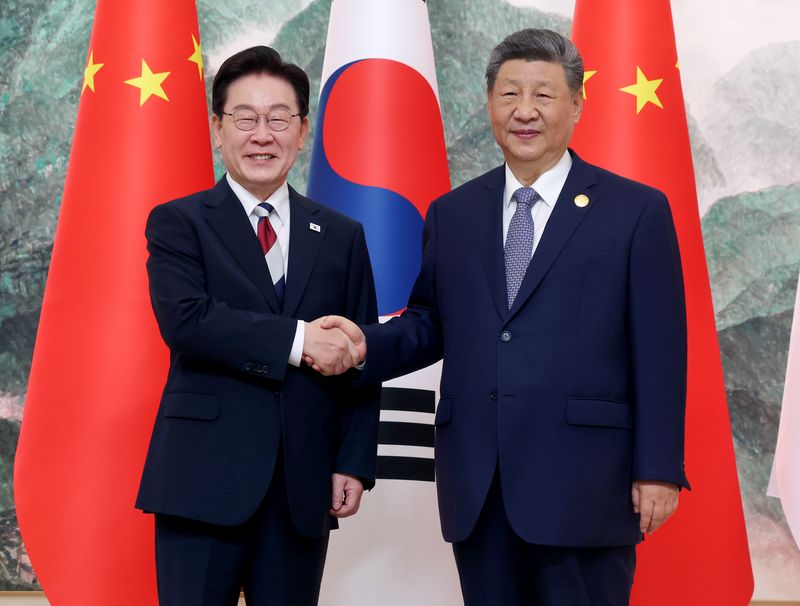
[Financial News] Entertainment and media stocks surged after the conclusion of follow-up negotiations under the Korea-China Free Trade Agreement (FTA), but securities analysts say the actual earnings benefits will vary by sector. With expectations for an opening of the Chinese market already priced into share prices, analysts see rights sales by drama producers as potentially boosting earnings before K-pop concerts do.
According to DS Investment & Securities on the 19th, buying interest concentrated in entertainment and media stocks after the two countries declared a substantive conclusion to follow-up FTA negotiations on services and investment at the Korea-China summit on the 18th. Combined returns on the Korea Exchange (KRX) and Nextrade (NXT) were 30% each for Studio Dragon and SM Entertainment, 26% for Dear U Co., Ltd., and 22% for JYP Entertainment Corporation.
The negotiations produced results eight years and eight months after they began in March 2018. China pledged most-favored-nation treatment and non-discrimination in pre-screening in the film and gaming sectors. The scope of co-productions, previously limited to films, was also expanded to include dramas, animation, variety shows and other content.
However, analysts say it is too early to interpret the agreement as a full lifting of the Hallyu ban (China’s restrictions on Korean Wave content). Permission for concerts in mainland China, a key source of revenue for entertainment companies, was not included in the agreement. Although dramas were included in the scope of co-productions, approval to air individual titles was not guaranteed.
Jihye Jang, a researcher at DS Investment & Securities, said, “It is too early to interpret this agreement as a full lifting of the Hallyu ban.”
The area drawing securities analysts’ attention first is “rights to older dramas.” Studio Dragon and Studio S, a subsidiary of SBS, among others, have so far sold global online video services (OTT platforms) the rights to air their content in territories outside China. Analysts say that if sales in China resume, already-produced content could be monetized further, improving earnings without the burden of new production costs.
For K-pop agencies, by contrast, the key questions are whether concerts in mainland China will resume and whether activities there will be permitted. Chinese fans have considerable purchasing power and potential demand for concerts, but revenue cannot be gauged until actual concert dates are confirmed.
Jang said, “We should first focus on the possibility of resuming sales of rights to older dramas,” adding, “It would be appropriate to factor in further earnings gains as we confirm presales of new titles in China and schedules for K-pop artists’ concerts in mainland China, among other things.”
Ultimately, analysts say the first benefits of opening the Chinese market are more likely to come from drama-rights deals than from concerts. If entertainment stocks have already reacted to the optimism, the factors expected to support share prices going forward will be whether actual contracts are signed and revenue is generated.
[email protected] Kim Gyeong-a Reporter